
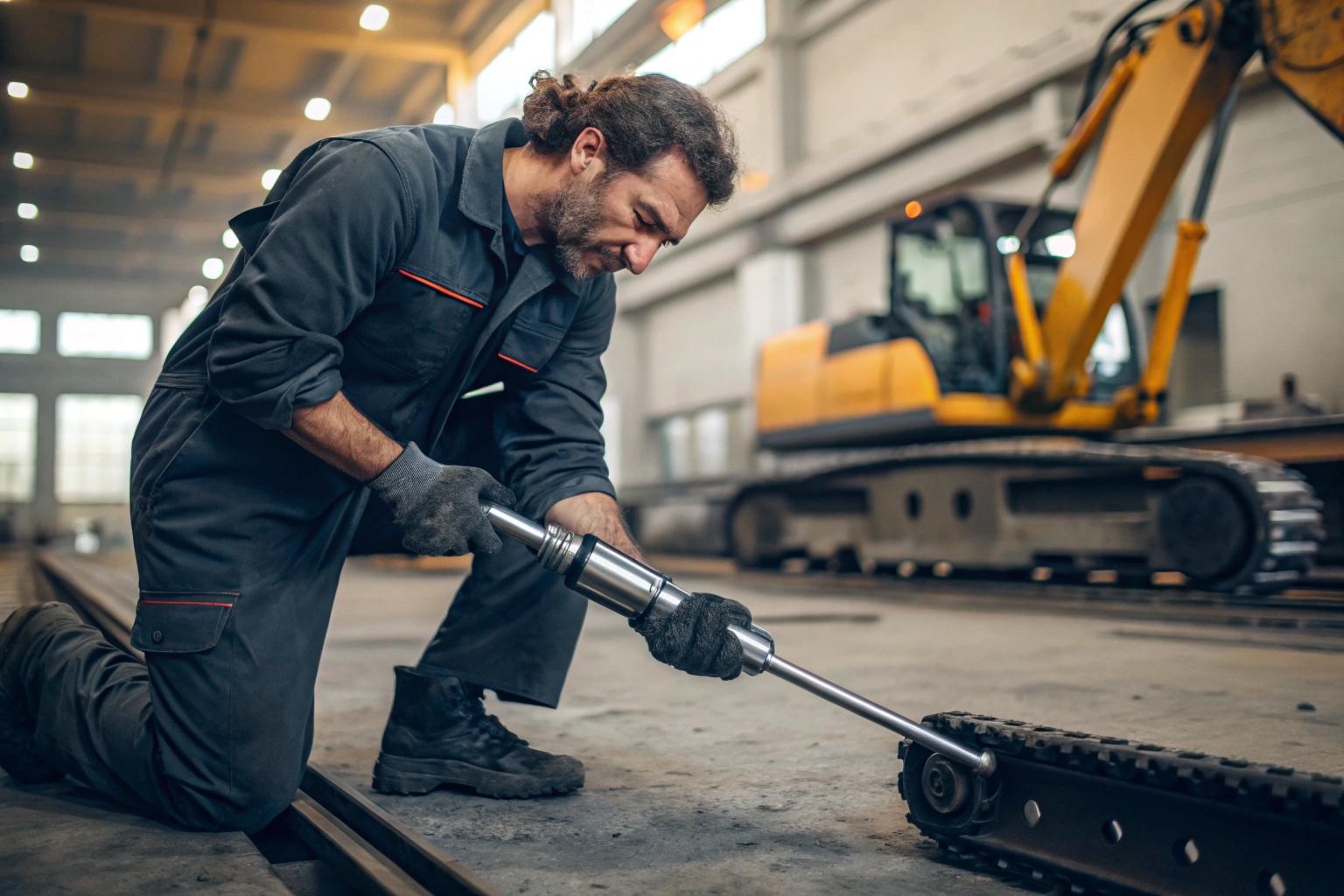
If your undercarriage parts fail due to poor installation, who gets the blame? You do. Uncertainty without data is a business killer. As a manufacturer, I know that technical data is just as important as the steel itself.
Yes, most professional excavator undercarriage parts suppliers, including top-tier Chinese manufacturers, can provide technical drawings, assembly instructions, and torque specifications upon request. This is crucial for aftermarket or custom orders to ensure proper fitment and structural integrity.
To ensure the product performs well for your end customers, we need more than just metal. We need data support. Next, we will explore exactly what technical documentation you should demand and how it impacts your business stability.
Do I get 2D/3D models for engineering review?
Seeing is believing. But before the product arrives at your warehouse, drawings are your only eyes. Many sourcing directors like you want to confirm every detail before shipping.
Suppliers typically provide 2D PDF drawings for dimensional verification of interface points. Full 3D engineering models are rare for standard parts due to IP protection but are available for custom OEM projects to ensure precise compatibility.
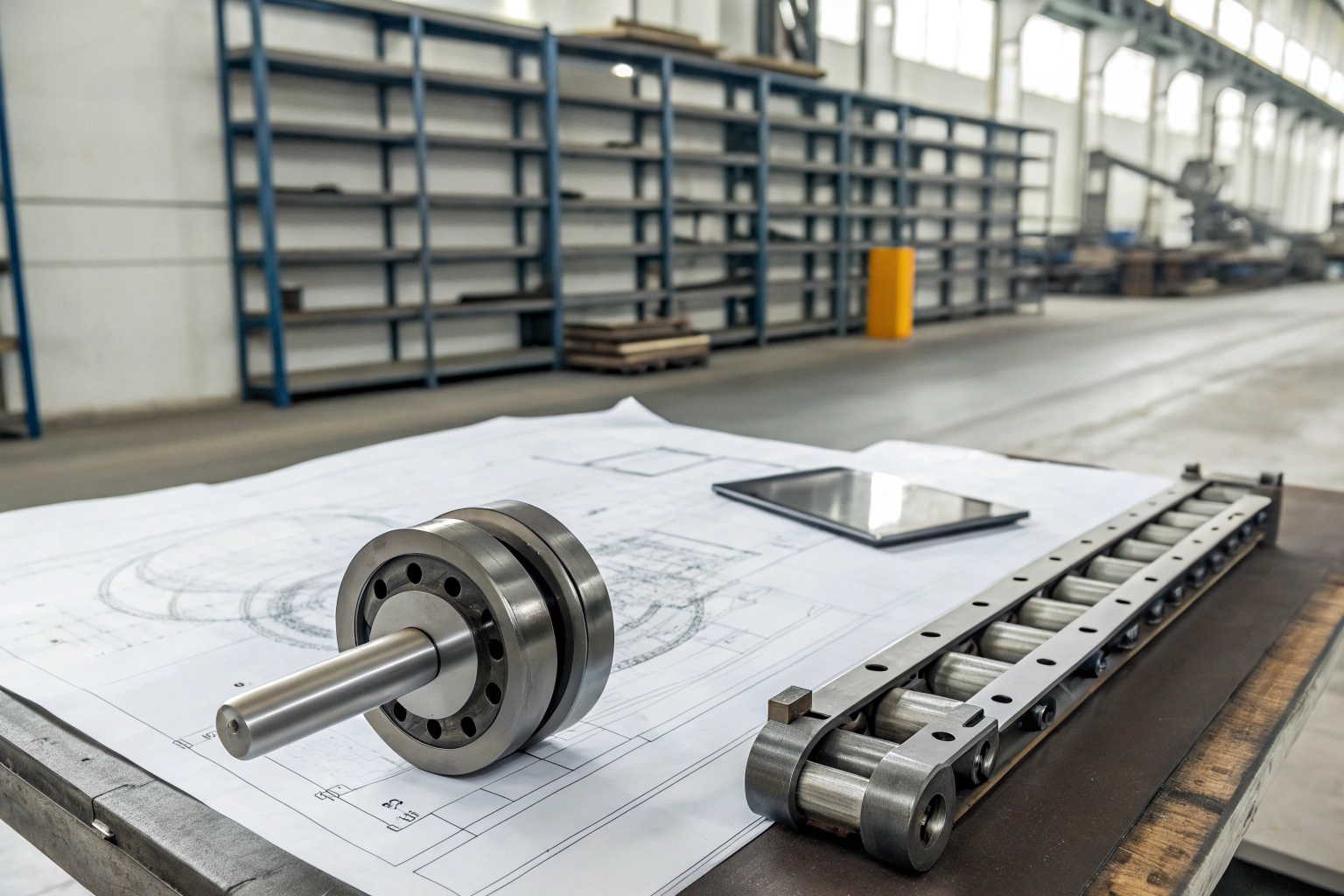
In this industry, a drawing is not just a piece of paper; it is the first line of defense for quality control 1. Many buyers overlook this when purchasing general parts, but for a professional like you, it is non-negotiable.
The Difference Between OEM and Aftermarket Drawings
When you ask for drawings from different types of suppliers, you will get very different responses. Understanding these differences helps you manage expectations better.
Here is how three main types of suppliers differ in drawing support:
| Supplier Type | 2D Drawings (PDF) | 3D Models (STEP/IGES) | Primary Use |
|---|---|---|---|
| OEM (Original) | Exploded views/Parts diagrams | Rarely provided (Confidential) | Part identification & ordering |
| Brand Aftermarket (e.g., Dingtai) | Key interface dimension drawings | Only for custom projects | Fitment check & Engineering review |
| Generic/Low-end | Sketch or no drawing | Not provided | Basic visual check |
Why Can’t I See the Full Engineering Design?
You might ask, "I bought this part, why can’t I have its full design blueprint?" This comes down to Intellectual Property (IP) 2.
For OEM manufacturers like Caterpillar or Komatsu, the internal structural design of undercarriage parts is their core secret. They do not want this data leaking into the market. Therefore, even if you are a large customer, you usually only get Parts Breakdown Drawings. These are enough for you to confirm the part number, but not enough for you to copy and produce.
For a brand aftermarket manufacturer like us, the situation is slightly different. If you need to confirm the mounting hole distance of a Sprocket 3, or the shaft diameter of a Track Roller 4, we will send you a 2D drawing with detailed dimensions. We need you to confirm these key points to ensure our product fits your machine perfectly. However, we also protect our specific heat treatment formulas and internal seal designs.
The Special Case for 3D Models
If you are doing a custom project, such as designing a reinforced Chain Guard for specific mining equipment, then the rules change. In this OEM contract manufacturing mode, we act as your factory and will share 3D models with your engineering team. This usually requires signing a Non-Disclosure Agreement (NDA) 5.
But in standard aftermarket trading, if a supplier sends you detailed 3D source files casually, you should actually be careful. This might mean they lack awareness of protecting their R&D, or the drawings themselves are just copied from somewhere else without verification. True engineering collaboration requires process and security.
What file formats are available for my CAD team?
Your office likely has strict engineers. They don’t want blurry photos; they need data that can be imported into their software. Format compatibility directly affects communication efficiency.
The industry standard for quick review is PDF, while CAD teams require DWG or DXF for 2D layouts. For complex 3D modeling or stress analysis, universal formats like STEP or IGES are essential to ensure software compatibility.
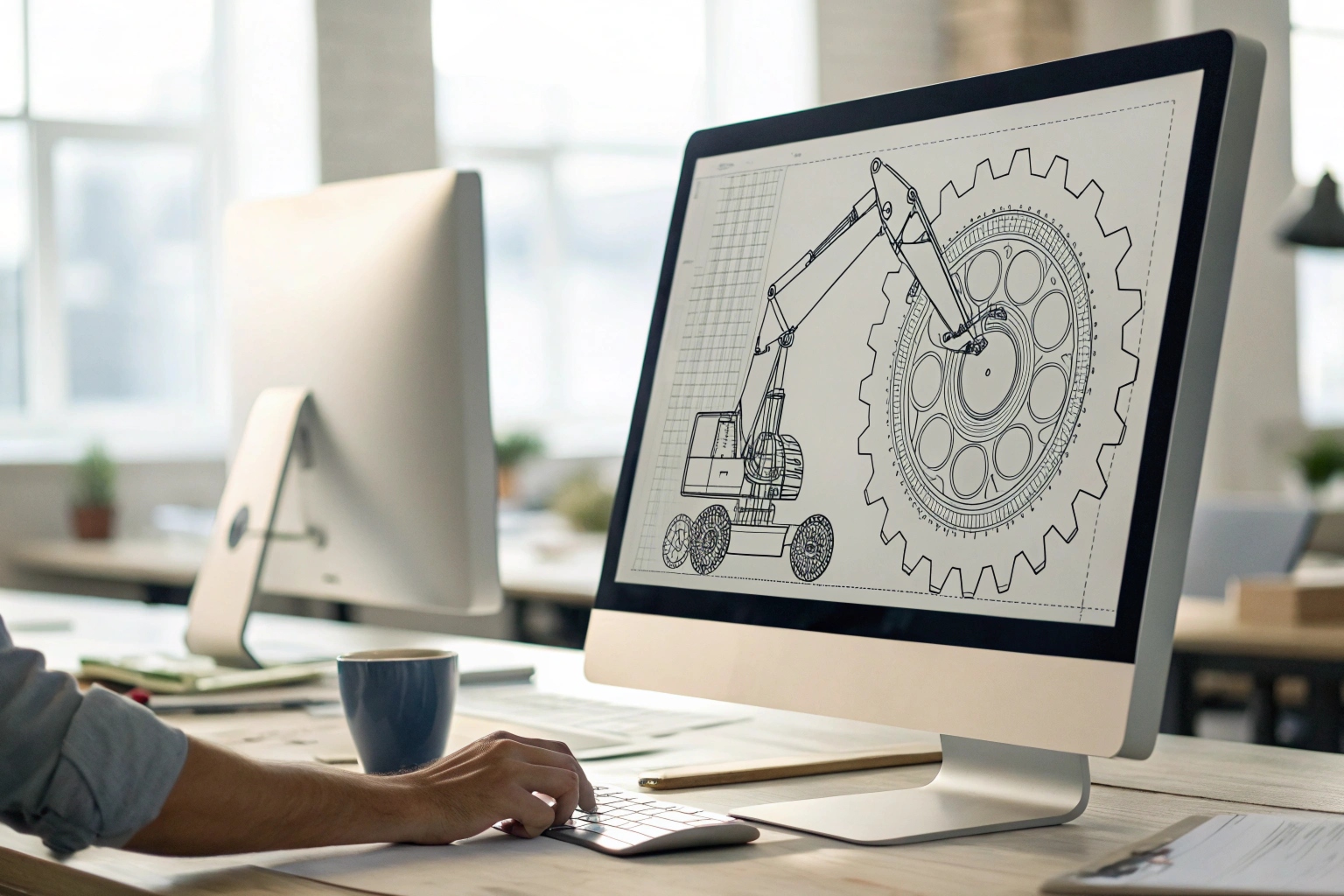
If your supplier sends a hand-drawn sketch photographed with a phone, that is a red flag. Professionalism is reflected in every file sent.
Why File Format Matters?
Imagine your engineer is designing a travel system modification for a customer. If the supplier sends a JPG image, the engineer has to manually redraw every line. This not only wastes time but also invites human error.
If we provide Vectorized PDFs or DWG files, your engineer can directly measure and overlay them. This means errors are caught on the computer screen, not in the muddy construction site.
Common File Formats and Scenarios
To make your team’s work smoother, you should request the following formats from your supplier:
-
PDF (Portable Document Format):
- Purpose: It acts as a contract. It locks the version to ensure everyone sees the same thing.
- Advantage: Opens on any device, cannot be easily tampered with.
- Best for: Purchasing manager review, on-site technicians checking dimensions.
-
DWG / DXF (2D Drawing Format):
- Purpose: The universal language of CAD software.
- Advantage: Your engineers can drop our part drawings directly into your general assembly layout to check for interference and fit.
- Best for: Technical department fitment verification.
-
STEP / IGES (3D Model Format):
- Purpose: Used for 3D modeling and Finite Element Analysis (FEA) 6.
- Advantage: Contains geometric information of the object, the most precise way to interact.
- Best for: Custom development or complex undercarriage assembly design.
Beware of "Format Conversion" Errors
One detail is often overlooked: version conversion. Sometimes, a supplier’s software version is too high, preventing you from opening the file; or when converting to a universal format (like from Pro-E to STEP), certain tolerance annotations are lost.
This requires the supplier to have professional technical docking capabilities. At Dingtai, our technical team will ask the customer: "What software do you use?" Then we output the most compatible version. This seems like a small thing, but for a buyer like you who values efficiency, it saves a lot of back-and-forth communication time. It shows we speak your language, literally and digitally.
Can I receive bilingual manuals for my customers?
Your customer might be in the US, but their mechanic might speak Spanish; or you import from China but don’t want your customer to see Chinese text. The language of the manual affects user experience and brand image.
Absolutely. As your OEM partner, we provide customized bilingual (e.g., English/Spanish) installation manuals and maintenance guides. This white-label service helps you present a professional brand image and reduces the risk of installation errors for your end-users.
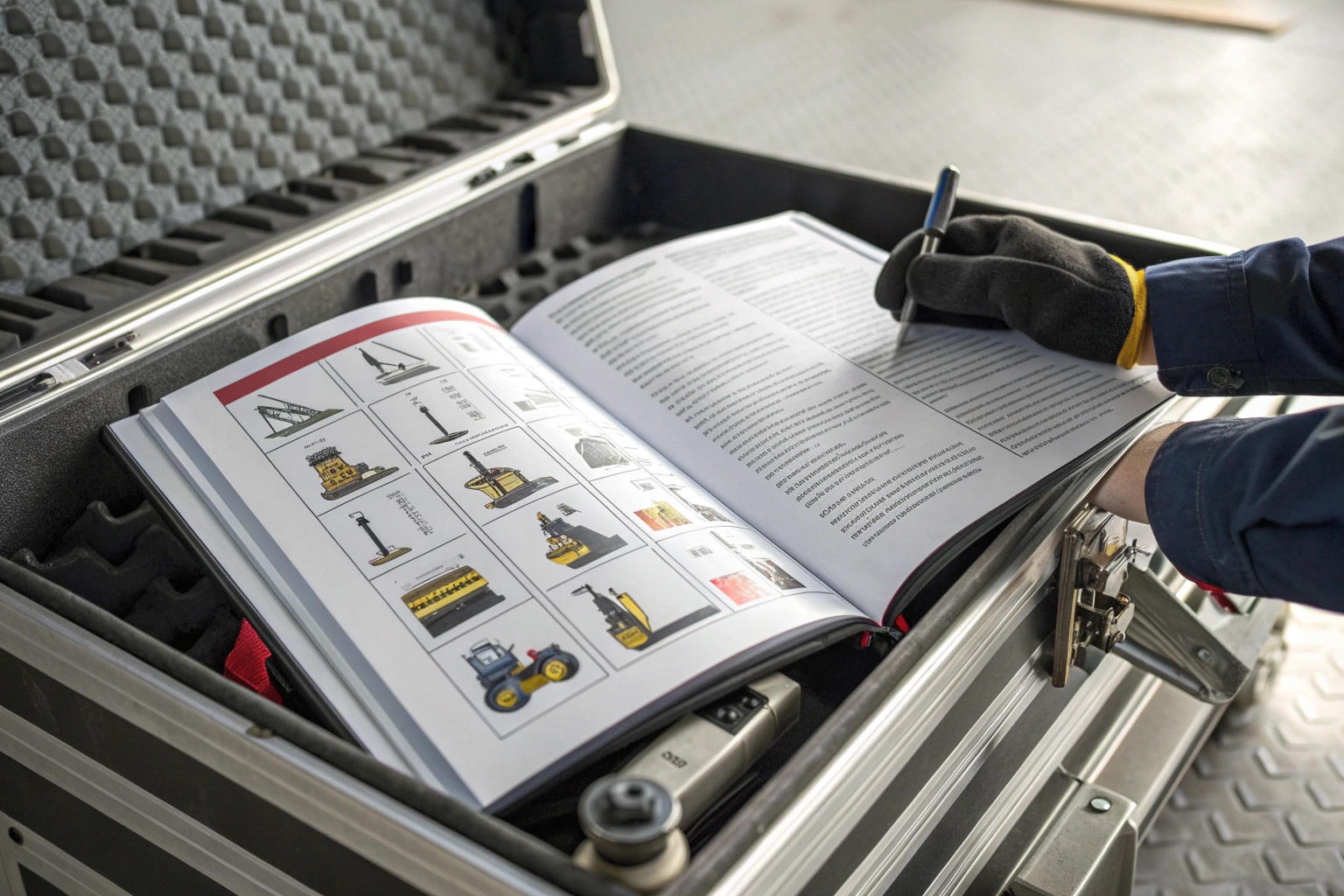
The manual is not just for installation; it is an extension of your brand’s professionalism. If the paper is cheap and the language is confusing, customers will assume the product quality is low too.
Why Documentation is Part of the Product
Many suppliers think their job is done once the steel is cast. But in the North American market, Liability 7 is a huge issue. If a mechanic gets injured or a machine is damaged due to unclear installation instructions, this could lead to lawsuits.
Clear, multi-language manuals are actually a form of risk control.
Customized Content Checklist
When we create manuals for clients like you, we don’t just translate words. We focus on these core sections:
- Safety Warnings: This is paramount. Must be in bold red text, bilingual. Example: "Ensure pressure is released before disassembling the track adjuster."
- Tool List: Tell the mechanic what size socket is needed, and if a hydraulic press is required.
- Step-by-Step Diagrams: The fewer words, the better; the more pictures, the better. Even if the mechanic cannot read well, they can understand the images.
Torque Specs: The Most Critical Data
Of all data, Torque Specs cannot be vague.
- Generic Parts Risk: Many low-end factories only give a range or say "tighten it." This is irresponsible.
- Professional Approach: We provide specific value tables.
Look at the comparison below to understand why data is so important:
| Part Location | Generic Advice (High Risk) | Professional Advice (Dingtai Standard) |
|---|---|---|
| Track Shoe Bolts | "Use impact gun to tighten" | 850 Nm ± 50 Nm + 120° Turn (Torque-Turn Method) |
| Track Roller Bolts | "Tighten until it stops" | 500 Nm (Must apply Loctite 262 8 Threadlocker) |
| Segment Bolts | "Refer to standard torque" | Per SAE J429 9 Grade 8 Standard: 900 ft-lbs |
The Importance of Localization
Your mention of "bilingual" is very foresighted. In the southern US, a large portion of construction workers use Spanish. If your box only has an English manual, it creates a communication gap.
We support printing manuals with your company Logo. When you distribute these products, your customers see a professional document they can read. This greatly increases their stickiness to your brand. They are not just buying a track roller; they are buying a complete solution that includes the knowledge to install it safely.
Engineering changes are normal in manufacturing. It could be for performance improvement or raw material standard upgrades. But if the factory changes it and doesn’t tell you, it’s a disaster.
Reliable suppliers enforce strict Engineering Change Notification (ECN) protocols. We share detailed revision logs whenever a dimensional or material change occurs, ensuring your inventory data matches the actual physical products you receive.

This is about supply chain transparency. Buyers who are unaware of changes are often the ones who end up paying for the mistakes.
What is a Revision Log? Why is it Important?
In long-term B2B cooperation, products are not static. Maybe we tweaked the heat treatment process to make the hardened layer deeper; or we upgraded a seal material from NBR to FKM.
If there is no revision log:
- Your sales team is still selling to customers using old parameters.
- Your warehouse might mix new and old batches, and if a customer requests a return, you can’t tell them apart.
- Worst of all, if it is a dimensional tweak, the new batch might not fit older machines.
How We Manage Version Control
To solve pain points for large clients like you, we follow the ISO 9001 10 document management system:
- Version Tracking: Every drawing sent to you has a version number (e.g., Rev. A, Rev. B).
- Change Notification (ECN): Before shipping, if there is a change, we issue an ECN document listing the "Before" and "After" comparison.
- Interchangeability Statement: We clearly state if the new part can replace the old one, or if they are completely incompatible.
Not All Suppliers Can Do This
This is a hard metric distinguishing "workshops" from "modern factories."
- Low-end Suppliers: They change molds at will, thinking "it’s close enough," and never tell you. You only find out when your customer complains that the bolt holes don’t align.
- Dingtai’s Approach: We treat you as an extension of the factory. You have the right to know about any changes.
For a buyer like you who values stability, the revision log is a form of security. It proves your supplier is producing under controlled conditions, not working by feel. This significantly reduces the energy and cost you spend handling after-sales disputes.
Conclusion
Technical drawings, assembly instructions, and torque specs are not just extra paper; they are the soul of product quality. Reject suppliers who cannot provide data, and choose a partner willing to transparently share technical details. In the construction machinery industry, precise data means safety, and safety is the biggest profit.
Footnotes
1. Importance of process standards in maintaining consistent manufacturing output. ↩︎
2. Legal definitions and rights regarding creations of the mind. ↩︎
3. Mechanical function of toothed wheels in tracked machinery. ↩︎
4. Role of guide wheels in undercarriage weight distribution. ↩︎
5. Legal framework for protecting confidential business information during collaboration. ↩︎
6. Simulation method for predicting how parts react to stress. ↩︎
7. Legal responsibility for defective products causing harm to users. ↩︎
8. Technical specifications and applications for high-strength threadlockers. ↩︎
9. Mechanical requirements for high-strength carbon steel fasteners. ↩︎
10. Global standards for effective quality management systems. ↩︎