

I know the feeling of dread when you hear that loud "pop" coming from your undercarriage. It usually happens when you are under a tight deadline, and suddenly, your excavator throws a track. You look at the chain, and it is stretched out like an old rubber band. It costs you time, money, and a lot of frustration. I want to help you avoid that mess by understanding the numbers that actually matter.
For a new track chain, the manufacturing pitch tolerance should be within ±0.15mm to ±0.30mm per link. The wear limit for a used chain is typically +1.5% of the pitch, or about 3mm max per link. The main standards used are JB/T 5932.2-2017 in China and ISO 606 for general chain specs.
Many buyers get confused by the different numbers and standards out there. Some suppliers will throw complex codes at you to hide the fact that their quality is low. But getting this right is the secret to a long-lasting undercarriage. Let’s look at how you can check these numbers yourself and what you should really ask your supplier.
How do I measure chain pitch accurately in the field?
You might think you can just eyeball the wear on your tracks, or maybe use a standard tape measure on a muddy track, but that is a risky game. I have seen too many people replace chains too late, destroying their sprockets, or too early, wasting good money.
To measure pitch accurately, do not measure just one link. Measure across 4 or 5 pins on a section of the chain that is pulled tight. This average reading removes small variations and gives you the true condition of your undercarriage.
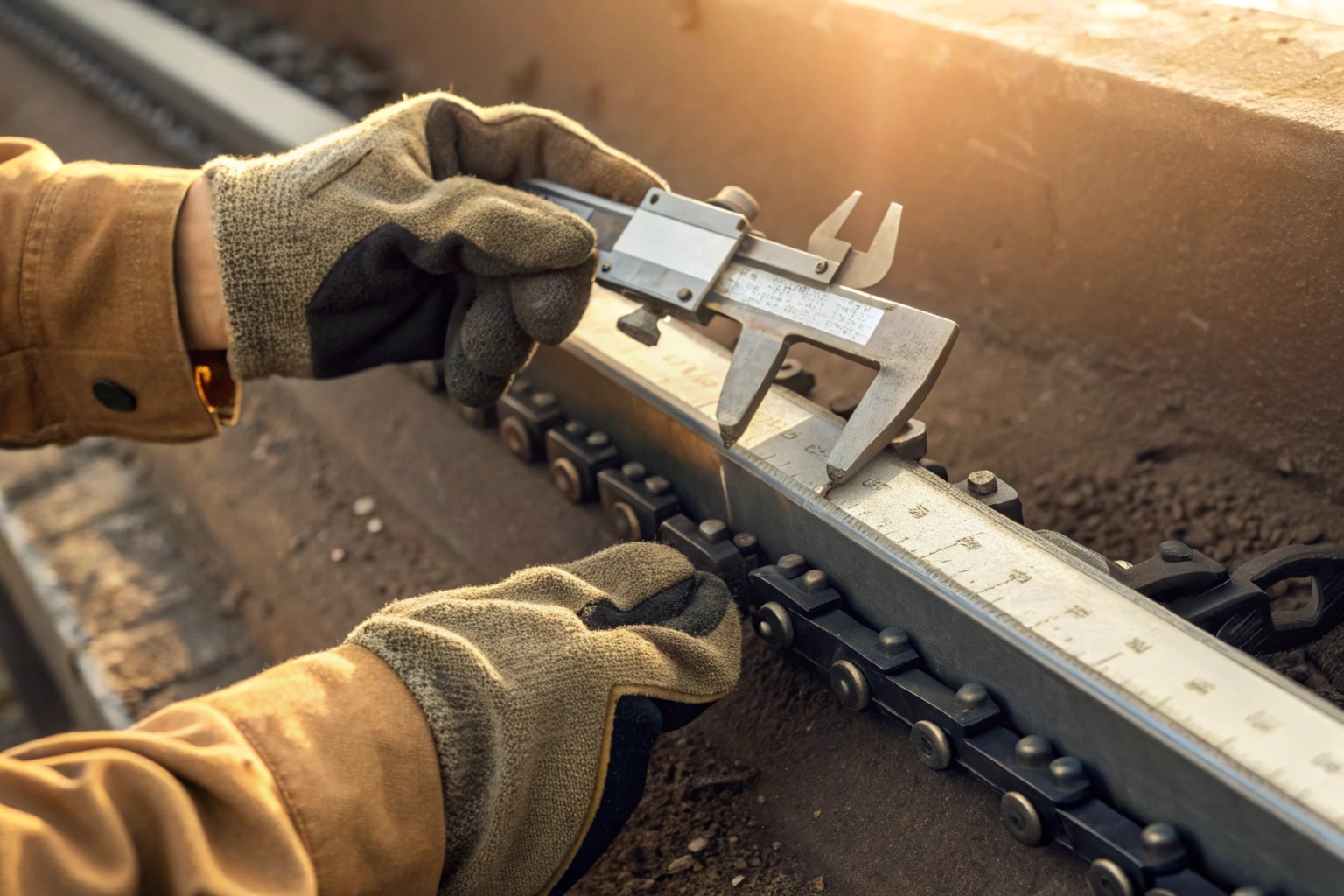
I often tell my clients that a tape measure is their best friend, but only if they use it right. When you are out in the field, mud and grease can hide the truth. First, you must clean the track. It sounds simple, but you would be surprised how many people skip this step. If there is packed dirt between the pin and the bushing, your measurement will be wrong.
Next, you need to make sure the chain is tight. I recommend moving the machine forward and letting it coast to a stop without using the brakes. This usually puts the slack on the bottom and keeps the top section taut. This top section is where you want to measure. If the chain is loose, the links will bunch up, and your reading will be short, making you think the chain is better than it actually is.
Never measure just one link. A single link might be off by a tiny bit due to manufacturing tolerance 1, but that doesn’t mean the whole chain is bad. We use the "Multi-Link Method." For smaller machines, measure across 4 links (5 pins). For larger dozers, measure across 10 links if you can. You measure from the center of the first pin to the center of the last pin.
Why the "One Link" Method Fails
I once had a customer in Texas, David, who called me complaining that his new chains were "out of spec." He was measuring each link individually with a small caliper. He found one link that was 0.5mm longer than the others and panicked. I explained to him that in a cast or forged assembly, individual variances happen. What matters is the cumulative pitch. The sprocket engages with multiple links at once. If the average over 4 links is correct, the chain will run smooth.
Here is a simple rule of thumb I use for common pitch sizes. This table helps you decide when it is time to order replacements.
Common Pitch Sizes and Wear Limits
| Nominal Pitch (mm) | Measure Across (Links) | New Chain Length (mm) | 100% Worn Length (mm) |
|---|---|---|---|
| 135 | 4 | 540 | 550 |
| 154 | 4 | 616 | 626 |
| 171 | 4 | 684 | 694 |
| 190 | 4 | 760 | 772 |
| 203 | 4 | 812 | 824 |
| 216 | 4 | 864 | 877 |
| 228 | 4 | 912 | 926 |
If your numbers hit that "Worn Length," it is time to change them. If you wait longer, the pitch becomes so long that the bushing starts riding up the sprocket tooth, acting like a grinder.
Which ISO/GB specs define bushing and pin tolerances?
There is an alphabet soup of standards out there—ISO, GB, SAE, JIS. It is enough to make anyone’s head spin. Let me clear up which ones actually matter for the parts you buy from China.
The primary standard we follow in China is JB/T 5932.2-2017 for track links. Globally, ISO 606 helps define heavy-duty chain tolerances, and ISO 20474 covers safety and machine design. However, major OEMs like Komatsu and CAT have their own internal specs that are often stricter than these public standards.
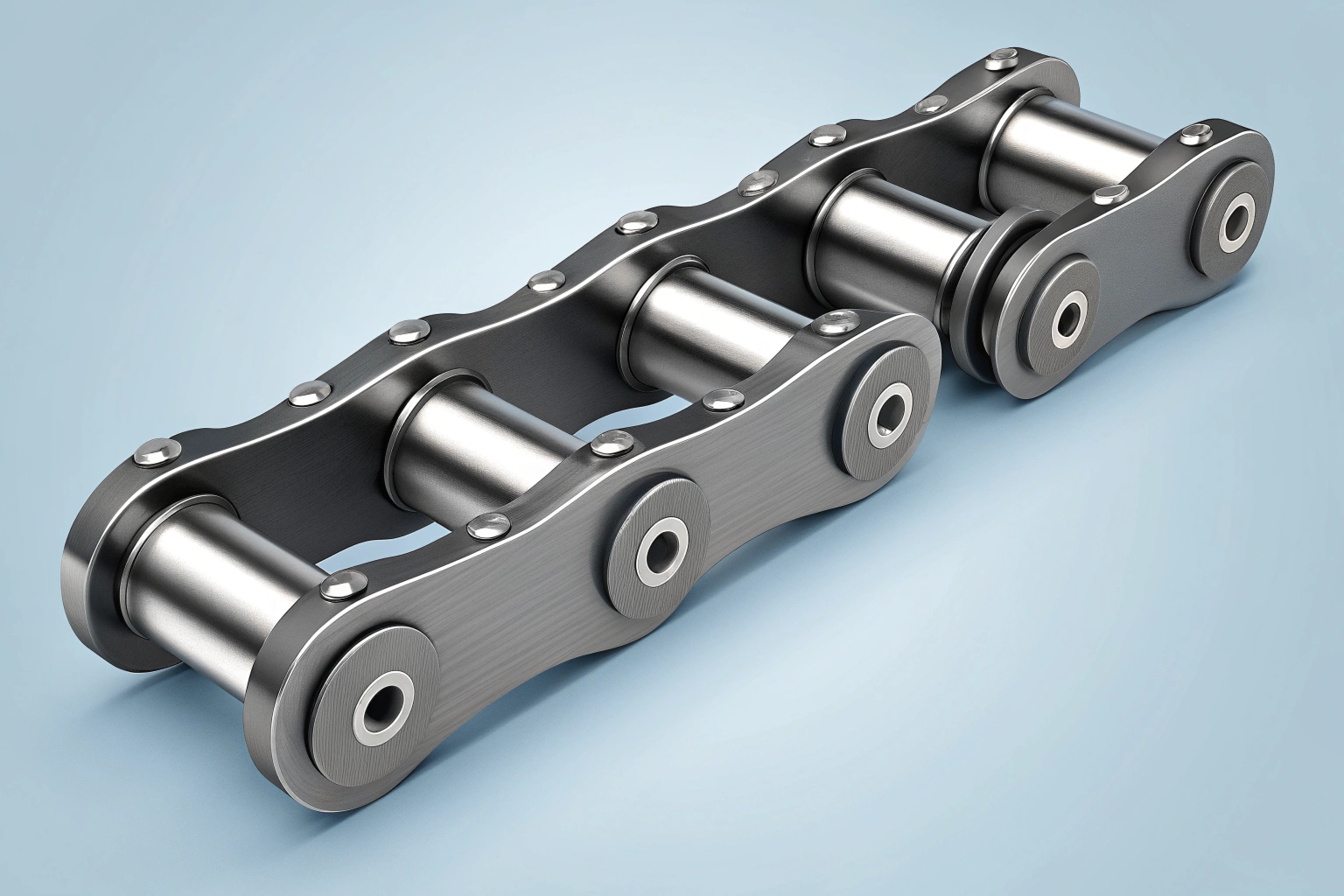
When we talk about standards, we are really talking about two things: "Will this fit?" and "Will this last?". In the world of undercarriage parts 2, there isn’t just one global book that every single factory follows perfectly. Instead, we have a mix of national standards and manufacturer specifics.
In China, the bible for us is JB/T 5932.2-2017. This standard lays out the specific dimensions and acceptable errors for bulldozer and excavator track links 3. It is very similar to the Japanese standards used by companies like Komatsu. If a factory in China tells you they don’t know what JB/T 5932 is, that is a huge red flag. It means they might just be copying a sample part without understanding the engineering behind it.
But for you, the international buyer, ISO 606 is a good reference. It deals with short-pitch transmission precision roller chains 4. While excavator chains are much bigger and tougher, the principles of how we measure the "gap" or tolerance remain the same.
The most critical part of the tolerance isn’t just the length; it is the fit between the pin and the bushing. This is where the magic (or the failure) happens. If the gap is too big, dirt gets in and grinds away the pin. If it is too small, oil can’t move (for lubricated chains), and the joint generates too much heat and seizes up. This is why we use Boron steel 5 and strict heat treatment standards 6.
Material Standards and Hardness Depth
We don’t just rely on dimensional standards; we rely on material standards too. A chain can have perfect dimensions but fail in 500 hours if the steel is soft.
| Component | Standard Material | Hardness Requirement (HRC) | Case Depth (mm) |
|---|---|---|---|
| Track Link | 35MnB / 40MnB | Surface: 52-58 | 3mm – 8mm |
| Track Pin | 40Cr | Surface: 52-60 | 2mm – 5mm |
| Track Bushing | 20CrMo | Surface: 52-58 | 2mm – 4mm |
At Dingtai, we actually aim for the higher end of these hardness ranges. We treat the JB/T standard as a minimum requirement, not the goal. We know that in a mine site, or on a rocky construction site in the US, "minimum" isn’t good enough. You need that extra depth of hardness (Case Depth) to resist wear once the outer layer starts to scratch.
Can my supplier provide a tolerance chart per batch?
I always tell my customers: "Trust, but verify." Any supplier can promise you great quality over the phone or on WhatsApp. But can they show you the data on paper?
Yes, a professional supplier should be able to provide a Quality Control (QC) report for every batch. This report must include dimension checks, hardness testing results, and heat treatment curves. If they cannot give you this, they might not be inspecting their goods at all.

In my 20 years in this industry, I have seen many buyers accept shipments without asking for a single piece of paper. Then, three months later, they call me asking why the chains are stretching or why the links are cracking.
A tolerance chart per batch is your insurance policy. When we finish a production run at Dingtai, we don’t just pack the parts into shipping containers. We take random samples—usually 10% to 20% of the lot—and we measure them. We check the pitch, the link height, and the bushing diameter.
You should ask your supplier for a report that looks like the table below. It shows you that they are actually checking the "Core Tolerance" we talked about earlier. Remember, for a new chain, we are looking for a pitch deviation of no more than ±0.3mm.
Sample QC Tolerance Chart (What you should see)
| Inspection Item | Standard Value (mm) | Upper Limit (+mm) | Lower Limit (-mm) | Actual Result (Avg) | Pass/Fail |
|---|---|---|---|---|---|
| Pitch Length | 190.00 | +0.30 | -0.30 | 190.12 | PASS |
| Bushing OD | 60.00 | +0.20 | -0.10 | 60.05 | PASS |
| Pin Length | 150.00 | +0.50 | -0.50 | 149.95 | PASS |
| Link Height | 105.00 | +1.00 | -1.00 | 105.40 | PASS |
If your supplier sends you a generic Excel file that looks like it was made three years ago, be careful. You want to see real data from your specific batch. This data proves that the cumulative tolerance over 10 links is less than 3mm, which ensures your chain will fit perfectly on your sprocket.
One trick I learned: Ask for the "Heat Treatment Curve" 7 graph. This is a chart that shows how the steel was heated and cooled. It is very hard to fake. If they can supply this, you know they are the real manufacturer, not just a middleman trading company.
Do tighter tolerances reduce premature wear on my machine?
Some people ask me if paying for "high precision" is really worth it. They think, "It’s just big heavy metal, does a millimeter really matter?"
Absolutely. Tighter tolerances ensure perfect engagement between the track chain and the sprocket. If the tolerance is loose, the chain will "climb" the sprocket teeth, causing rapid wear on both components. Precision manufacturing creates a "Pitch Match" that significantly extends the lifespan of your undercarriage.

Let’s think about how the chain and sprocket work together. It is like a gear system. The sprocket teeth are designed to grab the chain bushings at a very specific distance. This is the "Pitch."
If your chain is built with loose tolerances—let’s say the pitch varies by +1.0mm instead of ±0.3mm—the bushing won’t sit at the bottom of the sprocket tooth (the "root"). Instead, it will ride up on the side of the tooth. This is called "Pitch Mismatch."
When this happens, all the driving force of your excavator (which can be tons of pressure) is concentrated on a tiny point on the sprocket tooth tip, rather than being spread out evenly across the root. This high pressure acts like a grinder. It wears down the tooth tip and eats away at the bushing wall.
The "Pop" of Death
Have you ever heard a loud popping sound when your machine is reversing or under heavy load? That is often the sound of the bushing forcibly sliding down into the sprocket seat because the pitch was wrong. Every time you hear that pop, you are shaving hours off the life of your undercarriage.
In my experience, a chain that meets the strict ±0.3mm manufacturing standard can last 30% to 50% longer than a cheaper chain with a ±1.0mm variance. It is not just about the chain lasting longer; it is about saving your sprocket and your final drive 9. A bad chain can destroy a brand-new sprocket in less than 500 hours.
Also, tight tolerances mean less vibration. A loose chain slaps around. That vibration travels up into the idler, the rollers, and even the operator’s cabin. So, buying precision parts isn’t just about wear; it is about a smoother ride and less fatigue for your machine. At Dingtai, we use CNC machining centers 10 to bore the pin holes after the links are forged, ensuring that the distance between holes is exact, every single time. This is the difference between a cheap chain and a professional one.
Conclusion
To wrap it up, always check your pitch. Aim for that ±0.3mm standard on new parts, and replace them when wear hits 3%. Ask for reports, and don’t settle for "good enough."
Footnotes
1. Definition of engineering tolerances in manufacturing processes. ↩︎
2. Overview of undercarriage components and maintenance importance. ↩︎
3. Guide to track link maintenance and wear patterns. ↩︎
4. Official ISO standard for precision roller chain specifications. ↩︎
5. Properties and benefits of Boron steel for durability. ↩︎
6. Resources on industrial heat treating processes and standards. ↩︎
7. Explanation of time-temperature transformation in steel hardening. ↩︎
8. Technical details on sprocket tooth design and interaction. ↩︎
9. Function of final drives in heavy machinery power transmission. ↩︎
10. How CNC technology ensures precision in metal manufacturing. ↩︎