
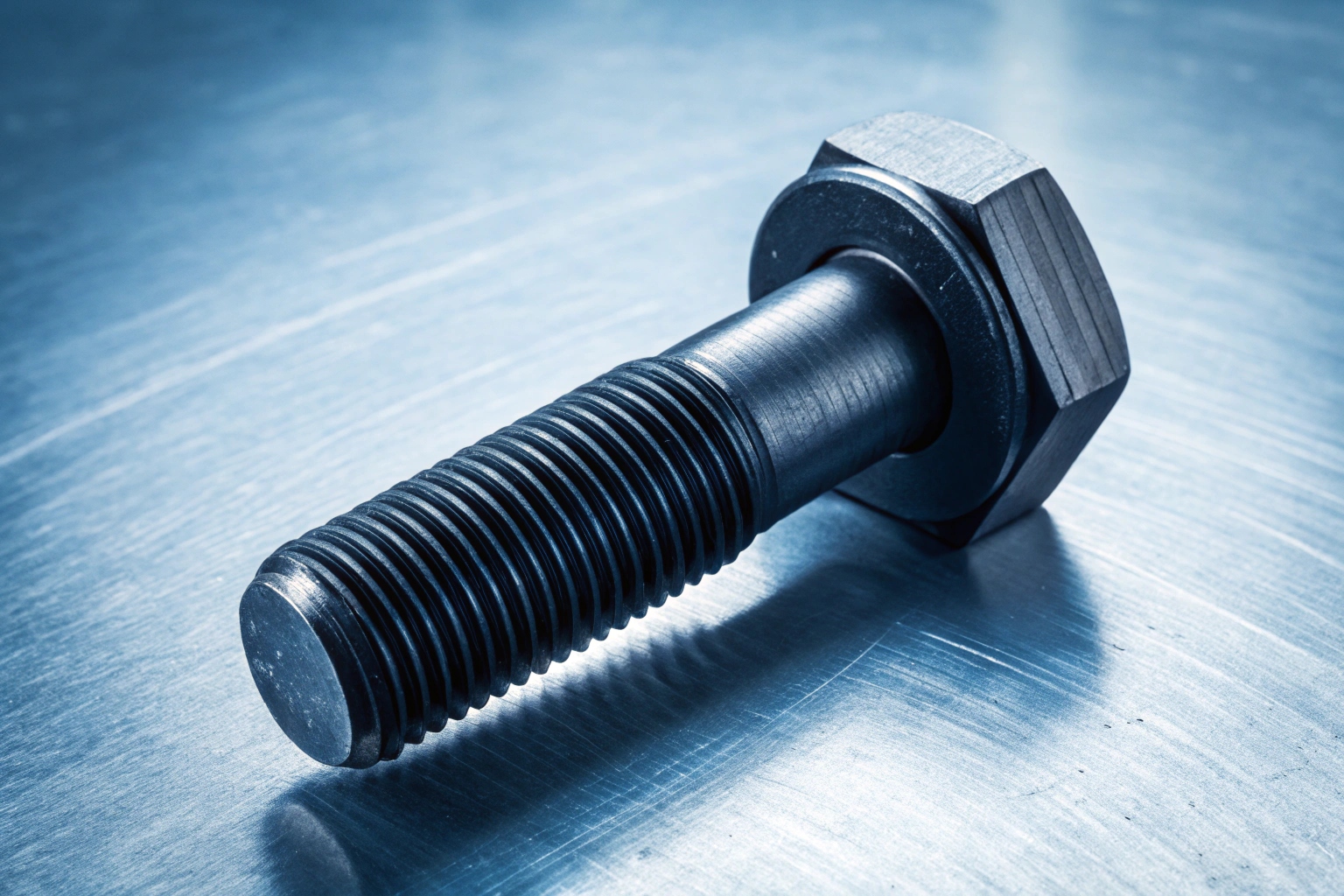
I know the frustration of hearing that loud "snap" in the middle of a mining site, signaling yet another broken track bolt. You are likely here because you want to stop that costly downtime and ensure your undercarriage stays intact under heavy loads.
For modern excavators, track shoe bolts must generally meet Grade 12.9 standards, offering a tensile strength of 1220 MPa. You should apply torque using the "Torque-Turn" method—tightening to an initial seating torque and then turning an additional 120 degrees—to ensure proper clamping force without snapping the bolt.
Understanding the numbers is just the start; you need to know why these specs matter and how to apply them in the field. Let’s look at the specific details that will keep your tracks running.
Are 10.9 bolts standard for my shoe assemblies?
I have seen many procurement managers try to save money by purchasing Grade 10.9 bolts, thinking the difference is negligible. However, in my years of manufacturing at Dingtai, I can tell you that for heavy excavators, Grade 10.9 is often a recipe for failure.
Grade 12.9 is the industry standard for excavator track bolts, not 10.9. While Grade 10.9 bolts have a yield strength of 940 MPa, Grade 12.9 bolts offer a yield strength of 1080 MPa and a tensile strength of 1220 MPa, which is necessary to resist the extreme impact and shear forces in mining environments.

When we talk about "strength," we are really talking about how much abuse a bolt can take before it stretches permanently or snaps. In the world of heavy construction machinery, the forces acting on your track shoes are massive. Every time your operator turns the machine or hits a rock, the bolts experience huge shear stress.
The Material Science Behind the Grade
To achieve Grade 12.9, we do not just use ordinary steel. At our factory, we use high-grade alloy steels 1 like 40Cr or 35CrMo. These materials are heat-treated to achieve a core hardness of HRC 38-42. This is a very specific "sweet spot." If the bolt is too hard, it becomes brittle like glass and will snap when the excavator tracks hit a hard rock. If it is too soft, it will stretch, loosen, and eventually shear off.
Grade 10.9 bolts typically use carbon steel like 35# steel. While decent for general construction, they lack the extra "toughness" needed for the violent vibrations of a 30-ton excavator.
Hydrogen Embrittlement Risks
Another critical factor I want to highlight is the finish. You might think a shiny zinc-plated bolt looks better and resists rust. But for Grade 12.9 bolts, zinc plating is dangerous. The acid used in the plating process introduces hydrogen into the metal. This causes hydrogen embrittlement 2, which makes the steel crack from the inside out. This is why we always recommend black phosphate 3 or oil coatings for these high-strength bolts.
Here is a quick comparison of the mechanical properties to help you choose:
| Property | Grade 10.9 (Standard) | Grade 12.9 (Heavy Duty) |
|---|---|---|
| Material | Medium Carbon Steel | Alloy Steel (35CrMo / 40Cr) |
| Tensile Strength | 1040 MPa | 1220 MPa |
| Yield Strength | 940 MPa | 1080 MPa |
| Best Application | Light Dozers / Small Excavators | Mining Excavators / Heavy Dozers |
Choosing the right grade is the foundation of a reliable undercarriage. If you put a Grade 10.9 bolt on a large mining excavator, you are asking for trouble.
How do I verify torque in the field safely?
Many mechanics I speak with still rely on a simple "click" torque wrench and stop there. While this works for car tires, it is dangerously inaccurate for track bolts because friction steals your clamping force.
You should verify torque using the "Torque-Turn" method rather than relying on a single torque value. This involves tightening the bolt to a low initial torque (e.g., 200 Nm) to seat the parts, and then rotating the bolt a specific angle (usually 120 degrees or 1/3 turn) to achieve the precise bolt stretch and preload.
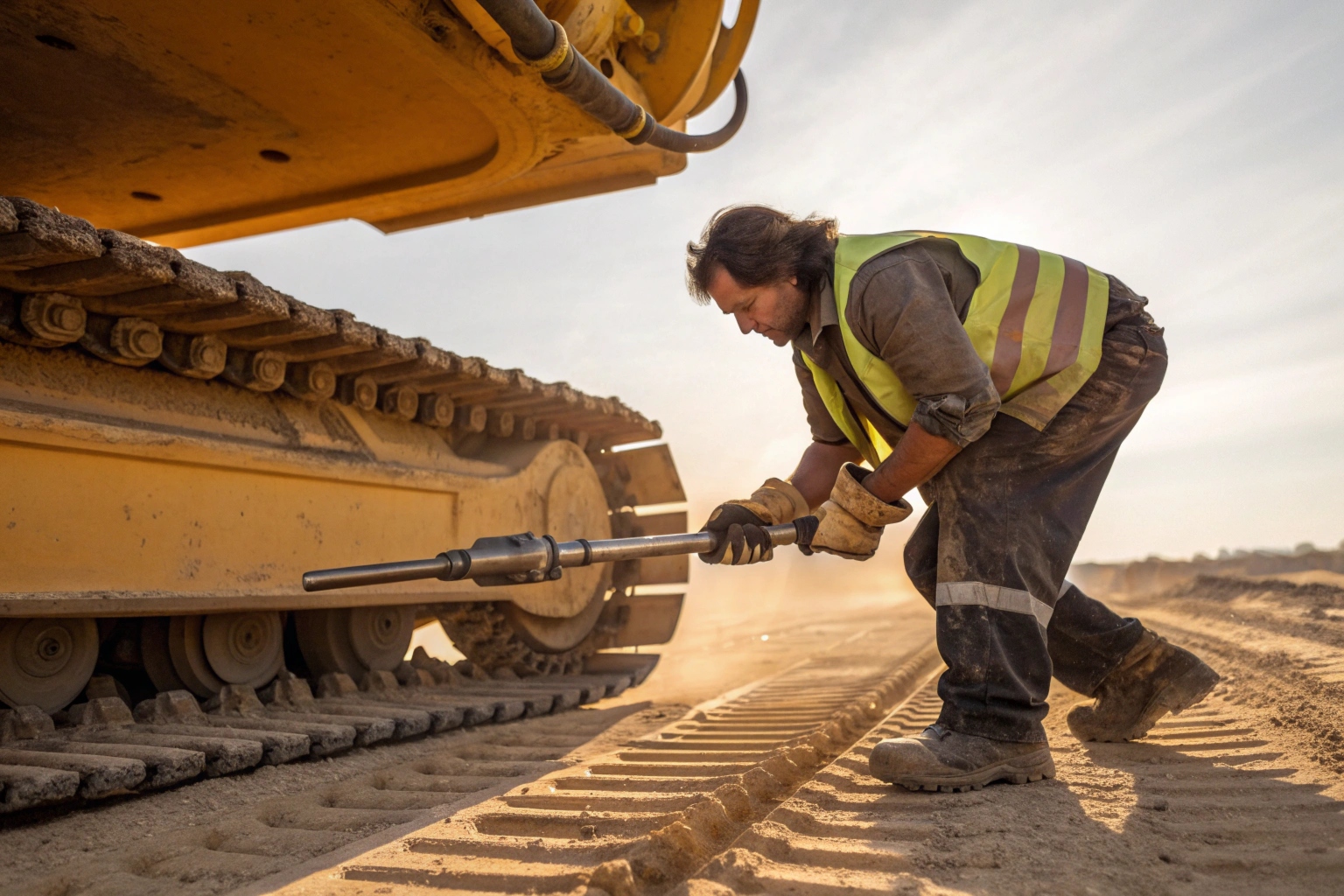
The Torque-Turn method 4 is the gold standard in our industry for a reason. When you use a torque wrench, up to 90% of your effort is just fighting friction between the threads and the washer face. Only 10% actually stretches the bolt to hold the track shoe in place. If the bolt is rusty or dry, your wrench clicks "ready," but the bolt is actually loose.
The Wet vs. Dry Debate
This brings me to a vital point: Lubrication. Most OEM torque specifications are "wet" values. This means you must apply oil or a specialized anti-seize compound 5 to the threads and the washer face before installation. If you install them dry, friction increases drastically. You might hit 500 ft-lbs on your wrench, but the bolt hasn’t stretched enough to hold the shoe tight.
Specific Torque Examples
The specific numbers depend on the bolt diameter. A larger bolt needs more force to reach its "yield point" (the point where it clamps tightest). At Dingtai, we provide charts for this, but here are common examples for general reference. Remember, the "Turn" is usually 120 degrees (one-third of a full circle) for standard track bolts.
Torque Specifications by Bolt Size
| Bolt Size | Initial Torque (Seating) | Additional Turn | Final Estimated Force |
|---|---|---|---|
| M16 | ~145 ft-lbs (200 Nm) | + 120° (1/3 Turn) | High |
| M20 | ~325 ft-lbs (440 Nm) | + 120° (1/3 Turn) | Very High |
| M24 | ~500 ft-lbs (680 Nm) | + 120° (1/3 Turn) | Extremely High |
Note: Always check your specific machine manual. Caterpillar and Komatsu specs may vary slightly.
The Master Bolt Exception
Be careful with the "Master Bolt." This is the bolt used on the split master link that connects the track chain. Because this link endures different stresses, some manufacturers require a 180-degree (1/2 turn) rotation instead of the standard 120 degrees. If you only turn it 120 degrees, the master link might open up while the machine is working.
What anti-loosening methods should I apply?
You might think that adding lock washers or double nuts is the best way to keep bolts tight. However, in the heavy equipment world, these methods often fail because they cannot handle the crushing loads of a 50-ton machine.
The most effective anti-loosening method is ensuring proper mating surface preparation and consistent clamping force, not adding external lockers. You must remove all paint and rust from the track shoe and link surface before installation, as trapped paint pulverizes under load, creating gaps that cause bolts to loosen.
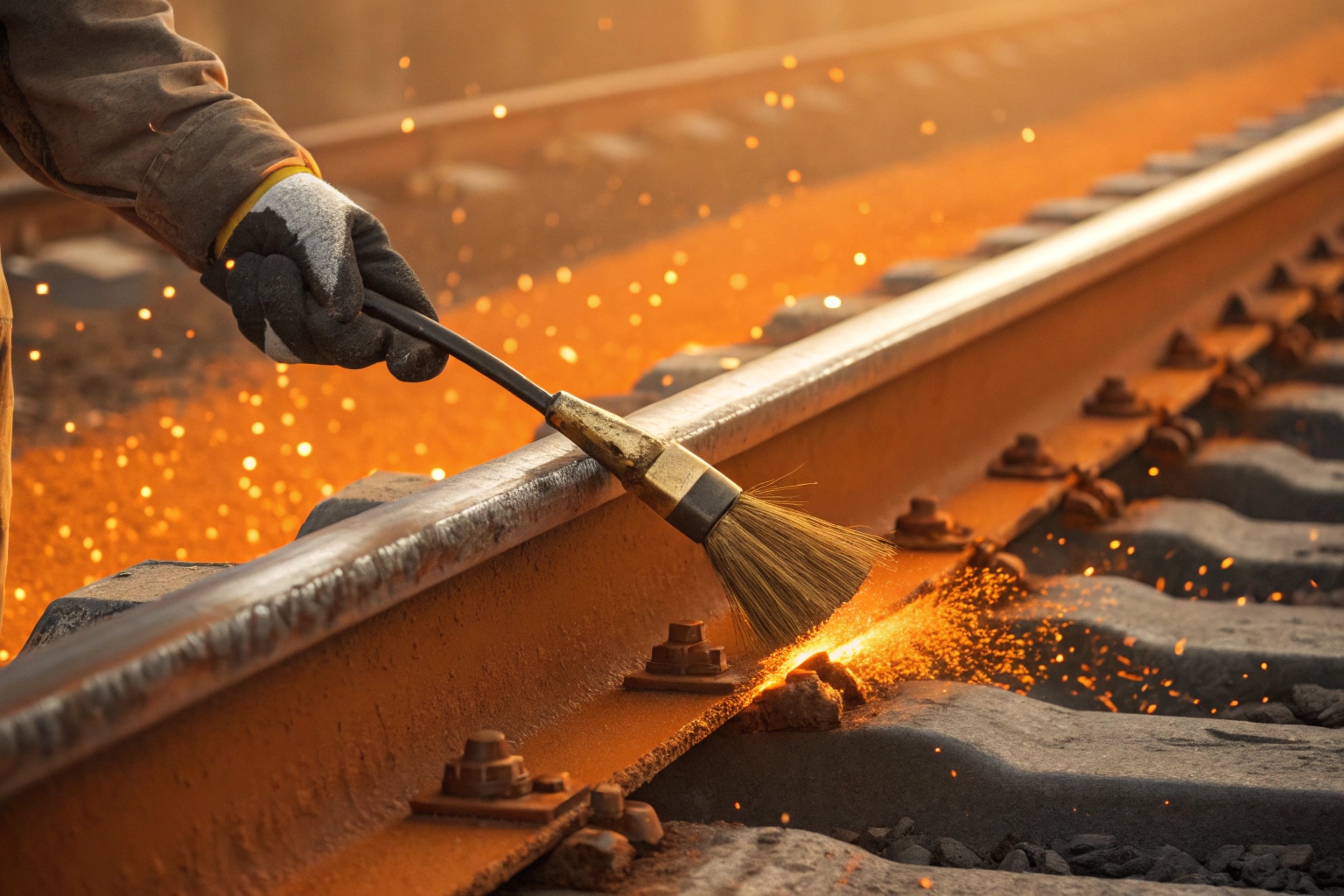
I cannot stress this enough: Paint is the enemy of tight bolts.
The "Paint Trap"
When we manufacture track links and shoes, we paint them to prevent rust during shipping. However, before you bolt them together, that paint on the contact surfaces must go. If you bolt a shoe onto a painted link, the paint acts like a thin cushion. After a few hours of heavy operation, the vibration pulverizes that paint into dust.
Suddenly, you have a microscopic gap between the shoe and the link. It might be less than a millimeter, but that is enough. The bolt loses its preload 6, and once tension is lost, the nut will back off no matter how much Loctite 7 you used.
Why "Retorquing" is a Myth
There is a common belief that you should re-torque track bolts after 50 hours. With the Torque-Turn method, this is actually dangerous.
- Plastic Range: We tighten these Grade 12.9 bolts into their "plastic range." This means we have stretched them permanently to get maximum grip.
- Snap Risk: If you take a massive breaker bar and try to tighten them more after 50 hours, you are pushing the metal past its limit. The bolt will likely snap.
Instead of a wrench, use your eyes. Walk around the machine. If you see a shiny ring around a bolt head or nut, that indicates movement. Movement means it is loose. Do not tighten it—replace it.
Surface Preparation Checklist
To ensure your bolts stay tight without chemical lockers, follow this simple process:
| Step | Action | Why it matters | |
|---|---|---|---|
| 1 | Scrape/Grind | Remove all paint/rust from shoe and link mating surfaces. | Ensures metal-to-metal contact. |
| 2 | Clean Threads | Wire brush the bolt and nut threads. | Ensures accurate torque readings. |
| 3 | Lubricate | Apply oil to threads and washer face. | Reduces friction for better clamping. |
| 4 | Tighten | Apply initial torque + 120° turn. | Stretches bolt to correct tension. |
Can I reuse old bolts to save money?
I understand the pressure to cut maintenance costs, and looking at a pile of used bolts that "look fine" makes it tempting to put them back on. But from an engineering and safety standpoint, this is a gamble you will almost certainly lose.
You should never reuse track shoe bolts because the Torque-Turn tightening method stretches them permanently into their plastic deformation zone. Once removed, these bolts have lost their elasticity and structural integrity, meaning they will loosen rapidly or shear off completely if reinstalled.
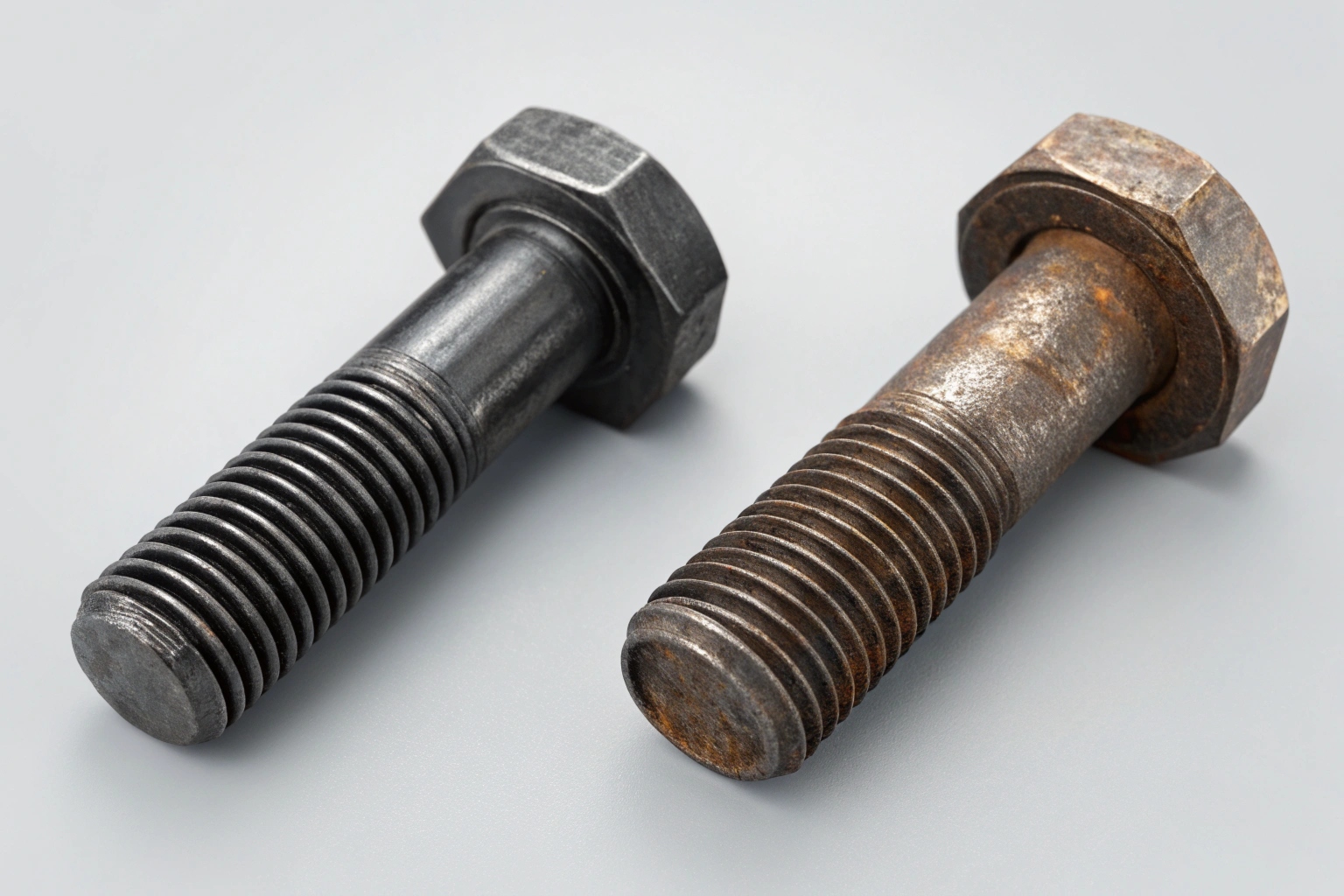
Think of a track bolt like a rubber band. When you pull a rubber band a little bit, it snaps back. That is how standard bolts work (elastic range). But track bolts are pulled so hard they stretch out and don’t snap back (plastic range).
The Physics of Failure
When you install a Grade 12.9 track bolt using the Torque-Turn method, you are intentionally stretching the steel to its yield point. This provides incredible clamping force. However, once you undo that nut, the bolt remains longer than it was when it was new. The "spring" inside the steel is broken.
If you try to install that used bolt again:
- False Torque: You will hit the torque wrench click, but the bolt won’t be tight enough because the metal is "tired."
- Necking: The bolt will stretch further at its weakest point (necking) and snap unexpectedly.
Cost Analysis: New Bolts vs. Downtime
Let’s look at the real cost. A complete set of high-quality bolts and nuts might cost you a few hundred dollars.
Now, imagine a bolt shears off in the middle of a job.
- The Shoe Loosens: This damages the expensive track link mounting surface. Now you need to replace the link, not just the bolt.
- Downtime: Your excavator sits idle for 4 hours while a mechanic travels to the site. That is hundreds or thousands of dollars in lost production.
When to Replace What
It is not just the bolt; the nut matters too. The nut is often slightly softer than the bolt so that the threads distort slightly to lock in place. Once removed, the nut’s threads are damaged. This compromises the structural integrity 8 of the entire assembly.
| Component | Reuse Policy | Reason |
|---|---|---|
| Track Bolt | NEVER | Permanently stretched; will fail under load. |
| Track Nut | NEVER | Threads distorted; won’t hold torque. |
| Track Shoe | YES | If not bent or worn thin. |
| Track Link | YES | If rail height is within limits and bolt holes aren’t wallowed out. |
My advice is simple: Treat bolts as consumables, just like oil filters 9. You wouldn’t reuse an oil filter to save $20, so don’t reuse a track bolt. This leads to permanent plastic deformation 10 that renders the part unsafe.
Conclusion
To keep your excavators running, always choose Grade 12.9 bolts made from alloy steel, use the Torque-Turn installation method, and ensure mating surfaces are paint-free. Never reuse old bolts; the small savings are not worth the risk of costly downtime.
Footnotes
1. Definition and properties of high-strength alloy steels. ↩︎
2. How hydrogen causes sudden failure in high-strength metals. ↩︎
3. Benefits of phosphate coatings for corrosion resistance and friction. ↩︎
4. Engineering guide to the torque-turn tightening procedure. ↩︎
5. Purpose of anti-seize lubricants in threaded assemblies. ↩︎
6. Explanation of bolt preload and its importance in joints. ↩︎
7. Overview of thread-locking adhesives and their applications. ↩︎
8. Importance of maintaining structural integrity in mechanical systems. ↩︎
9. Guide to selecting and maintaining hydraulic and oil filters. ↩︎
10. Scientific explanation of permanent material deformation under stress. ↩︎