
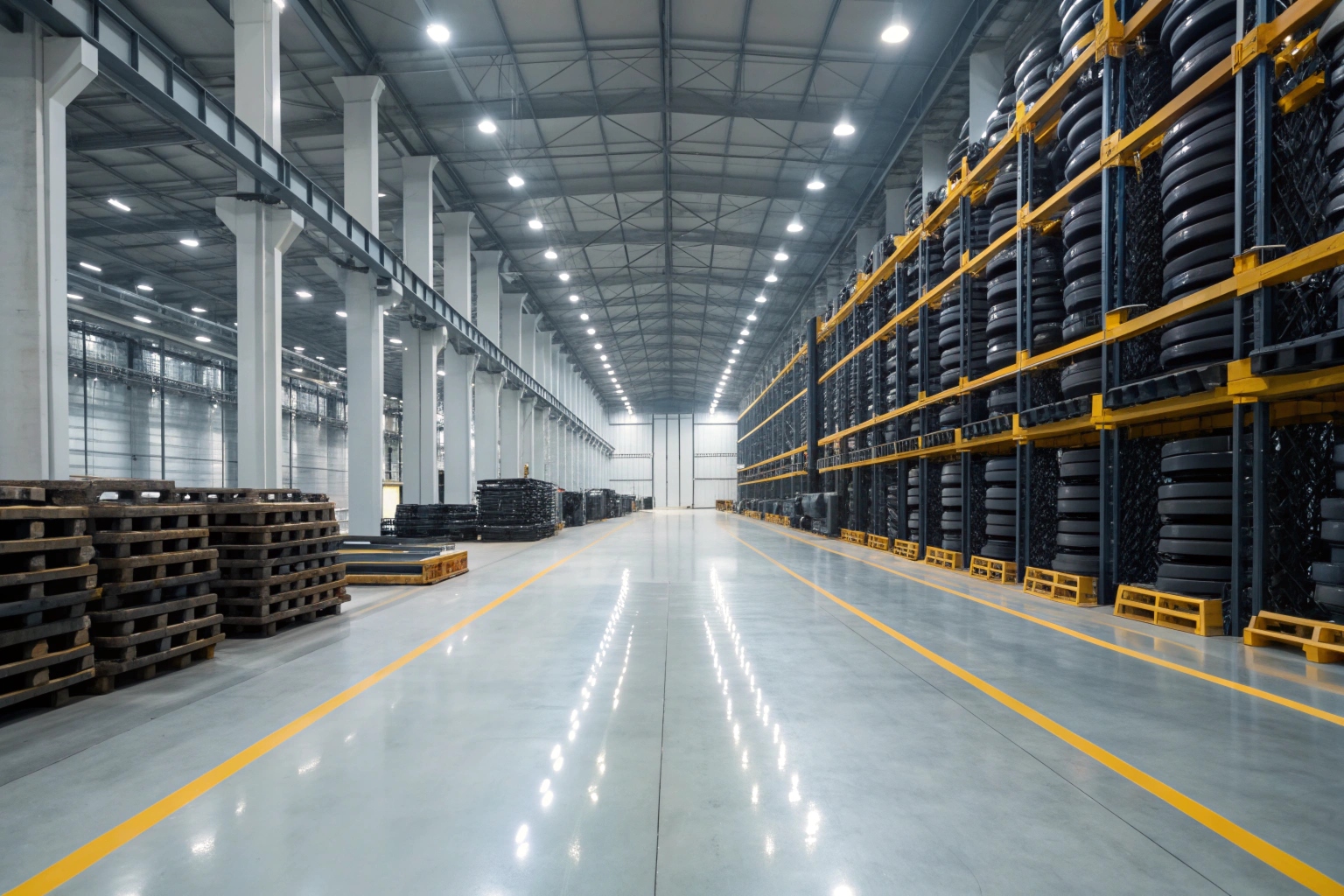
I know the sinking feeling when a customer screams for a track chain, but your inventory rack is empty. I have seen how waiting weeks for ocean freight kills your reputation.
Top-tier manufacturers now support multi-warehouse shipping and overseas stock to reduce delivery times from 45 days to just 1-3 days. This strategy bypasses customs delays and high shipping costs, ensuring you have heavy replacement parts exactly when your local customers need them most.
However, not every supplier has the capability or capital to manage a global logistics network. You need to know exactly what to ask to ensure your supply chain is robust, not just a promise on a website. Let’s dive into how we can speed up your business.
What lead time do I get with a regional hub?
Is your cash flow tied up on a ship crossing the Pacific Ocean right now? I know that waiting months for inventory prevents you from serving urgent repair jobs.
A regional hub drastically cuts your lead time from the standard 30-60 days (sea freight) to a rapid 1-5 days for ground delivery. This allows you to compete with local OEM dealers by offering immediate availability on heavy undercarriage parts without the exorbitant cost of air freight.
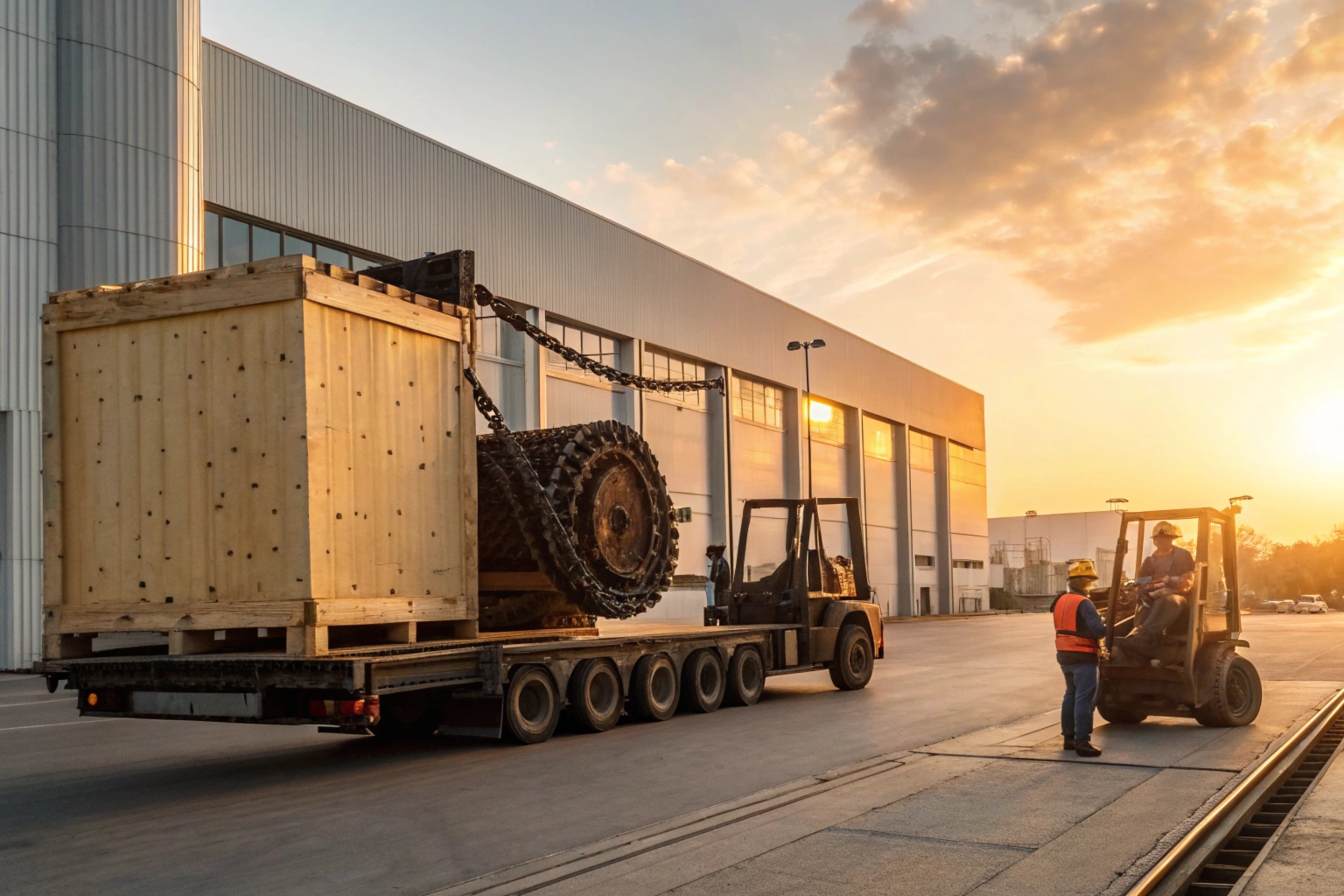
When we talk about "regional hubs" in the heavy machinery industry, we are discussing a complete shift in how you manage your business assets. As a manufacturer in China, I see the logistics data every day. Sending a container of track rollers from Fujian to a port in California, then clearing customs, and finally trucking it to your warehouse takes time. In the best-case scenario, it is 35 days. If there is a port strike or a customs inspection, it can easily become 60 days.
For a distributor like you, that gap is dangerous. Your customers—the guys running mines and construction sites—cannot wait two months. If their dozer is down, they are losing thousands of dollars an hour.
The Mechanics of Regional Speed
By using a supplier who supports regional hubs, you move the "waiting period" away from the critical point of sale. The inventory sits in a warehouse in your country (for example, a third-party logistics center 1 in Texas or Chicago) rather than in my factory in China. When you place an order, the goods are already cleared through customs. They just need to be loaded onto a truck.
This proximity changes your service level agreement (SLA) with your clients. You can confidently promise "next-day" or "3-day" delivery.
Cost vs. Time Analysis
You might think this service makes the parts too expensive. However, you must look at the total landed cost 2. When you ship urgent orders by air because you are out of stock, you destroy your profit margin. Undercarriage parts are heavy steel; air freight is financial suicide. Regional hubs allow you to pay bulk sea-freight rates to get the parts to the country, and then standard ground rates to get them to your door.
Here is a breakdown of how the timing shifts:
| Logistics Stage | Direct Import (Standard) | Regional Hub (Optimized) |
|---|---|---|
| Production Time | 15-20 Days | 0 Days (In Stock) |
| Ocean Transit | 25-40 Days | 0 Days (Already Landed) |
| Customs Clearance | 3-7 Days | 0 Days (Already Cleared) |
| Local Delivery | 2-5 Days | 1-3 Days |
| Total Lead Time | 45-72 Days | 1-3 Days |
This table shows why the regional model is superior for aftermarket distributors who face unpredictable demand. You are buying time, which is the one thing you usually cannot purchase.
How do we manage replenishment for overseas warehouses?
Do you worry about ordering too much stock that gathers dust, or too little that causes stockouts? I understand that balancing inventory levels from halfway across the world feels like gambling.
We manage replenishment through data-driven forecasting and real-time communication, aligning your historical sales data with our production schedules. By setting "safety stock" triggers, we automatically ship new containers before your overseas warehouse runs empty, ensuring a seamless cycle of supply without overstocking.

Managing an overseas warehouse requires more than just renting space; it requires a brain. If we just dump containers of parts into a warehouse in the US without a plan, you will end up with a pile of dead stock that ties up your capital. At Dingtai, we approach this with a strategy called Collaborative Planning, Forecasting, and Replenishment 3 (CPFR), but let’s keep it simple.
The Bullwhip Effect in Heavy Parts
In our industry, the Bullwhip Effect 4 is a major problem. A small spike in demand from your end user can cause you to panic and over-order. Then, I see that big order and I ramp up production too high. Eventually, we both have too much inventory.
To stop this, we need transparency. We need to look at your "sell-through" rate. This means we look at how many bottom rollers or idlers you actually sold last month, not just how many you think you might need.
Setting the Safety Stock Trigger
We work with you to establish a "Min/Max" level for each SKU.
- The Min (safety stock 5): When your inventory hits this number (e.g., 20 sets of PC200 track chains), it triggers an alert. We know that it takes 40 days to get new stock to you. So, the Min level must be enough to cover your sales for those 40 days.
- The Max: This is the most your warehouse can hold or the most you want to invest in one item.
The Role of the Manufacturer
As your manufacturing partner, I do not just wait for your email. I monitor these trends with you. If I see that the price of raw steel is about to spike in China, I will advise you to replenish your overseas warehouse now to lock in the lower cost. If I know we have a busy production season coming up (like before Chinese New Year), we plan your replenishment months in advance.
Here is what the communication flow looks like:
- Month 1: We analyze your Q1 sales data.
- Month 2: We produce the stock specifically for your hub.
- Month 3: The stock is on the water (ocean freight).
- Month 4: The stock arrives as your current inventory hits the "Min" level.
This cycle prevents the dreaded "out of stock" conversation you hate having with your customers.
Can I reserve stock under a blanket PO?
Are you tired of renegotiating prices every single time you need to place an order? I know that price volatility and production queues can ruin your annual budget and planning.
Yes, you can reserve stock using a Blanket Purchase Order (PO), which locks in your pricing and guarantees production capacity for a set period, usually one year. This agreement allows you to call off goods as needed, giving you stability in costs and priority in our manufacturing schedule.

A Blanket Purchase Order 6 (PO) is one of the most powerful tools for a seasoned buyer like you. In the volatile world of steel manufacturing and international trade, certainty is a luxury. A Blanket PO gives you that certainty. It acts as a long-term contract where you agree to buy a certain quantity of undercarriage parts over a year, but you do not take delivery of them all at once.
Stability in a Volatile Market
The cost of undercarriage parts is heavily dependent on the price of steel and energy. If the market shifts, prices can jump 10% or 15% in a month. By signing a Blanket PO with a manufacturer like Dingtai, you effectively freeze the price. Even if raw material costs 7 go up later in the year, your price remains what we agreed upon. This allows you to set your selling prices to your customers with confidence, protecting your margins.
Manufacturing Priority
The other hidden benefit is "Production Slot Reservation." My factory serves many clients worldwide. During peak seasons, lead times can stretch because the machines are full. However, if you have a Blanket PO, you are not fighting for a spot in the line. We have already allocated capacity for your order. We know that in June, we need to make 500 rollers for David, and we plan around it. You become a VIP client simply by planning ahead.
The "Call-Off" Mechanism
You might wonder, "Do I have to pay for everything upfront?" Usually, no. You pay as you "release" or "call off" the shipments.
- You sign for 1,000 units for the year.
- In January, you ask for 200 units (Release #1). You pay for 200.
- In April, you ask for 300 units (Release #2). You pay for 300.
This helps your cash flow immensely. You get the bulk pricing discount of buying 1,000 units, but you keep the cash flow flexibility of smaller orders.
Critical Considerations
Of course, you need to be careful. A Blanket PO is a commitment. If the market price drops significantly, you are still locked into the higher price (though good partners will often renegotiate). Also, you are liable for the materials if you decide to cancel. But for stable, high-moving items like popular excavator chains, the risk is very low compared to the benefits of guaranteed supply.
| Feature | Spot Buying (Standard Orders) | Blanket PO (Strategic Buying) |
|---|---|---|
| Price | Market price at time of order | Fixed price for the contract term |
| Lead Time | Subject to current factory load | Guaranteed / Priority production |
| Inventory Risk | Low (buy as needed) | Medium (committed to quantity) |
| Admin Work | High (negotiate every order) | Low (one negotiation, many releases) |
Are bonded warehouse options available?
Do import duties and taxes hurt your cash flow before you have even sold the product? I understand the pain of paying thousands in taxes for parts that might sit on your shelf for months.
Yes, bonded warehouse options are available and highly recommended for optimizing cash flow. They allow you to store imported goods closer to your market without paying customs duties or taxes until the products are actually removed for sale, legally deferring your financial liability.
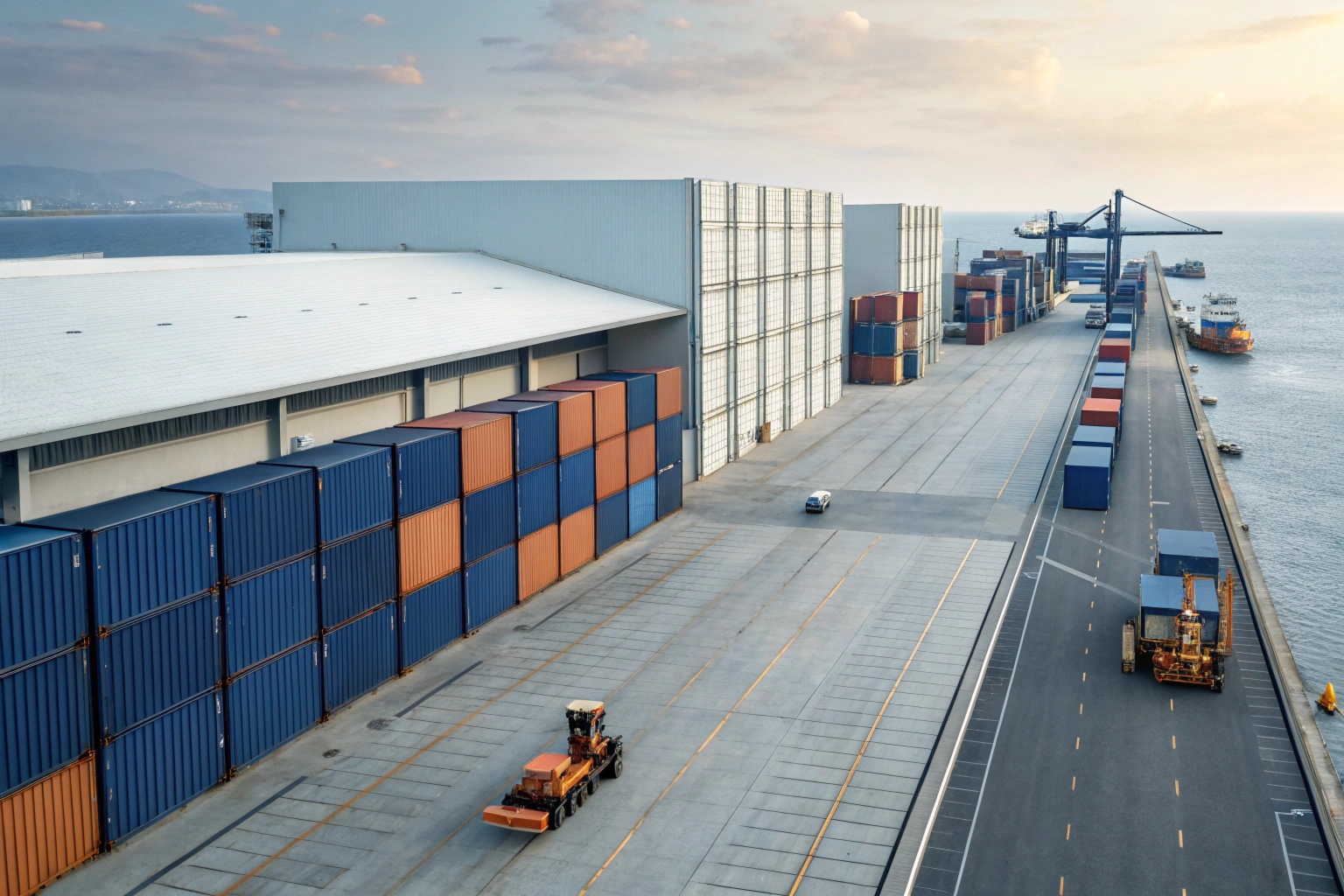
A bonded warehouse 8 is a secured building in a special customs zone where goods are stored before they are officially "imported" into the country. For a business like yours that deals in high-value, heavy industrial parts, this is a financial game-changer.
Improving Your Cash Conversion Cycle
Think about the traditional process. You pay for the goods. You pay for the shipping. Then, the moment the ship hits the US port, Uncle Sam wants his tariff duties. If you are importing from China, those tariffs can be substantial. You have to write a huge check to Customs, but you haven’t sold the parts yet. You might not sell them for three months. That is cash sitting dead on your balance sheet.
With a bonded warehouse:
- We ship the goods to a bonded facility in the US.
- The goods sit there. You pay $0 in duties.
- You find a buyer for 10 track groups.
- You pull those 10 groups out of the warehouse.
- Now you pay the duty, only on those 10 groups, using the money the customer just paid you.
This significantly improves your Cash Conversion Cycle 9.
Strategic Re-Exporting
Another massive advantage is re-exporting. Suppose you are based in the US but you also have customers in Canada or Mexico. If you import goods into a regular US warehouse, you pay US taxes. If you then ship them to Canada, you might have to pay Canadian taxes too (or file complex paperwork to get a refund).
In a bonded warehouse, the goods never technically entered the US commerce system. If you ship them from the US bonded warehouse to Mexico, you generally do not pay US duties at all. You only pay the Mexican duties. This makes your facility a true international distribution hub without the double taxation 10 penalty.
Is It Right for You?
Using a bonded warehouse does come with storage fees and administrative requirements. The inventory must be strictly tracked. However, for a high-volume distributor, the savings on holding costs usually outweigh these fees. It allows you to hold a larger inventory "locally" (technically in limbo) so you can react fast, without the massive upfront tax bill.
Summary of Benefits
- Cash Flow: Keep your cash in your bank, not the government’s, until the sale is made.
- Speed: Goods are physically near your customers, ready for quick delivery.
- Flexibility: Option to re-export to neighboring countries without double duties.
Conclusion
Multi-warehouse shipping and bonded stocks are not just logistics terms; they are financial strategies. They allow you to deliver faster than your competitors while protecting your cash flow. If you are ready to build a supply chain that works as hard as your machines, we should talk.
Footnotes
1. Definition of outsourced logistics services for warehousing and distribution. ↩︎
2. How to calculate the total price of a product upon arrival. ↩︎
3. A strategy to integrate supply chain planning and inventory management. ↩︎
4. Phenomenon where demand fluctuations increase up the supply chain. ↩︎
5. Buffer inventory held to prevent stockouts during demand spikes. ↩︎
6. Long-term agreement for multiple delivery dates over a period. ↩︎
7. Expenses related to materials used in the production process. ↩︎
8. Secure facility for storing dutiable goods without immediate tax payment. ↩︎
9. Metric expressing the time to convert inventory investments into cash. ↩︎
10. Income taxes paid twice on the same source of income. ↩︎