

I see the frustration on my clients’ faces when they talk about delayed replies. You send an email, and you wait. You ask a question, and the answer is vague. You need clear answers to keep your inventory moving.
To communicate effectively, you must align your schedule with Beijing Time (UTC+8) and adopt WeChat for real-time updates. You need to respect the hierarchy and "face" culture by avoiding direct confrontation. Always confirm technical specifications like hardness and dimensions with annotated drawings to bridge language gaps.
I have worked in this industry for many years. I want to share the specific strategies I use. These tips help my international clients get exactly what they need without the headache.
When should I schedule calls for quick responses?
You wake up, check your phone, and see nothing. Your supplier did not reply. Now you have to wait another 24 hours. This cycle kills your efficiency. You need to know exactly when to reach us.
The best time to call Chinese factories is between 8:00 PM and 11:00 PM EST. This overlaps with the start of our workday (8:00 AM to 11:00 AM Beijing Time). You must avoid calling between 12:00 PM and 2:00 PM Beijing Time, as lunch breaks are strictly observed for rest.

Time zones are the first barrier we must break. China is a massive country. It is roughly the same size as the United States. However, we do things differently here. We use only one time zone for the entire country: Beijing Time (UTC+8) 1. It does not matter if the factory is in the east or the west. We all watch the same clock. For you in the United States, this usually means we are 12 to 13 hours ahead. When you are finishing your dinner, our engineers in Fujian are just sitting down at their desks.
If you send an email at 2:00 PM EST, it arrives at 2:00 AM here. The factory is dark. The office is empty. Nobody will see your message until the next morning. If you have an urgent issue with a shipment of track rollers 2, this delay hurts your business. You cannot fix the problem today. You have to wait. To get the fastest response, you should schedule your communication during the "Golden Window." This is your evening and our morning.
The Sacred Lunch Break
You must also understand our lunch culture. In Western business culture, lunch is often a quick sandwich at the desk. In Chinese manufacturing, the lunch break is sacred. Between 12:00 PM and 2:00 PM, the factory floor goes silent. The lights in the office turn off. Workers and managers take a nap. This is not laziness. It is a way to recharge for a long afternoon. If you call during this time, nobody will answer. If they do answer, they might be groggy. I always tell my clients to respect this window. It is better to send a detailed message and wait for us to wake up at 2:00 PM.
Asynchronous Workflows
Since we cannot always speak live, we need a good system. We call this asynchronous work 3. This means you send work while we sleep, and we do the work while you sleep. I recommend you send complex requests at the end of your workday. For example, you might need new design drawings for a custom idler. Send the request before you leave the office. This gives my technical team a full day to review it. Then, when you wake up the next morning, the answers are waiting in your inbox. This cycle keeps the project moving 24 hours a day.
Here is a simple chart to help you plan your calls:
| Your Time (EST) | My Time (Beijing) | Activity Status | What You Should Do |
|---|---|---|---|
| 8:00 AM – 5:00 PM | 8:00 PM – 5:00 AM | Factory Closed | Leave email messages only. Do not expect a reply. |
| 8:00 PM – 11:00 PM | 8:00 AM – 11:00 AM | Best Time | Call now. Staff is fresh and active. |
| 12:00 AM – 2:00 AM | 12:00 PM – 2:00 PM | Lunch Break | Do not call. Everyone is resting. |
| 2:00 AM – 6:00 AM | 2:00 PM – 6:00 PM | Afternoon Work | Good for replies, but urgency drops. |
How do I confirm technical details to avoid misreads?
A wrong dimension on a sprocket is a disaster. It can ruin your reputation. You cannot afford vague promises. Your customers rely on precise fitment for their machines.
Never rely on text alone for technical specifications. Always use annotated CAD drawings and photos to define dimensions. Request a "sealed sample" for mass production orders. This physical standard overrides written descriptions and eliminates translation errors regarding material grades or heat treatment depths.
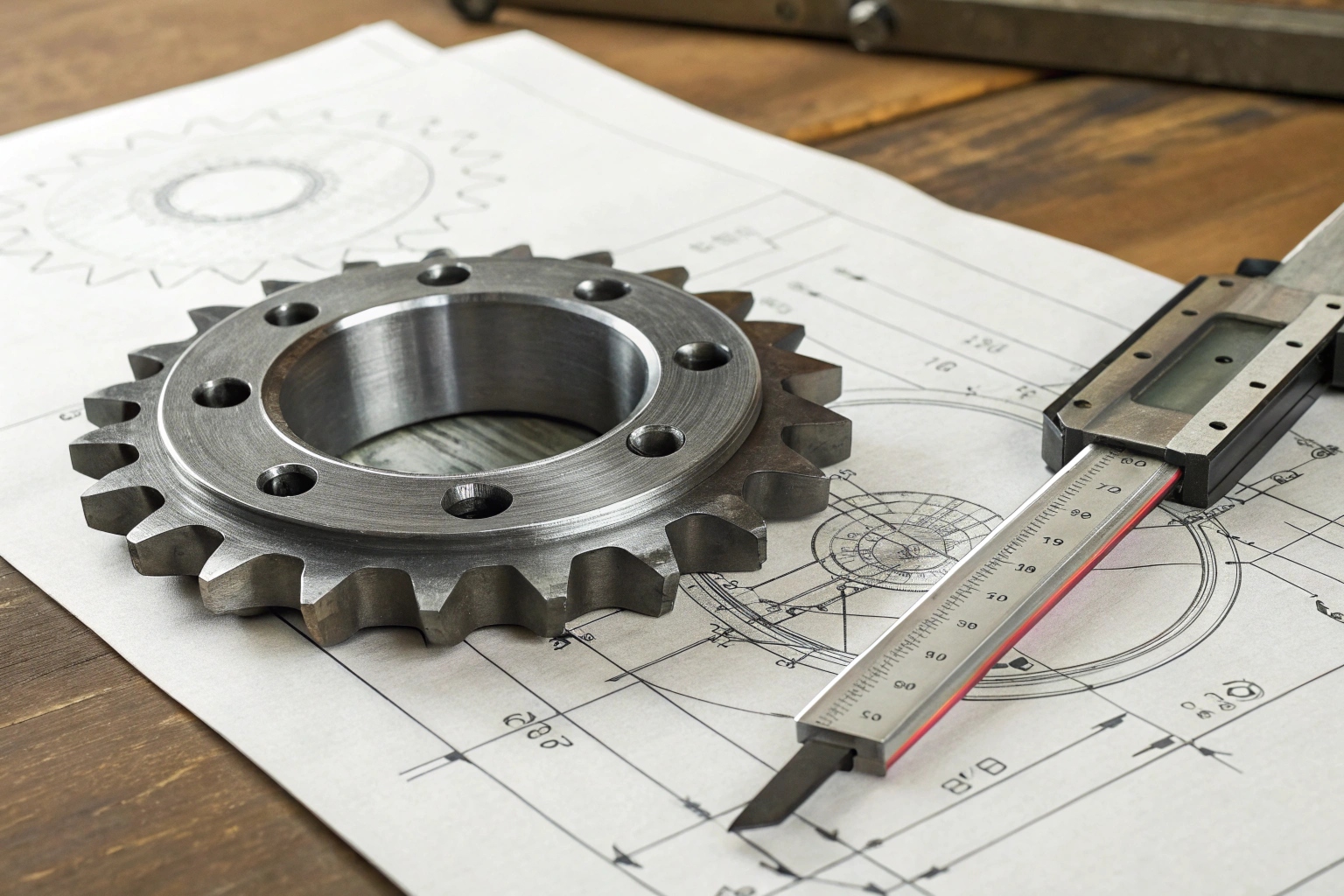
In the heavy machinery business, a small misunderstanding costs a lot of money. English is the international language of business. However, many factory workers use translation software to read your emails. These apps are getting better, but they still struggle with technical terms. If you write "hard steel," the software might translate it simply as "strong." This is dangerous. To a polite sales rep, "strong" might mean standard steel. To you, it means a specific Rockwell C hardness 4.
I always tell my team that numbers and lines do not lie. When you want to confirm a specific size for a track chain, do not just write it in an email. Send a diagram. Circle the critical area in red. Write the dimension next to it. For example, if the bolt hole size on a drive sprocket is critical, send a photo of a caliper 5 measuring that hole. Ask the factory to do the same. This visual confirmation bridges the language gap instantly. It creates a record that we both understand perfectly.
The Concept of "Face" (Mianzi)
You also need to understand the concept of "Face" 6 (Mianzi). In Chinese culture, people do not like to say "no" directly. It feels rude. It causes the other person to lose face. If you ask, "Can you make this custom bushing by Friday?" a supplier might say, "We will try our best." In the US, this sounds like a promise. In China, it often means, "It is very unlikely, but I do not want to upset you."
To get the truth, you must ask open-ended questions. Do not ask, "Can you do X?" Instead, ask, "How much time do you need to finish X?" This forces the supplier to give you a real number without feeling like they are refusing you. It removes the pressure and lets them be honest.
The Sealed Sample Strategy
For large orders, the most powerful tool is the "Sealed Sample." Before we start mass production of a new bucket tooth or roller, I send one perfect sample to the client. You test it. You sign your name on it and send it back, or keep a duplicate. If there is ever a dispute about quality later, we look at that sample. It settles the argument immediately. The physical object is worth more than ten pages of contracts.
Technical Verification Checklist
| Item to Verify | Method to Use | Why It Matters |
|---|---|---|
| Dimensions | Annotated PDF/CAD drawings | Translation software misinterprets descriptions of shape. |
| Material Grade | Chemical Composition Report 7 | "High quality" is subjective; chemical data is factual. |
| Hardness | Heat Treatment Curves/Data | Ensures the part won’t wear out prematurely. |
| Finish/Color | Photos of Paint Samples | Prevents "yellow" from becoming "orange" in production. |
Should I use WeChat for faster coordination?
Email feels formal and safe. But it is often too slow for modern business. You might wonder if an instant messaging app is professional enough for big orders.
Yes, you should use WeChat for daily updates and relationship building. While email is best for formal contracts, WeChat offers faster responses and built-in translation. It allows you to build "Guanxi" (relationships) and get "live" video proof of stock, which is standard in Chinese business.
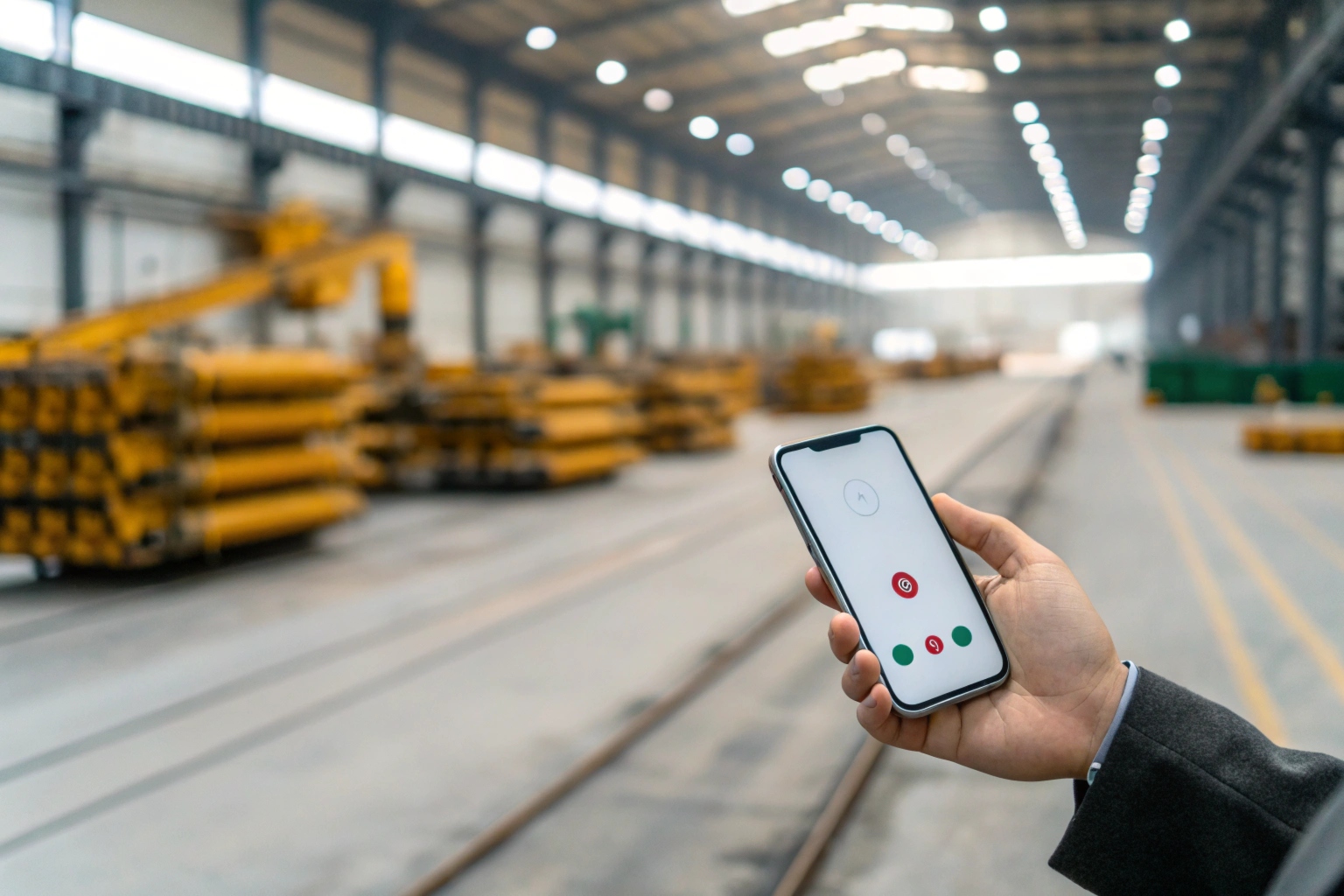
I use email for contracts, invoices, and official specs. But for everything else, I use WeChat 8. In China, WeChat is not just for chatting with friends. It is the most important business tool we have. Almost every supplier, logistics agent, and engineer uses it constantly. If you want a reply in 10 minutes instead of 24 hours, you need to be on this platform.
Speed and Translation
WeChat has a very useful "Translate" button. If a factory engineer sends you a message in Chinese about a delay with a casting mold, you can tap one button to read it in English. It is fast and usually accurate enough for quick updates. This speed helps us solve small problems before they become big ones. If I am on the factory floor and see a packaging issue, I can snap a photo and send it to you instantly. You can say "fix it" or "it is okay" right then. If we did this by email, the goods might be packed and shipped before you even saw the message.
Live Video Verification
One of the biggest risks in buying from overseas is not knowing if the stock is real. Some trading companies pretend to be factories. They might tell you they have 500 track shoes in stock when they actually have zero.
WeChat solves this. You can ask for a live video call. You can say, "Show me the warehouse right now." A real manufacturer like us will be happy to walk you through the aisle and show you the parts. We can zoom in on the date stamps. This builds huge trust. You can see the dust on the boxes. You can hear the machines running. You cannot fake a live video call.
Building Guanxi (Relationships)
Business in China is personal. We work harder for people we like and trust. This concept is called Guanxi 9. WeChat is perfect for this. It allows for a little bit of casual chat. You can share a picture of your job site. I might share a picture of our team dinner.
These small interactions make you a human to us, not just an order number. When production is tight and everyone wants their parts, the factory boss prioritizes the client he has a relationship with. A simple "thumbs up" emoji or a holiday greeting on WeChat goes a long way. It creates a connection that email cannot match.
What holidays could delay my approvals?
Unexpected factory shutdowns can destroy your supply chain. You need to predict these pauses. You must keep your warehouse stocked for your customers.
The Chinese New Year (January or February) and Golden Week (October) cause the biggest delays. Production often stops for two to three weeks during New Year. You must place orders at least two months in advance to avoid the pre-holiday rush and logistics bottlenecks.
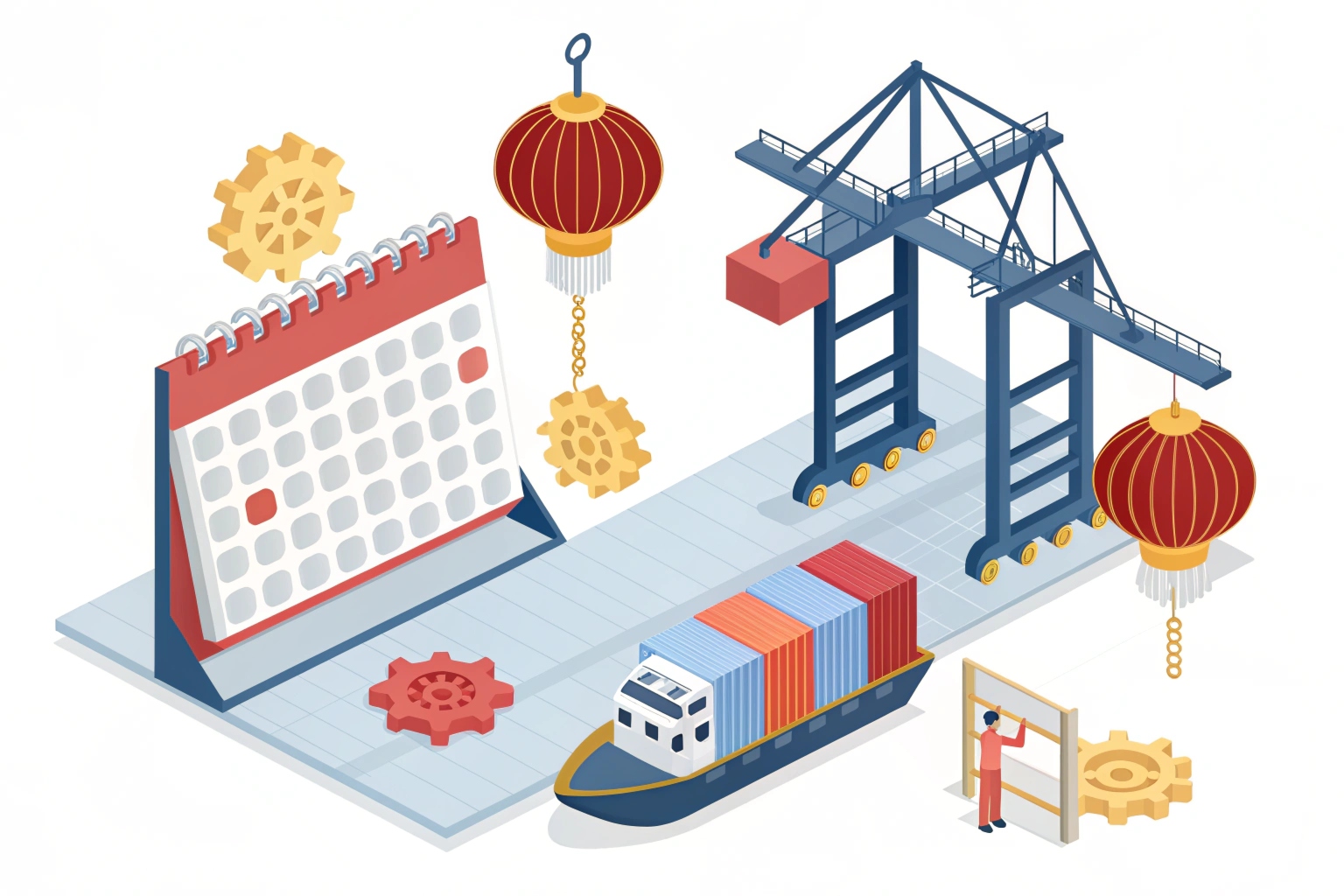
If you do not plan for Chinese holidays, you will run out of stock. The impact of these holidays is much bigger than a standard bank holiday in the US. In the US, a holiday is one day off. In China, major holidays are mass migrations.
The Chinese New Year (CNY) Impact
This is the most critical event of the year. The official holiday might only be seven days, but the disruption lasts for a month. Workers travel thousands of miles to their hometowns. They often leave two weeks before the holiday to beat the traffic. They might return two weeks after the holiday. This means production lines are empty for a long time.
Also, raw material suppliers (like steel mills) close down too. Even if my factory stays open, I cannot make undercarriage parts if I cannot get steel.
You must place your orders for Q1 (first quarter) by November. If you wait until January, your order will sit in a pile until March. And when the factory opens again, there is a backlog. Everyone is fighting for space on the ships. Shipping prices go up, and space is limited. The Chinese New Year 10 logistics crunch is real and unavoidable.
Golden Week and Other Breaks
The second biggest break is National Day (Golden Week) in early October. This is usually a full week off. While not as disruptive as CNY, it still stops shipping and production.
There is also Labor Day in May and the Dragon Boat Festival in June. These are shorter, usually 3 days. They affect response times but usually do not stop the supply chain completely.
The "Pre-Holiday Rush" Quality Risk
There is a hidden danger before these holidays. Everyone tries to rush their orders out before the factory closes. Workers are tired and rushing to finish so they can go home. This is when mistakes happen.
If you push a factory too hard to ship "before the holiday," quality control might slip. It is safer to plan ahead so your order is finished comfortably before the rush begins. I always advise my clients to keep a buffer stock in their US warehouse to cover these periods.
Holiday Planning Guide
| Holiday | Approximate Date | Duration | Impact Level | Action Required |
|---|---|---|---|---|
| Chinese New Year | Jan/Feb (Lunar) | 3-4 Weeks | Severe | Order 60-90 days in advance. |
| Golden Week | Oct 1st – 7th | 1 Week | High | Ship before Sept 25th. |
| Labor Day | May 1st – 5th | 3-5 Days | Medium | Expect delayed replies. |
| Dragon Boat | June (Lunar) | 3 Days | Low | Minor shipping delays. |
Conclusion
To succeed with Chinese factories, you must adapt to our environment. Align your calls with our morning hours. Use visuals to confirm every technical detail. Use WeChat to build speed and trust. And always order early before the major holidays. These simple steps will make your supply chain smooth and reliable.
Footnotes
1. Explanation of UTC+8 standard time used throughout mainland China. ↩︎
2. Definition and function of track rollers in heavy machinery. ↩︎
3. Guide to managing workflows across different time zones effectively. ↩︎
4. Technical scale for measuring the indentation hardness of steel. ↩︎
5. Overview of precision instruments used for measuring object dimensions. ↩︎
6. Insight into the sociological importance of reputation in China. ↩︎
7. Document certifying the chemical properties of metal materials. ↩︎
8. Official site for the primary communication tool in Chinese business. ↩︎
9. Definition of the system of social networks and relationships. ↩︎
10. Analysis of shipping delays and logistics during the holiday. ↩︎