

Are you tired of seeing your heavy equipment sit idle because of a cracked track chain or a seized roller? I have spent years helping buyers avoid the nightmare of premature part failure.
Common quality defects in excavator undercarriage parts include cracks (fatigue and weld-related), hardness variance from poor heat treatment, and dimensional drift causing misalignment. Prevention requires strict material selection, controlled induction hardening, and 100% magnetic particle inspection to ensure components withstand high-impact mining and construction environments.
The difference between a machine that runs for 5,000 hours and one that breaks in 500 hours usually comes down to things you cannot see with the naked eye. Let me walk you through the technical red flags and how we stop them at the factory level so you can protect your bottom line.
Which process steps cause roller cracking?
I often talk to buyers who are frustrated when a brand-new roller splits open after just a few weeks in the field. It is a massive headache that stops work and costs money.
Roller cracking is usually caused by improper welding pre-heating, excessive quenching speeds during heat treatment, or using low-grade scrap steel with high impurities. To prevent this, manufacturers must use high-quality boron steel and implement a stepped tempering process to relieve internal stresses after forging and welding.

The Root Causes of Structural Failure
When I look at a cracked roller, the first place I check is the weld seam. In many cheap factories, workers skip the pre-heating stage to save time. When you weld cold metal, the temperature difference is too high. This creates a Heat Affected Zone 1 that is extremely brittle. Under the weight of a 30-ton excavator, that brittle zone will snap.
Another major culprit is the quenching process. If the water or oil used to cool the part is too cold, the outside of the roller shrinks too fast while the inside is still hot. This creates internal tension. If the factory doesn’t follow up with immediate tempering—which is like a "massage" for the metal molecules to relax—the part is a ticking time bomb.
Materials Matter
We use 40Mn2 or 50Mn for our roller shells. These materials have the right chemistry to handle the heat. If a supplier uses low-grade scrap steel 2, no amount of heat treatment can fix the fundamental weakness of the metal.
Prevention Strategies for Buyers
| Defect Type | Manufacturing Cause | Prevention Method |
|---|---|---|
| Weld Cracks | No pre-heating | 200°C+ Pre-heating & Slow Cooling |
| Quench Cracks | Cooling too fast | Controlled Polymer Quenchants |
| Stress Cracks | Skipped Tempering | 100% Tempering Cycle (4-6 hours) |
| Internal Flaws | Casting Porosity | Ultrasonic Testing (UT) |
To avoid these issues, I always suggest asking your supplier for their "Heat Treatment Log." A professional manufacturer like Dingtai records the temperature for every batch. If they can’t show you the data, they aren’t controlling the process. We also use Magnetic Particle Inspection 3 (MPI). This uses a special fluid and light to show cracks that are invisible to the eye. If there is a tiny hairline crack, the MPI will make it glow.
How do I control hardness uniformity in heat treat?
One of the most common complaints I hear from David and other procurement experts is that one side of a track link wears out faster than the other. This is a classic sign of uneven hardness.
Hardness uniformity is controlled by maintaining a consistent alloy chemistry (specifically Manganese and Boron levels) and using automated induction hardening machines. Constant monitoring of the "Case Depth"—the thickness of the hardened layer—ensures the part remains wear-resistant even as the surface begins to grind down over time.
Why Hardness Variance Happens
I have seen many small shops use manual flame hardening. A worker holds a torch and moves it along the part. This is a recipe for disaster. If the worker sneezes or moves too fast, the hardness drops. This creates "soft spots." When your excavator is working in rocky soil, those soft spots will wear away instantly, leading to a "wavy" wear pattern that ruins the whole track group.
The Science of the "Case Depth"
Hardness isn’t just about the surface. It is about how deep the protection goes. For a D8 dozer, for example, we look for a case depth of 8mm to 12mm. If the hardening is only skin-deep (1-2mm), the part will look good during the first week, but once that thin layer is gone, the soft metal underneath will fail rapidly.
Technical Specifications for Quality Parts
Hardness Comparison Table
| Component | Surface Hardness (HRC) | Depth of Hardness (mm) | Importance |
|---|---|---|---|
| Track Link | 52 – 58 | 8 – 12 | Prevents rail wear |
| Track Pin | 55 – 60 | 3 – 5 | Reduces internal friction |
| Track Shoe | 42 – 49 | 5 – 8 | Balance of grip and impact |
| Sprocket | 50 – 56 | 6 – 10 | Prevents "shark-fin" teeth |
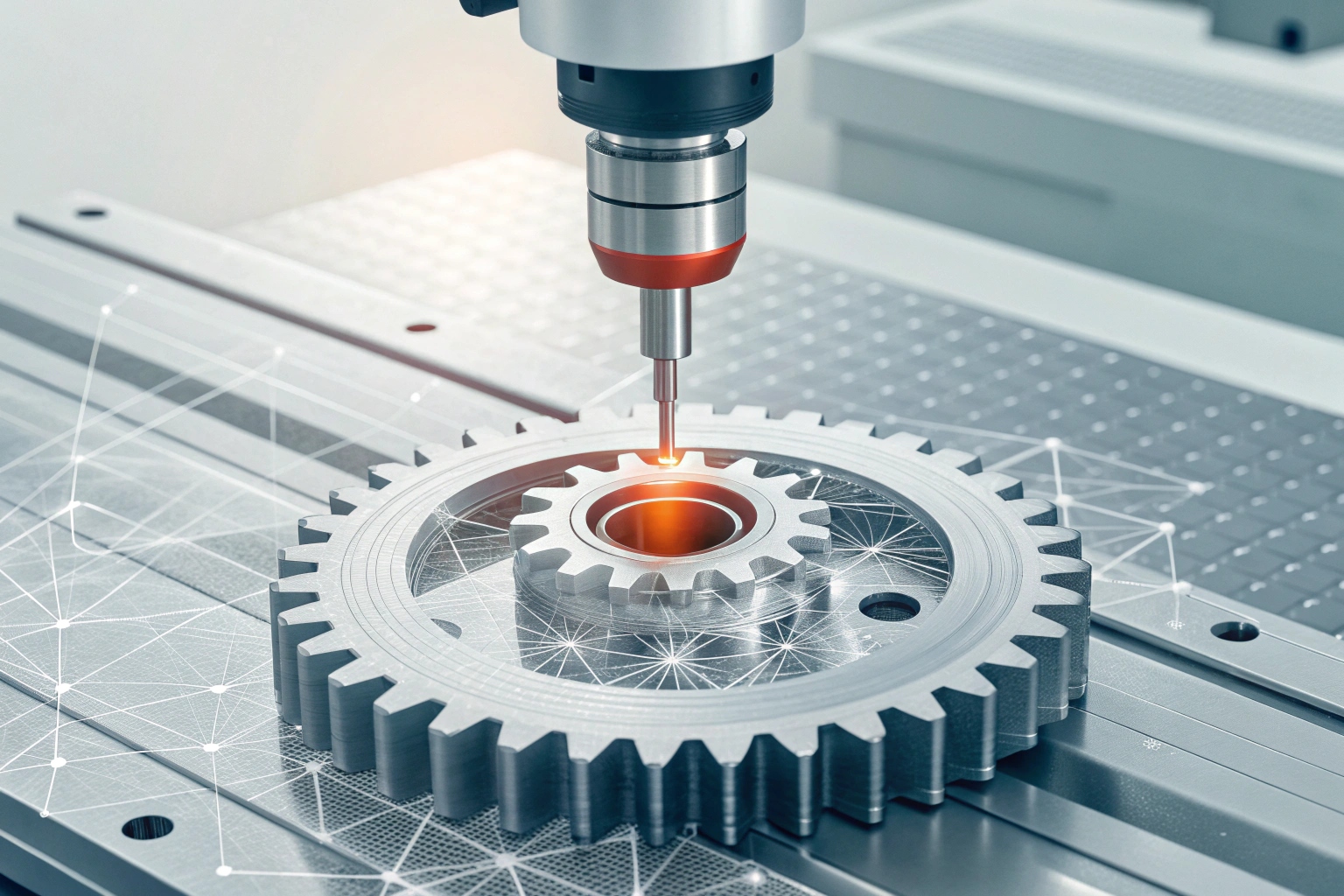
At Dingtai, we use induction hardening machines 4. The machine moves at a precise speed, and the water spray is constant. This ensures that every millimeter of the track link has the same Rockwell Hardness 5 (HRC) value. We also perform "Hardness Mapping." This means we cut a sample part in half and test the hardness from the surface all the way to the core to make sure the transition is smooth.
What machining controls prevent runout issues?
Have you ever felt a vibration in your machine that just wouldn’t go away? Or noticed that a roller is wearing heavily on one side? This is usually caused by "runout" or dimensional drift during the machining process.
To prevent runout and dimensional drift, manufacturers must use high-precision CNC lathes and dedicated boring fixtures. Regular calibration of measuring tools and "First Article Inspection" (FAI) are essential to ensure that centerlines of bores and outer diameters are perfectly aligned within a 0.05mm tolerance.
The Danger of Dimensional Drift
I often explain to my clients that undercarriage parts are like a giant puzzle. If the hole for the track pin is even 0.5mm off-center, the entire track chain will "snake" as it moves. This creates massive side-loading on your idlers and rollers. It doesn’t just wear out the chain; it destroys every other component in the system.
Tools of the Trade
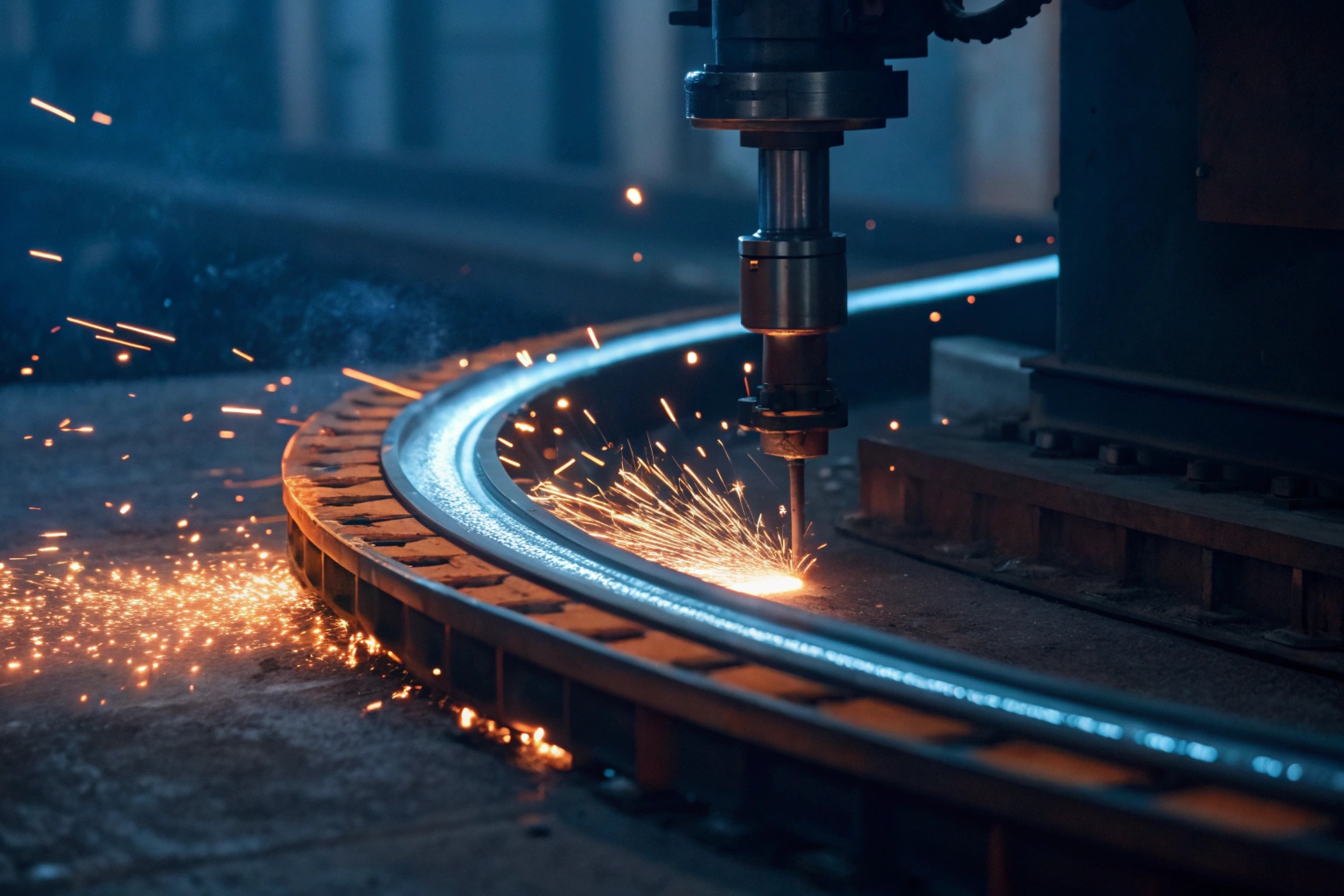
We use Coordinate Measuring Machines 6 (CMM) to check our work. A CMM uses a very sensitive probe to map the part in 3D. It compares the physical part to the original blueprint. If the holes are out of position by the width of a human hair, the machine flags it.
Common Machining Defects and Solutions
- Bore Oversize: Often caused by worn-out cutting tools. Solution: Automatic tool life management systems.
- Eccentricity: When the inner and outer circles don’t share the same center. Solution: Using "One-Stop" machining where both sides are finished in one clamping.
- Pitch Inconsistency: When the distance between track links varies. Solution: Dedicated jigs that lock the links in place during assembly.
By using dedicated fixtures, we ensure that every part is held in the exact same position every time. We also replace our cutting tips frequently. Some factories try to squeeze every last bit of life out of a tool, but that leads to rough surface finishes and "chatter marks." A smooth surface finish is critical for seals to work properly. If the surface is rough, it will chew up the rubber seals 7, the oil will leak out, and the roller will seize.
Should I define corrective actions in my SLA?
When I talk to professional buyers like David, the conversation eventually turns to the Service Level Agreement (SLA). Many people focus only on price, but the real pros focus on what happens when things go wrong.
You should absolutely define corrective actions in your SLA. A strong agreement should include specific "Root Cause Analysis" (RCA) requirements for any failure over a 1% threshold. It must also outline clear timelines for replacement parts, labor compensation for major failures, and a "Continuous Improvement" clause to prevent the same defect from happening twice.

Why a Clear SLA is Your Best Insurance
I have seen many buyers lose thousands of dollars because their contract was too vague. If a batch of rollers fails, you don’t just need new rollers; you need to know why they failed. A good manufacturer should act as your partner. When we receive a report of a defect, we don’t just send a replacement. We open a Corrective Action Report 8 (CAR).
Essential SLA Clauses for Undercarriage Parts
| Clause Name | What it Should Cover | Why it Matters |
|---|---|---|
| Warranty Period | 12 months or 2,000 – 3,500 hours | Protects against early-life failure |
| Response Time | 24-48 hours for technical analysis | Minimizes machine downtime |
| Material Traceability | MTRs (Material Test Reports) for all batches | Proves the quality of the raw steel |
| Defect Threshold | Action plan triggered if >1.5% failure | Identifies systemic quality issues |
Building a Long-Term Partnership
I always tell my clients that a quality issue is a test of a supplier’s character. In our factory in Fujian, if we find a dimensional drift 9 in a batch, we stop the line immediately. We notify the customer before they even find the problem. This transparency is what builds trust.
Your SLA should also require the supplier to provide Process Control Charts 10. This allows you to see if their quality is staying steady or if it is starting to drift. If you see the hardness numbers starting to drop over three months, you can tell the supplier to fix their heat treat before the parts ever leave the factory. This proactive approach is how you manage a global supply chain without losing sleep.
Conclusion
Preventing quality defects in undercarriage parts requires a mix of high-grade materials, precise heat treatment, and strict machining tolerances. By focusing on these technical details, you ensure machine reliability.
Footnotes
1. Explanation of how welding heat alters the microstructure of nearby metal. ↩︎
2. Overview of how impurities in scrap steel affect structural integrity. ↩︎
3. How magnetic particle inspection detects surface and sub-surface discontinuities. ↩︎
4. Insights into using induction technology for consistent surface hardening. ↩︎
5. Standardized testing for measuring the hardness depth of industrial components. ↩︎
6. Using 3D coordinate measurement to ensure parts meet blueprint specifications. ↩︎
7. Role of high-performance seals in protecting internal mechanical components. ↩︎
8. Importance of documenting corrective actions to prevent recurring quality failures. ↩︎
9. Impact of measurement accuracy and drift on mechanical part alignment. ↩︎
10. Guide to using statistical tools to monitor production quality stability. ↩︎