
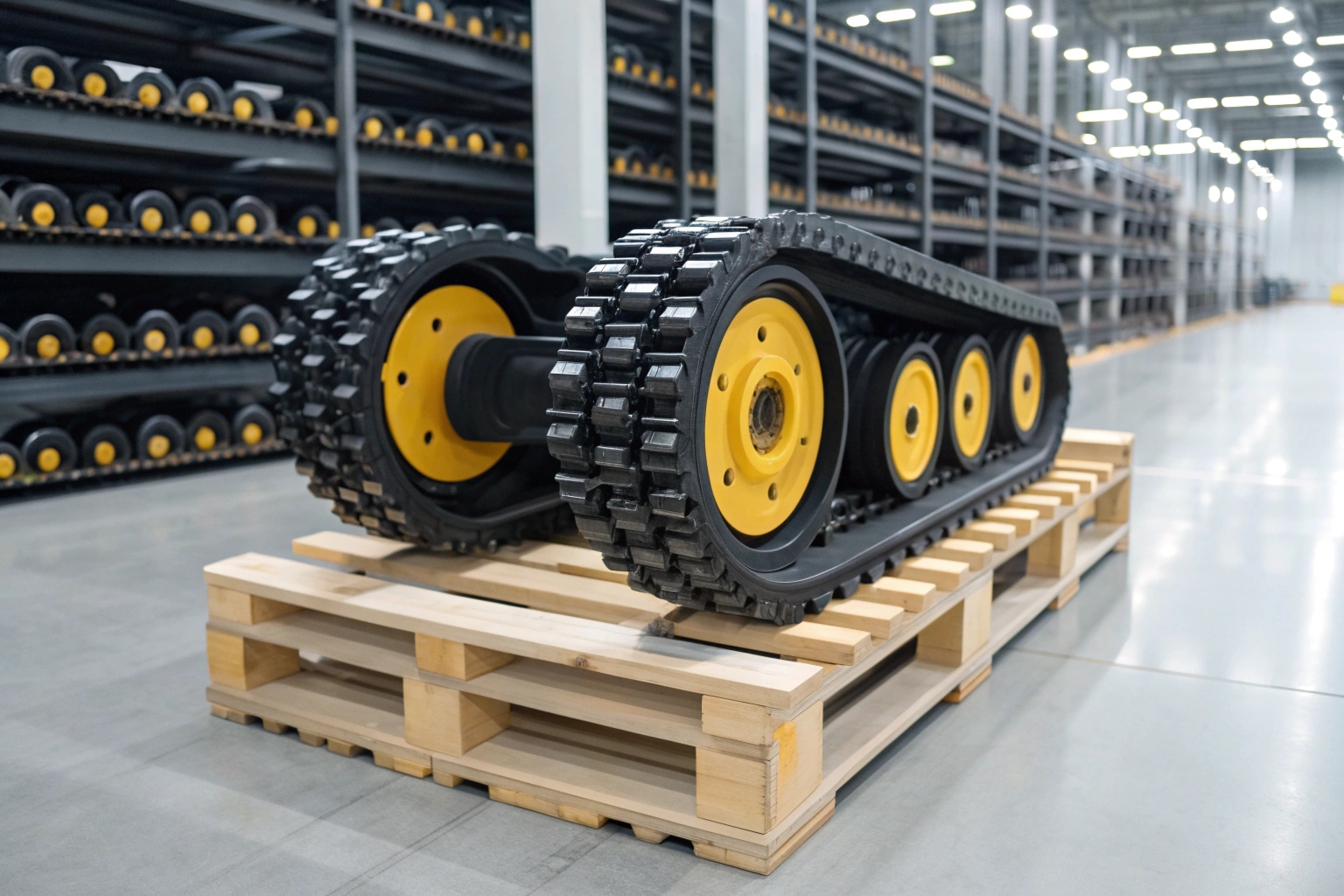
I know that every hour your bulldozer sits idle costs you money, and installing new parts incorrectly is even worse because it destroys your investment immediately. Let’s talk about the support you actually need.
Most international suppliers provide comprehensive remote guidance, including digital manuals, torque charts, and video tutorials, as a standard free service. Onsite technical support is generally a paid option requiring specific contract terms, covering travel and labor for major installations or fleet overhauls.
Finding a supplier who simply ships metal is easy, but finding one who ensures that metal fits and performs is the real challenge. You need to know exactly what happens after the shipping container arrives at your yard and how we can help you avoid costly mistakes.
Will they offer torque specs and assembly manuals?
I have seen too many track chains fail early simply because a mechanic guessed the bolt tightness, and you should never have to guess when installing critical heavy machinery components.
Yes, professional manufacturers always provide detailed technical data sheets, including torque specifications and assembly manuals. We consider these documents essential for the warranty and longevity of components like track rollers and drive sprockets.
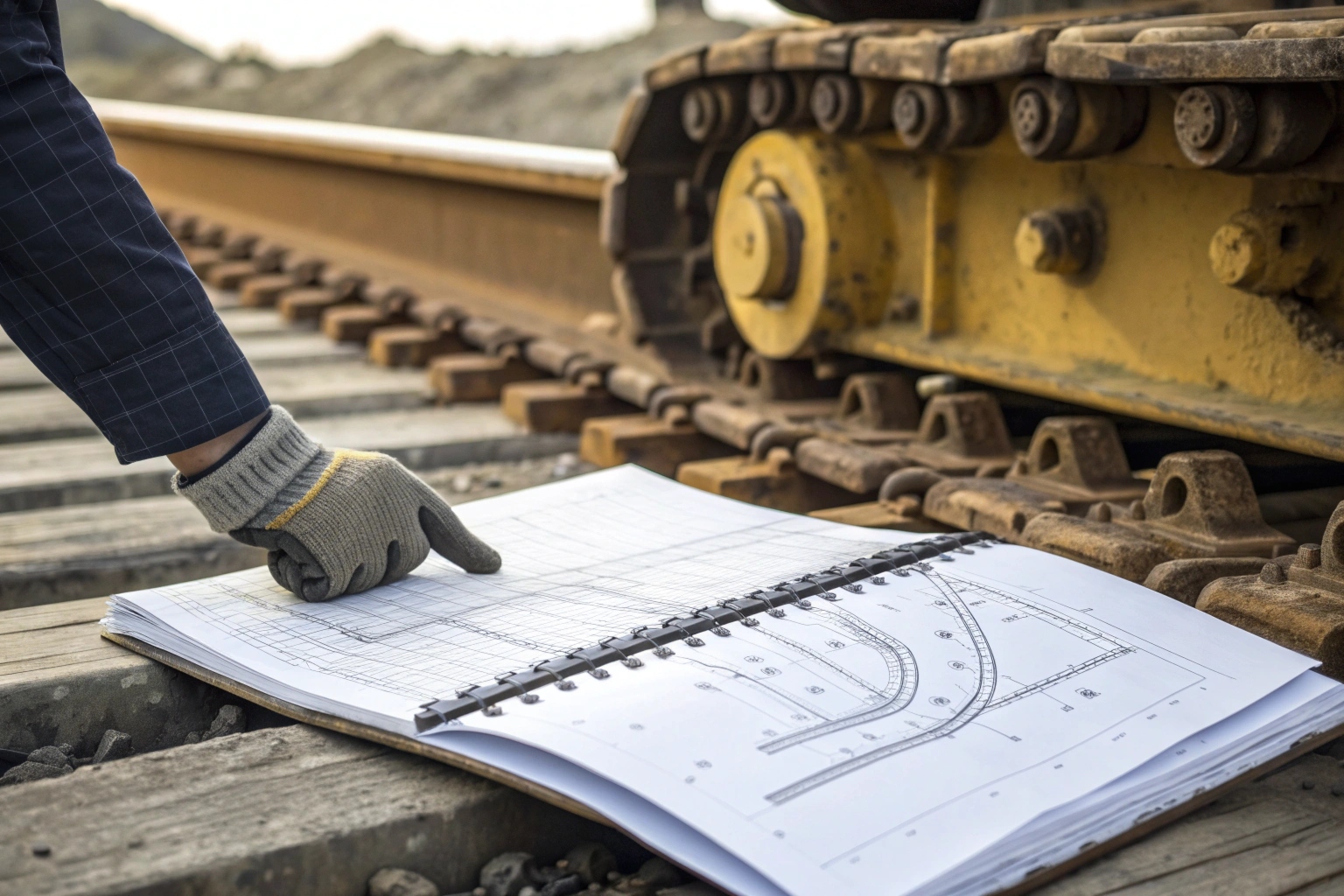
When you buy high-quality undercarriage parts from China, you are buying precision engineering. However, that engineering only works if the installation follows the rules. A supplier who cannot give you a data sheet is a supplier you should avoid. In my experience at Dingtai, providing the numbers is just as important as providing the steel.
Why Data Matters More Than Metal
The connection between a track shoe 1 and the link assembly relies on extreme pressure. If the bolts are too loose, they will shear off under load. If they are too tight, they will stretch and fail. We provide specific numbers for every bolt size and material grade. This is not just a suggestion; it is a requirement for safety. We also focus on wear limits. A good manual will tell you the exact dimension of a new part and the dimension at which it needs replacement. This helps your maintenance team plan ahead. You do not want to change a part too early and waste money, but you also cannot wait until it breaks the rest of the system.
Comparing Supplier Documentation Standards
You can spot a bad supplier by their paperwork. If they only send you a commercial invoice 2 and a packing list 3, you are in trouble. We believe that technical documentation is part of the product. Look at this comparison to see what you should expect from a top-tier manufacturer versus a generic trading company.
| Feature | Generic Trading Company | Professional Manufacturer (Like Dingtai) |
|---|---|---|
| Torque Specs | Often missing or generic | Specific to bolt grade and size |
| Assembly Guide | None or poorly translated | Step-by-step with diagrams |
| Material Reports | "Steel" | Full heat treatment 4 & hardness data |
| Update Frequency | Never | Updated with OEM design changes |
Your team needs clear, simple English instructions. We make sure our documents are readable for the guys in the shop, not just engineers in an office. This reduces mistakes and speeds up the work. I have had customers call me to thank me just for the clarity of our bolt torque chart because it saved them from stripping a thread on a $500 sprocket. That is the kind of value we add.
Can I schedule video support during first installs?
Sometimes, a manual isn’t enough because you are in the field, and you need a second pair of expert eyes right now to check a fitment issue.
You can absolutely schedule real-time video support with responsive suppliers. We use tools like WhatsApp or Zoom to walk your team through the first installation, ensuring every idler and chain is positioned correctly before you start the engine.

The world has changed. Ten years ago, if you had a problem, you sent an email and waited three days. Today, we solve problems in minutes using the camera in your pocket. This is a game-changer for international business.
How Remote Inspections Work
When you receive your first container of track rollers 5 or idlers from us, we want you to feel confident. We set up a time that works for your time zone. I know the time difference between the US and China is large, but our sales and technical team works flexible hours. We are often up late to make sure your morning starts smoothly. During a video call, we can look at the wear pattern on your old parts. This tells us a story. Maybe your tension was wrong, or maybe the operator is driving too fast in reverse. We can then watch as you mount the new part. We check the alignment visually. We can hear the sound of the fitment. These small details prevent massive failures later.
Troubleshooting in Real-Time
Imagine you are trying to install a new drive sprocket 6, and the bolt holes do not seem to line up perfectly.
- Without video: You struggle for hours, maybe drill the holes bigger (bad idea), or send an angry email.
- With video: You call us. We see the issue. We tell you to rotate the sprocket 180 degrees or clean the hub surface. The problem is solved in five minutes.
We also use this time to verify that you have the right tools. Installing a track pin requires a press, not a sledgehammer. If we see unsafe practices, we will stop you. This protects your staff and preserves your warranty.
Video Call Checklist
To make the most of our time, we ask clients to prepare a few things before the call. This ensures we can diagnose the issue immediately.
| Preparation Item | Why it is needed |
|---|---|
| Clean Surface | Mud hides cracks and alignment marks. |
| Good Lighting | We need to see the serial numbers and fitment gaps. |
| Measuring Tool | Calipers or tape measure to show us dimensions live. |
| Connection | WiFi or 4G signal at the machine side. |
Do they train my team on proper track tensioning?
Tracks that are too tight break under pressure, while tracks that are too loose slip off the idler, so your team needs to know the sweet spot for every machine.
Reliable suppliers do not just sell iron; they share knowledge. We offer training modules and guides specifically for track tensioning, helping your maintenance crew understand the specific requirements for different soil conditions and machine models.
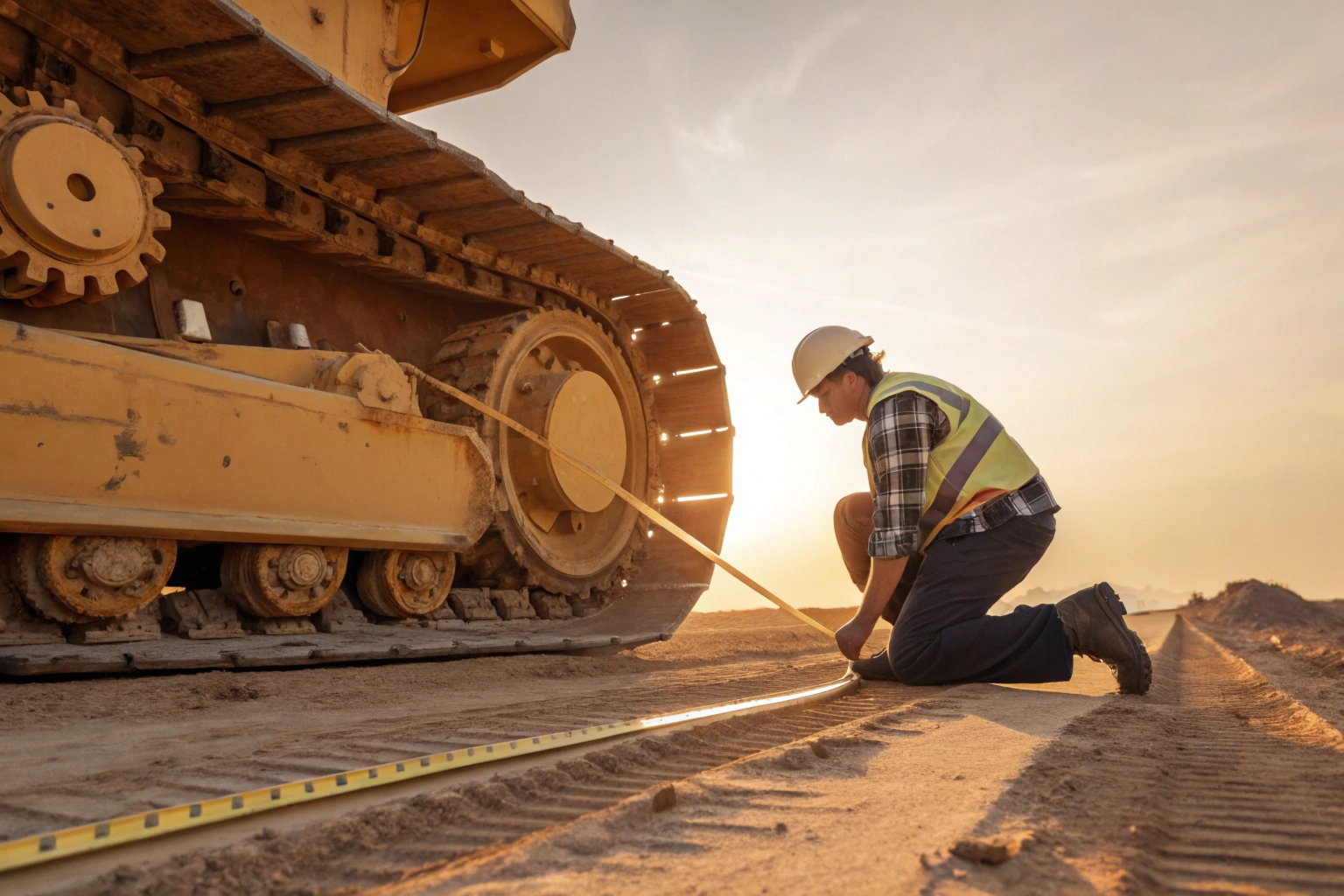
Track tension 7 is the single most important factor in the life of your undercarriage. It is also the most common thing people get wrong. A lot of operators set the tension once and never check it again. This is a costly mistake.
The Science of Tension
We teach your team that tension is not a fixed number. It changes based on where the machine is working. If you are working in soft mud, the mud packs into the links. This tightens the chain naturally. If you start with a tight chain, the mud will cause it to snap. You need to run looser in mud. If you are on hard rock, a loose chain will thrash around. It will damage the rollers and the idler. You need a tighter chain. We provide simple charts that your operators can keep in the cab.
Tension Adjustment Guide based on Terrain
We break it down simply so your operators can make quick decisions. This table is something we encourage our clients to print out and stick on the wall of their maintenance shed.
| Terrain Condition | Tension Requirement | Why? |
|---|---|---|
| Hard/Rocky Ground | Standard/Tight | Prevents excessive movement and impact damage. |
| Soft Soil/Sand | Slightly Loose | Reduces friction and wear on bushings 8. |
| Mud/Clay | Loose | Allows space for material packing without stretching the chain. |
Training Resources We Provide
We do not expect you to be the teacher. We send you videos that show exactly how to measure the "sag" of the track. We show you where to place the straight edge. We explain how to use the grease cylinder 9 to adjust the idler. This training protects your bottom line. A correctly tensioned track lasts 50% longer than a poorly tensioned one. That means you buy parts from me less often. That might sound bad for my business, but it is good for our relationship. I want you to be profitable so you stay a customer for twenty years, not just one order. I recently helped a client in Nevada who was burning through tracks every 1500 hours. After our tension training, they are now getting 3000 hours. That is real money saved.
Are service visits included in my contract?
You might want a factory engineer to physically visit your site because this is the highest level of trust, but it involves significant logistics and costs.
Onsite service visits are rarely included in standard purchasing contracts due to high travel costs. However, for large-scale OEM orders or custom projects, we can negotiate paid site visits for pre-inspection, installation supervision, and final system testing.
We must be honest about the economics of global trade. I cannot fly an engineer from Fujian to Texas to install one set of rollers. The flight ticket would cost more than the profit on the parts. However, there are times when an onsite visit is necessary and valuable.
When Onsite Support Makes Sense
We usually reserve onsite support for "Project Level" business. If you are an OEM developing a new machine and using our undercarriage, we will be there. We need to see how our parts integrate with your hydraulic system. If you are a large distributor receiving your first major stock order (say, 5-10 containers), we might send a representative. This person helps you organize the warehouse. They teach your sales team how to identify the parts. They show your mechanics the quality control 10 points. This is an investment in our partnership.
The Cost Structure of Site Visits
If you require onsite support for a specific installation, we can do it, but we need to define the terms in the contract.
- The Fee: Usually calculated per day (Per Diem).
- Expenses: You cover the flights, hotel, and local transport.
- Liability: We guide and supervise. Your local team does the heavy lifting. We are there for expertise, not manual labor.
Service Comparison: Remote vs. Onsite
Here is how you should decide what you need. It often depends on the scale of the problem and the skill level of your local team.
| Service Type | Cost | Response Time | Best Use Case |
|---|---|---|---|
| Remote (Video/Docs) | Free | Immediate / Same Day | Routine installs, troubleshooting, maintenance questions. |
| Onsite (Physical) | High (Paid) | Weeks (Visa/Travel) | New OEM product launch, large fleet audits, complex failures. |
| 3rd Party Local | Medium | Days | Standard labor when you lack internal mechanics. |
Most of the time, our remote support is faster and more effective than waiting for a flight. But know that if the project is big enough, we are willing to travel. We are partners, and we go where the business needs us. We have sent engineers to mines in South America and construction sites in the Middle East. It is part of our commitment to being a global brand, not just a local factory.
Conclusion
Technical support defines the difference between a vendor and a partner. Whether through free video guidance or paid onsite engineering, we ensure you have the knowledge to install our parts correctly.
Would you like me to send you a sample of our track tensioning guide so you can review our technical standards?
Footnotes
1. Importance of selecting the correct track shoe for machinery. ↩︎
2. Definition and purpose of a commercial invoice in trade. ↩︎
3. Understanding the function of a packing list for shipping. ↩︎
4. Technical overview of heat treatment processes for steel durability. ↩︎
5. Maintenance guide for inspecting and replacing track rollers. ↩︎
6. Guide to undercarriage parts including drive sprockets and maintenance. ↩︎
7. Step-by-step instructions for measuring and adjusting track tension. ↩︎
8. Best practices for lubricating bushings to reduce wear. ↩︎
9. How to use a grease cylinder for track adjustments. ↩︎
10. Principles of quality control in manufacturing and engineering. ↩︎