
You have spent years building your reputation in the heavy machinery aftermarket. You invested thousands of dollars engineering a reinforced track link 1 that lasts longer in rocky terrain. Then, six months later, you see a listing on a global wholesale site. It is your product, your design, maybe even using your photo, but it is being sold by a factory you have never heard of for 20% less than your cost. This nightmare scenario is the reason many buyers hesitate to manufacture in China.
Protecting your private brand and tooling IP requires a multi-layer strategy that combines legal protections, strict physical controls, and smart design choices. You must sign a comprehensive NNN agreement (Non-use, Non-disclosure, Non-circumvention) before sharing files, ensure you legally own the molds by paying upfront, and embed your logo directly into the metal casting to prevent unauthorized sales.
At Dingtai, I have sat on the other side of the table for twenty years. I have seen buyers make simple mistakes that leave them vulnerable, and I have helped savvy clients like David build "moats" around their businesses that no copycat can cross. It is not just about trust; it is about verifiable systems. Let me explain exactly how to secure your investment.
Should I sign an NDA and tooling ownership clause?
Many manufacturers will try to brush off legal paperwork, claiming that "business is based on relationships." While relationships are vital, they are not a legal defense when your drawings are leaked to a competitor. Relying on a handshake or a generic template you found online is the fastest way to lose your intellectual property.
Yes, you must sign a formal agreement, but a standard NDA is insufficient for manufacturing. You need a specific NNN Agreement (Non-Disclosure, Non-Use, Non-Circumvention) that explicitly forbids the factory from manufacturing your design for others. Furthermore, your contract must contain a "Tooling Ownership Clause" stating that once you pay for the molds, they are your 100% legal property, not the factory’s assets.
When we talk about legal protection in the context of manufacturing excavator undercarriage parts, the details matter immensely. Most Western buyers are familiar with a standard Non-Disclosure Agreement 2 (NDA). An NDA simply says, "Do not tell anyone my secrets." However, in the manufacturing world, the risk is not just the factory telling someone; the risk is the factory using your secrets to compete with you.
This is why I always advise my clients to insist on an NNN Agreement 3. The three "N"s stand for:
- Non-Disclosure: The factory cannot share your CAD files, material specs, or heat treatment data with third parties.
- Non-Use: This is the most critical part. It prevents the factory from using your design to manufacture products for themselves or other clients. Without this, a factory could legally say, "I didn’t tell anyone your design; I just used it to make my own brand of rollers."
- Non-Circumvention: This prevents the factory from bypassing you to sell directly to your customers if they find out who they are.
The "Free Mold" Trap
Beyond the NNN, we must discuss tooling ownership. In the production of track links, rollers, and idlers, the cost of molds 4 (tooling) is significant—often running into tens of thousands of dollars.
Some factories will offer you a tempting deal: "We will amortize the mold cost." This means they pay for the mold, and you pay a slightly higher piece price until it is paid off. Or worse, they say, "We will pay for the mold if you guarantee 5,000 units."
Do not accept this deal.
Under Chinese property law, and generally in manufacturing globally, whoever pays for the mold owns the mold. If the factory pays for it, it is their asset. They have the legal right to use that mold to produce parts for anyone they choose. They can run your production during the day and run a competitor’s production at night using the same tooling you helped design.
The only way to protect yourself is to pay 100% of the tooling cost upfront. In your contract, you must include a "Tooling Ownership Clause." It should explicitly state:
"The Buyer retains full legal title and ownership of all molds, dies, casts, and tooling created for this project. The Supplier holds these items solely as a custodian/bailee 5. The Buyer reserves the right to retrieve, relocate, or destroy these molds at any time upon written notice."
This clause gives you leverage. If the quality drops or the factory tries to raise prices unreasonably, you can threaten to pull the molds and move them to a new supplier. That threat alone is often enough to keep a supplier honest.
Here is a comparison of how different contract structures affect your risk level:
| Contract Type | What it Protects | Who Owns the Tooling? | Risk of Copycats |
|---|---|---|---|
| Standard NDA | Confidential Information only | Usually the Factory (unless specified) | High |
| NNN Agreement | Info, Usage, and Client list | The Buyer (if paid upfront) | Low |
| Amortized Tooling | Cash flow (short term) | The Factory (until fully paid) | Medium-High |
| 100% Upfront Payment | Ownership rights | The Buyer (Immediate) | Lowest |
By securing an NNN and paying for your tooling, you are building the legal foundation of your IP protection.
Can I store my molds at a third-party custodian?
Even with a contract, the physical reality is that your molds are sitting in a warehouse thousands of miles away. You might worry that when the factory says the mold is "in maintenance," it is actually being used to run an unauthorized "ghost shift" for the local market.
Storing molds at a third-party custodian is the most secure option, as it physically prevents the factory from accessing the tooling without your permission. However, for heavy undercarriage molds, a more practical solution is often a strict "Usage Log and Sealing" system combined with surprise audits. This balances security with the logistical reality of moving heavy steel dies.
The fear of the "Ghost Shift" is real. I have heard stories in the industry where a factory runs a client’s order from 8:00 AM to 5:00 PM, and then from 6:00 PM to midnight, they run the same line using the same molds to produce unbranded versions of the same part. These parts are then sold on domestic Chinese platforms or to less scrupulous exporters at a discount.
Option 1: The Third-Party Custodian
For high-value, unique proprietary designs, the gold standard is removing the temptation entirely. You can hire a third-party logistics or quality control company to act as a Tooling Custodian.
- How it works: The mold lives in the custodian’s secure warehouse, not at the factory.
- The Workflow: When you place a Purchase Order (PO) with me, the custodian trucks the mold to my factory. I run the production under the supervision of your inspector. Once the run is finished, the custodian immediately takes the mold back.
- The Pros: It is impossible for me to run unauthorized parts because I literally do not have the mold.
- The Cons: Undercarriage molds are heavy. A mold for a D8 bulldozer track link is massive. Moving it back and forth incurs high trucking fees and increases the risk of damaging the mold during transport. It also adds days or weeks to your lead time.
Option 2: Cycle Counters and Usage Logs
For most of my clients, the custodian approach is too slow and expensive. Instead, we implement a Technical Control System.
- Mechanical Cycle Counters: We install a tamper-proof mechanical counter 6 on the mold itself. Every time the mold closes and opens (a "shot"), the counter advances.
- The Math: If you order 1,000 rollers, and the mold makes 2 rollers per shot, the counter should advance by exactly 500 (plus a small agreed-upon percentage for scrap/setup).
- The Audit: You require the factory to send a photo of the counter before and after every production run. Furthermore, your third-party quality inspector (or a trusted agent) can visit the factory unannounced to check the counter. If the math doesn’t add up—if the counter shows 10,000 shots but you only ordered 5,000 parts—the factory has a serious problem.
Option 3: Sealing and Tagging
When a mold is not in use, it should be "sealed." We use a specialized tag or wire seal that loops through the mold’s lifting holes. If the factory wants to use the mold, they must cut the seal.
You can require the factory to video call you whenever they need to break a seal for a new order. It sounds strict, but professional manufacturers like Dingtai respect these requests because they show you are serious.
| Storage Method | Security Level | Cost Impact | Production Agility |
|---|---|---|---|
| Factory Warehouse | Low (Trust-based) | None | High (Immediate start) |
| Sealing + Cycle Counter | Medium-High | Low (Cost of counters/audits) | High |
| Third-Party Custodian | Very High | High (Transport & Storage fees) | Low (Wait for delivery) |
My advice? Start with the Cycle Counter and Sealing method. It provides 90% of the security for 10% of the cost. Only move to a third-party custodian if you catch the supplier cheating.
How do I restrict use of my drawings and logos?
Sending your complete technical drawings to a potential supplier feels like handing over the keys to your kingdom. Once a digital file is sent via email, it can be forwarded to anyone, anywhere, instantly. You need a way to share information for manufacturing without giving away your entire trade secret.
You should protect your design by "splitting" the data and permanently embedding your brand into the physical product. Never send a full 3D assembly file for a quote; use limited 2D PDFs instead. Most importantly, require your logo and part number to be cast or forged directly into the steel body of the part. This "physical branding" makes it economically ruinous for a factory to sell your parts to anyone else.
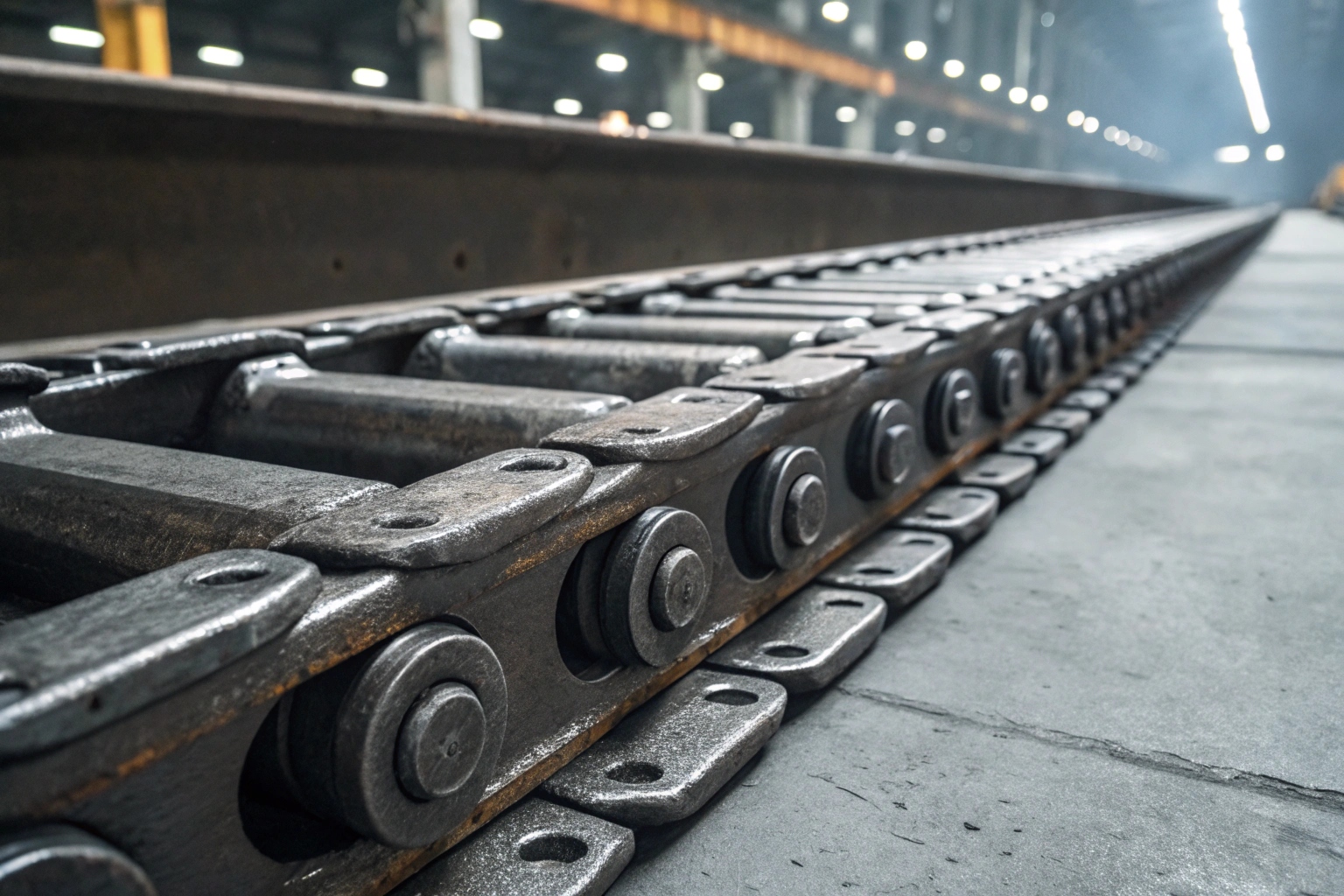
Intellectual property theft isn’t always high-tech hackers; sometimes it’s just a lazy sales manager forwarding your email to a subcontractor. To prevent this, you need to control what data leaves your office and how your product is physically made.
The "Split Manufacturing" Strategy
If you are developing a complex product, like a complete track adjuster assembly, do not have one single factory make every piece.
- Component Isolation: Have Factory A manufacture the recoil spring. Have Factory B manufacture the hydraulic cylinder. Have Factory C manufacture the yoke.
- Final Assembly: Ship all components to a separate location (your own warehouse or a trusted third-party assembly facility) for the final build.
By doing this, Factory A only knows the spring specs. They have no idea how it fits into the final design. No single supplier has the "blueprint" to copy your entire product. This is how the biggest OEMs 7 protect their supply chains.
The Power of "Cast-In" Branding
For undercarriage parts, the most powerful protection is physical, not digital.
Many buyers make the mistake of letting the factory produce "blank" or "neutral" parts, and then adding a sticker or painting a logo on at the end. This is dangerous. It means the factory can produce 5,000 neutral rollers, sell 1,000 to you, and sell 4,000 to your competitors by just slapping a different sticker on them.
The Solution: Require your logo to be Cast-In or Forged-In.
This means your logo is carved into the mold itself. When the molten steel is poured, your brand becomes a permanent, raised part of the metal body.
- Why it works: If I have 500 extra track links with "DAVID’S DOZERS" cast into the steel, I cannot sell them to anyone else. No other buyer wants your name on their parts.
- The Cost to Cheat: To remove a cast-in logo, I would have to use an angle grinder to grind the steel down, which leaves ugly marks and ruins the surface finish. It is labor-intensive and makes the part look like "seconds" or scrap. It simply isn’t profitable for me to steal your parts.
Digital Watermarking and File Hygiene
When you do send drawings, follow these rules:
- PDFs for Quotes: Never send editable 3D files (STEP, IGES, SolidWorks) for a preliminary quote. Send a 2D PDF that shows overall dimensions but hides proprietary internal structures or material chemical formulas.
- Watermarking: Every page of your drawing should have a giant, semi-transparent watermark across the center that says: "CONFIDENTIAL – PROPERTY OF [YOUR COMPANY] – DO NOT DISTRIBUTE."
- The "Fingerprint": Savvy engineers sometimes add a tiny, non-functional detail to the design. Maybe a small ridge in a non-critical area, or a specific radius that isn’t standard. If you see a copycat product in the market with that exact same useless ridge, you have 100% proof that it came from your stolen CAD files 8.
| Branding Method | Ease of Removal by Factory | Security Level | Cost |
|---|---|---|---|
| Adhesive Label/Sticker | Very Easy (Peel off) | Low | Low |
| Screen Printing | Easy (Solvent/Sanding) | Low | Low |
| Laser Marking | Medium (Grinding) | Medium | Low |
| Cast-In / Forged-In | Extremely Hard (Destructive) | Highest | High (Initial Tooling) |
By integrating your IP protection into the manufacturing process itself (via cast-in logos) and the supply chain structure (via split manufacturing), you make theft technically difficult and financially stupid.
What penalties apply for IP breaches?
A contract that forbids theft is useless if the punishment for stealing is vague. If a factory calculates that they can make $100,000 selling your fakes and only pay a $5,000 fine if caught, they will take that risk every time. You need penalties that scare them.
Your contract must include "Liquidated Damages" clauses that set a specific, high monetary fine for every breach. In the Chinese legal system, proving "lost profits" is difficult and subjective, but enforcing a pre-agreed fixed penalty is straightforward. You should also ensure the contract is governed by Chinese law so that you can freeze the factory’s local assets immediately upon a breach.
This is the part where many international business relationships fail. Western buyers often draft contracts under US or UK law, thinking it protects them. But if a factory in Fujian breaches your contract, a judgment from a court in New York is almost just a piece of paper. It is extremely difficult to enforce foreign judgments in China.
The Strategy: Liquidated Damages
In your NNN agreement and Manufacturing Contract, you need a section on Liquidated Damages 9. This is a legal term for a pre-agreed fine.
Instead of saying "The Supplier will pay for damages caused by the breach," (which is vague), your contract should say:
"If the Supplier discloses Confidential Information or sells the Buyer’s products to unauthorized third parties, the Supplier agrees to pay a penalty of $50,000 USD per occurrence, plus 300% of the total value of the unauthorized products sold."
Why this works in China:
- Burden of Proof: You do not need to prove to the judge exactly how much money you lost (which is hard). You only need to prove that the factory sold the part. Once that is proven, the judge looks at the contract, sees "$50,000," and awards it. It is simple math.
- Deterrence: When a factory owner like me sees a specific, massive number like $50,000 or $100,000, I take notice. It signals that you are not playing games. It changes the risk/reward calculation. If the profit from selling fakes is small, but the penalty is huge, I will not do it.
Jurisdiction and Asset Freezing
Your contract must specify a Chinese court (usually in the defendant’s location) as the jurisdiction for disputes and Chinese law as the governing law.
Why? Because if you sue in a Chinese court and have a strong evidence of breach (like the photos of the copycat parts or the "fingerprint" on the design), you can apply for Property Preservation 10 (asset freezing).
This means the court can freeze the factory’s bank accounts or seize their equipment before the trial is even finished to ensure there is money to pay you. This is a terrifying prospect for a manufacturer because it stops them from paying their workers or buying raw materials. The threat of an asset freeze is usually enough to force a quick settlement.
Monitoring: Trust but Verify
Finally, penalties only apply if you catch them. You need a monitoring routine.
- The "Mystery Shopper": Once a year, have a friend or a third-party agency pose as a new buyer. Have them contact your factory and ask, "I see you make undercarriage parts. Can you make this specific model?" (Send them a photo of your product).
- If the factory says, "No, that is a client’s exclusive design," you are safe.
- If the factory says, "Yes, we have the mold and can produce it for you," you have your evidence.
- Online Sweeps: Regularly search Alibaba, Made-in-China, and Amazon for your part numbers and unique visual features.
By combining a contract with teeth (Liquidated Damages) with a monitoring system, you turn your IP protection from a passive hope into an active defense system.
Conclusion
Protecting your private brand is not about finding a factory you "hope" is honest; it is about building a system where dishonesty is impossible or too expensive. By signing NNN agreements with specific liquidated damages, paying 100% for molds to ensure ownership, and physically casting your brand into the steel, you create a fortress around your business. At Dingtai, we welcome these strict standards because they protect our partnership as much as they protect your product.
Footnotes
1. Overview of track links in heavy machinery undercarriages. ↩︎
2. Definition and purpose of Non-Disclosure Agreements in business. ↩︎
3. Why NNN agreements are essential for manufacturing in China. ↩︎
4. Understanding the role of molds in industrial production. ↩︎
5. Legal definition of a bailee in property custody. ↩︎
6. How mechanical counters track production cycles and usage. ↩︎
7. Role of Original Equipment Manufacturers in supply chains. ↩︎
8. Explanation of Computer-Aided Design files used in engineering. ↩︎
9. Legal definition of liquidated damages for contract enforcement. ↩︎
10. Explanation of property preservation measures in Chinese law. ↩︎