
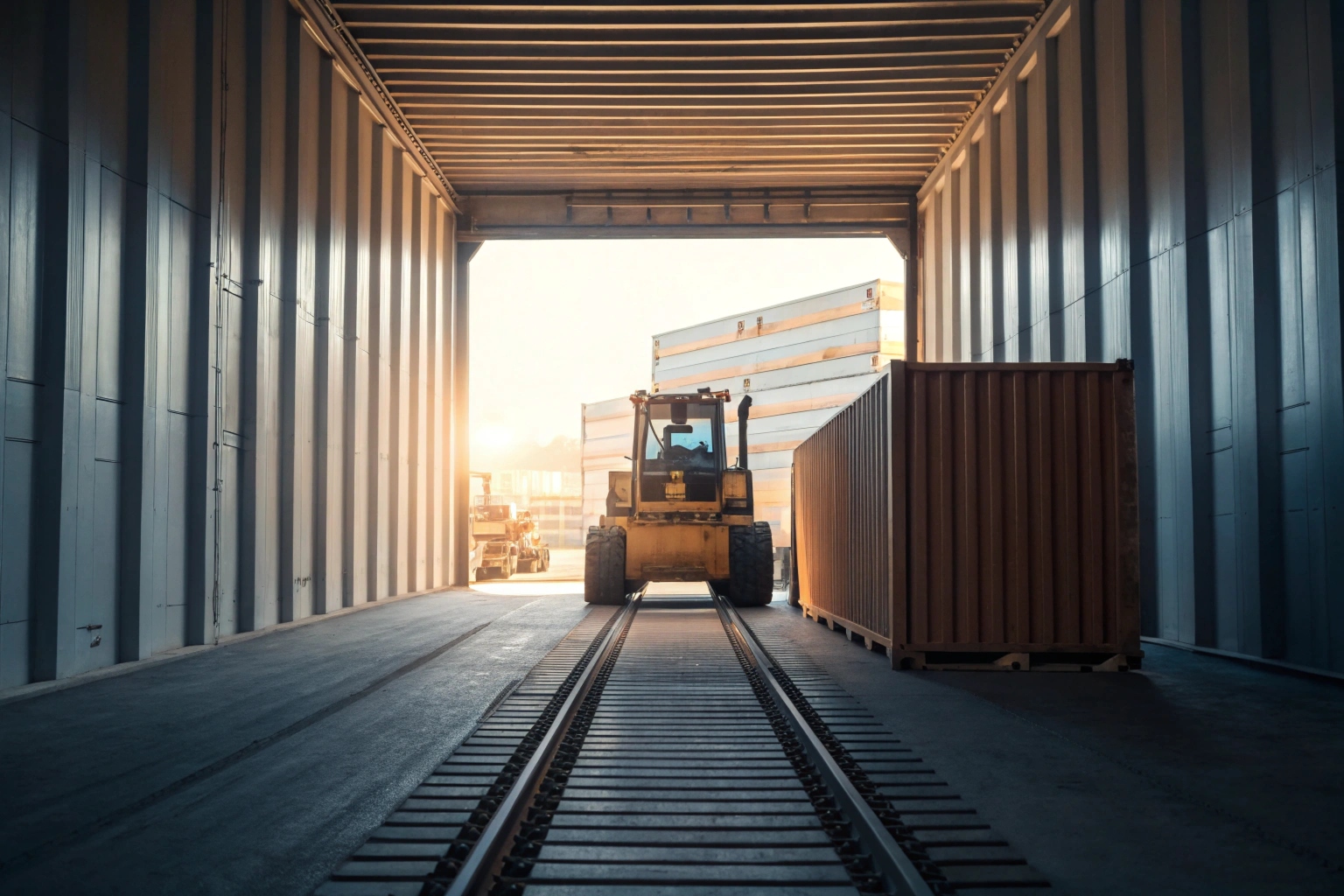
I know the stress of opening a container only to find heavy track chains have shifted and crushed expensive rollers during transit. It is a nightmare that wastes your time and eats your profit margins.
Optimize full-container loading for excavator undercarriage parts by standardizing unitization with pallets or steel stillages, planning a weight-balanced stuffing pattern, and applying proper blocking per ISO standards. This reduces transit damage while pushing container payload closer to legal and structural limits safely.
Every shipment is an opportunity to save money on freight, but only if the goods arrive in perfect condition. Let me share how we handle these heavy steel components to ensure they stay secure from our factory in Fujian to your warehouse.
What stacking and blocking methods work best?
I have seen many shipments fail because the loader thought heavy steel parts didn’t need much protection. In reality, the massive weight of track links and rollers makes them move like hammers inside a container if they aren’t blocked correctly.
To prevent damage, use a "Heavy-Base" stacking strategy where track groups and drive sprockets form the bottom layer, followed by column-stacked rollers secured with timber blocking. Use custom steel racks for irregular shapes to ensure no metal-on-metal contact 1 occurs during the high-frequency vibrations of sea transit.
The "Heavy-Base" Layer Strategy
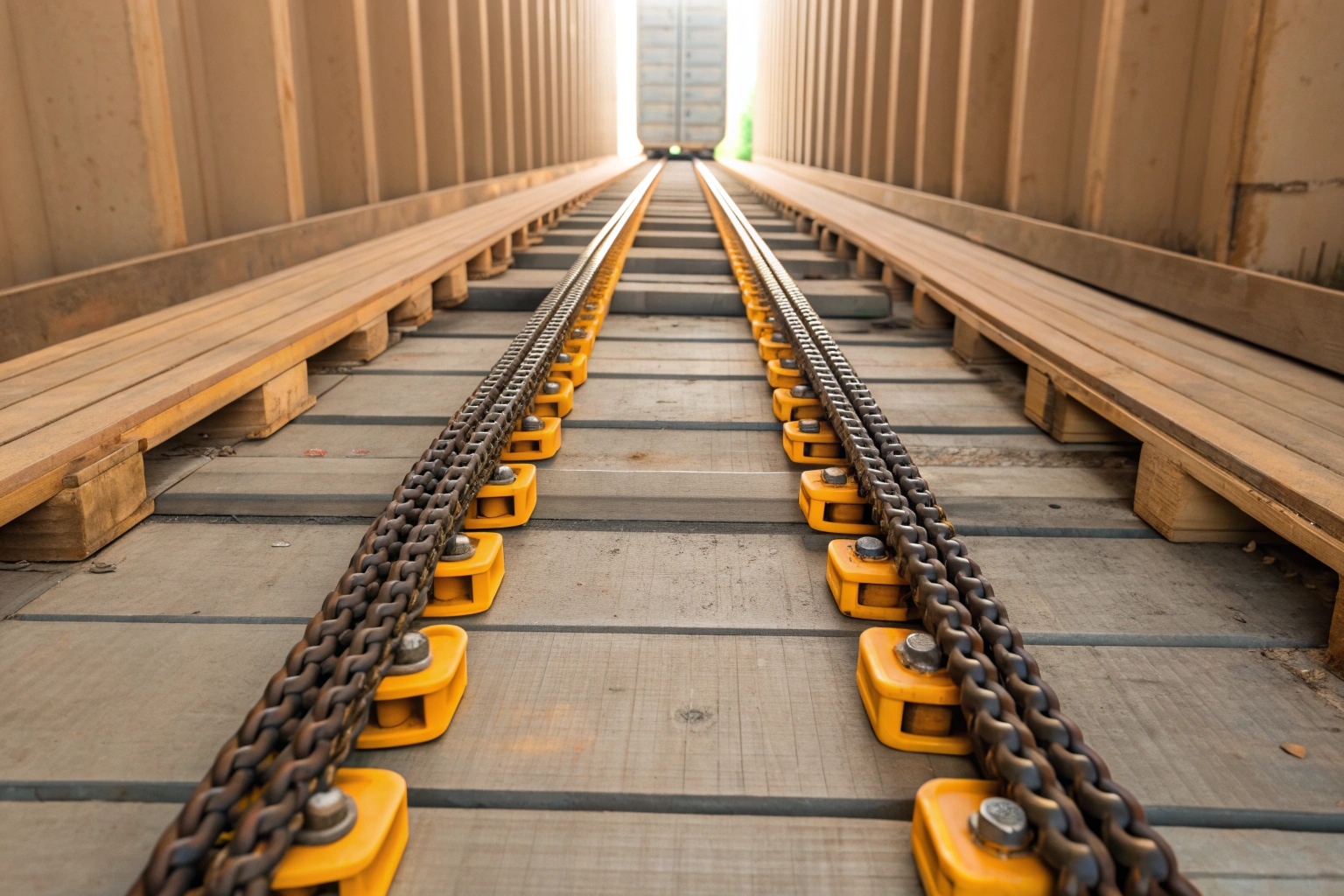
When we load a 20GP container for David or our other partners, we always start with the items that have the largest footprint and highest weight. Track groups are the foundation. We stack them in "nested" patterns to save space. If you are loading track shoes, we interlock them to reduce the height of the stack while maintaining stability.
Blocking Techniques for Heavy Steel
Blocking is about stopping the "slide." We use heat-treated timber 2 (ISPM 15 compliant) to create a frame around the bottom of the pallets. This frame is nailed or bolted to the container floor. For undercarriage parts, the most critical area is the "void" between the cargo and the container doors. We always install a H-brace 3 made of 4×4 timber to ensure the load doesn’t crash against the door when the ship hits rough waves.
Specialized Stacking for Rollers and Idlers
Rollers are cylindrical and love to roll. We use "V-blocks" or custom wooden cradles on the pallets. This ensures the weight is distributed across the pallet and doesn’t put pressure on a single point of the roller shell.
| Component Type | Stacking Method | Primary Blocking Material |
|---|---|---|
| Track Chains | Nested Flat Stacking | Heavy-duty Steel Strapping |
| Track Rollers | Vertical Column Stacking | Timber V-cradles & Pallets |
| Idlers | Upright in Steel Stillages | Custom Bolt-down Brackets |
| Sprockets | Flat Layering | Anti-slip Rubber Mats |
Can I use dunnage bags and strapping to stabilize?
I often get asked if air bags are enough to hold back several tons of steel. The short answer is: they are part of the solution, but not the whole story. If you rely only on air, you are asking for trouble when the container tilts.
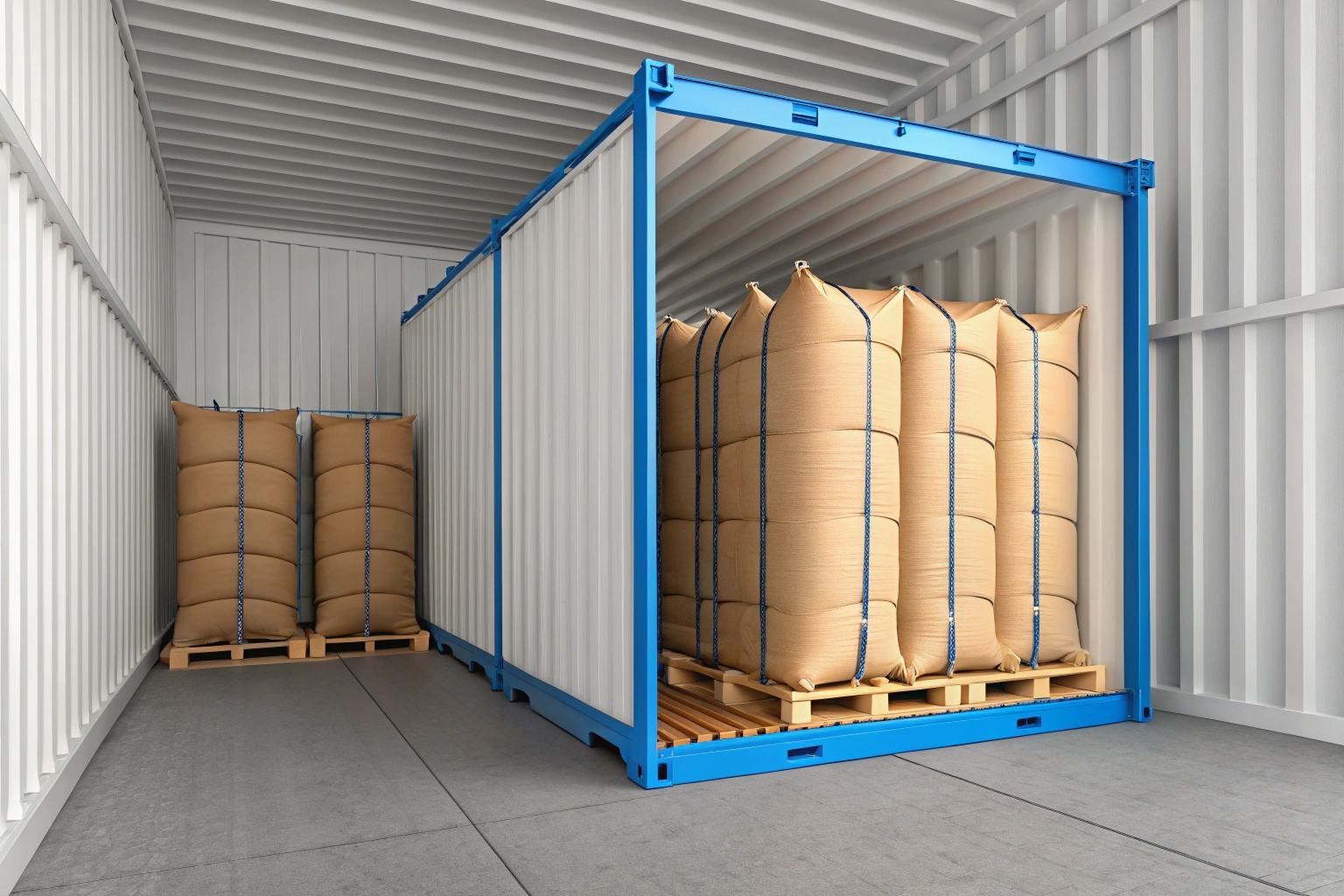
Yes, you can use heavy-duty dunnage bags to fill lateral voids and prevent side-to-side shifting, but they must be paired with high-tensile polyester strapping. For undercarriage parts, use composite strapping with a break strength of at least 2000kg to anchor heavy pallets to the container lashing points.
Why Strapping is Non-Negotiable
Steel tracks and drive motors are extremely dense. When a ship rolls, the lateral force 4 is immense. We use "loop lashing" techniques. We wrap the strapping through the pallet and pull it back to the D-rings welded into the floor of the container. We prefer composite strapping 5 over steel bands because composite has "memory"—it stays tight even if the cargo settles or shifts slightly.
Using Dunnage Bags Correctly
Dunnage bags 6 are perfect for the gaps between pallets. If there is a 10cm gap, the pallet can gather momentum before hitting its neighbor. We slide a heavy-duty Kraft paper air bag into that gap and inflate it. This creates constant pressure that keeps the entire "block" of cargo moving as one single unit.
Protection for the Straps
Because undercarriage parts have sharp edges (especially sprocket teeth and track shoes), we always use plastic edge protectors 7. Without them, the vibration of the ship will cause the steel edge to saw through the strap in just a few days.
| Tool | Purpose | Advantage for Undercarriage |
|---|---|---|
| Dunnage Bag | Gap Filling | Prevents "tipping" of tall stacks |
| Composite Strap | Anchoring | High shock absorption for heavy loads |
| Edge Protector | Shielding | Prevents strap breakage on sharp steel |
| Anti-slip Mat | Friction | Reduces the force needed from straps |
How do I plan weight distribution per container?
I once saw a container that was loaded with all the track chains at the very front. When the truck tried to lift it, the weight was so uneven the trailer almost tipped. It was a dangerous and expensive mistake.
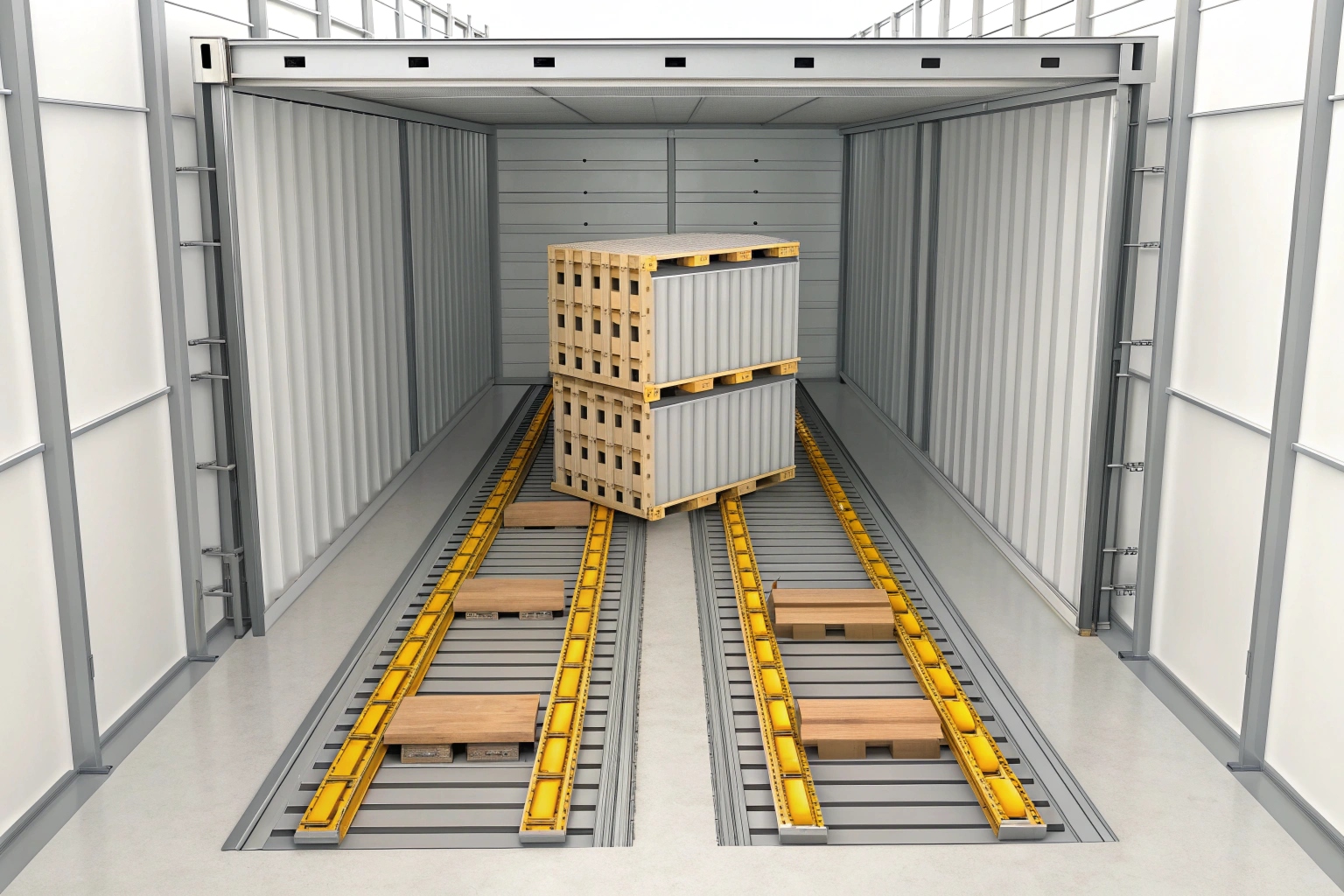
Plan weight distribution by following the 60/50 rule: no more than 60% of the cargo weight should be in any 50% of the container length. Place the heaviest items along the center line and over the floor cross-members to prevent the container floor from buckling under concentrated point loads.
Balancing the Longitudinal Load
The goal is to keep the center of gravity 8 as close to the middle of the container as possible. We use 3D loading software to calculate this before we even move a fork-lift. We place the heaviest track groups in the middle-front, and then balance the rear with rollers and idlers. This ensures that when the container is on a chassis, the axle weights are legal for the US or European roads.
Avoiding Floor Damage
Undercarriage parts are "point loads" 9. A single idler can weigh 200kg but sit on a very small surface area. If you put that directly on the wooden floor, it might break through. We use "sleepers"—long pieces of timber—to spread that weight across three or four of the steel cross-members that run under the container floor.
Height and Stability
We keep the center of gravity low. We never stack heavy track chains on top of lighter boxes. Everything heavy stays on the floor. If we have extra space at the top, we might put lighter items like gaskets or small hardware boxes, but only if they are properly secured so they don’t fall and get crushed by the steel below.
Weight Distribution Comparison Table
| Load Scenario | Risk Level | Consequence |
|---|---|---|
| All weight at the nose | High | Overloaded truck front axle; hard to steer |
| All weight at the doors | High | Rear axle overload; risk of door failure |
| Weight on one side | Medium | Container may tilt during crane lift |
| Balanced (Center-set) | Low | Safe transport; easy handling; legal weight |
I believe transparency is the key to a long-term partnership. If a supplier refuses to show you how they load, it usually means they are cutting corners. At Dingtai, we treat the loading plan as part of the technical specification.
A professional manufacturer will provide a detailed 3D loading diagram 10 and a photographic "stuffing report" before the container leaves the yard. This allows you to verify the weight distribution, the quality of the blocking, and the safety of the lashing against your specific requirements.

Why the Loading Plan Matters to You
For a procurement director like David, the loading plan is a risk management tool. It tells him exactly what to expect when the doors open. If he sees that the track chains are nested and the rollers are in steel stillages, he knows his warehouse team can unload quickly and safely using standard forklifts.
The Role of Digital Planning
We use software to simulate different SKU mixes. If you order 500 rollers and 20 track groups, we can show you exactly how they fit into a 20GP versus a 40HC. This helps you decide if you should add more items to the order to "fill the cube" and lower your per-unit shipping cost. It turns shipping from an expense into a strategic advantage.
Our Communication Process
Before we seal the container, my team takes photos of every stage: empty container (to show no holes), the first layer of heavy parts, the final blocking at the door, and the seal number. We send this to you immediately. This way, if there is ever a claim with the shipping line, you have the "as-loaded" proof that the cargo was secured perfectly.
Conclusion
Loading heavy undercarriage parts requires more than just a forklift; it requires a calculated plan. By focusing on unitization, weight balance, and rigid blocking, you can eliminate damage and maximize your container value. I am here to ensure your next shipment arrives as solid as the steel we produce.
Footnotes
1. Understand how metal-on-metal friction causes surface damage and corrosion during shipping. ↩︎
2. Official IPPC standards for heat-treated wood packaging to prevent pest spread. ↩︎
3. Technical guide on bracing and blocking techniques for heavy maritime cargo. ↩︎
4. Engineering definition of forces acting on cargo during sea vessel movement. ↩︎
5. Comparison of composite strapping benefits over traditional steel bands. ↩︎
6. Comprehensive guide on how dunnage bags stabilize containerized goods. ↩︎
7. Why edge protectors are essential for maintaining strap tension and cargo integrity. ↩︎
8. The physics of center of gravity and its impact on transport stability. ↩︎
9. Definition of point loads and how they affect structural floor integrity. ↩︎
10. Introduction to digital container stuffing plans and space optimization. ↩︎