

Dealing with returns is stressful, costing you time, money, and patience. You worry about damaged relationships and lost profits. I have designed a system to fix this.
To set effective return procedures, you must establish a strict Return Merchandise Authorization (RMA) protocol, clearly define freight liability based on the "root cause" of the defect, and utilize credit notes for faster financial resolution. These policies should be documented in your sales contracts to ensure transparency and efficiency.
When I first started exporting from Fujian, I learned the hard way that ambiguity kills business. A vague email agreement is not enough when you are shipping 20 tons of steel across the ocean. Over the years, I have refined these policies to protect both my factory and my partners like you. By setting clear boundaries, we remove the emotion from the problem. We turn a crisis into a simple checklist. In the following sections, I will walk you through the exact frameworks I use to handle these situations smoothly.
What RMA process should we follow?
Chaos rules when there is no plan. Do you hate waking up to angry emails about broken parts without any proof or context?
A robust RMA process requires the customer to submit a formal claim form including the purchase order number, photos of the defect, and operational data within a specific timeframe. The supplier then reviews this evidence to issue an authorization number, ensuring only valid claims are processed for return.

The Gatekeeper Strategy
In the heavy machinery industry 1, the RMA (Return Merchandise Authorization) is your most important gatekeeper. You cannot allow customers to simply ship bad parts back to your warehouse without warning. If they do, you end up with a pile of rusty steel, no paperwork, and a demand for a refund. This creates a logistical nightmare.
At Dingtai, we treat the RMA process as a formal investigation. It is not just about saying "yes" or "no"; it is about gathering data. When a customer claims a track chain snapped, I need to know why. Was it a material flaw? Or did they run a standard chain on a mining site? The RMA process forces the customer to stop and provide evidence before they demand money. This filter saves us from processing invalid claims that are actually caused by operator abuse.
The Three-Step Workflow
To make this work, I recommend implementing a strict three-step workflow. This keeps everyone on the same page.
Step 1: The Application Phase
The clock starts ticking the moment the customer notices a problem. They must fill out a standardized form. Do not accept a text message. The form must include:
- The PO Number: So we can trace the production batch 2.
- Visual Evidence: High-resolution photos of the failure point and the machine’s hour meter.
- Context: A brief description of the soil conditions (rock, sand, mud).
Step 2: The Assessment Phase
Once we receive the application, my technical team in Nan’an takes over. We have a "cooling off" period of 3 business days. We analyze the photos. We look for signs of external impact or improper installation. This pause is crucial. It prevents knee-jerk reactions where we accept liability too quickly.
Step 3: The Authorization Phase
If the evidence supports the claim, we issue a unique RMA number. This number acts as a passport. The customer must write it clearly on the outside of the return packaging 3. If a shipment arrives at my dock without this number, my warehouse manager is instructed to refuse receipt. This sounds harsh, but it ensures that every item entering our facility is accounted for.
Setting Time Boundaries
You must set strict deadlines. Steel degrades if left outside, and memories fade. You cannot let a customer return a part six months after they bought it. Below is the standard timeline table I use in my international contracts.
| Process Step | Deadline | Responsibility |
|---|---|---|
| Notification of Defect | Within 30 days of discovery | Customer (You) |
| Submission of Evidence | Within 5 days of initial notice | Customer (You) |
| Supplier Review | Within 3 business days of submission | Supplier (Me) |
| Physical Return Shipping | Within 14 days of RMA approval | Customer (You) |
By sticking to this schedule, we ensure that the problem is solved while the transaction is still fresh in everyone’s mind.
Who pays freight for confirmed defects?
Shipping heavy undercarriage parts is incredibly expensive. Are you tired of losing your profit margin paying for shipping on parts that weren’t even your fault?
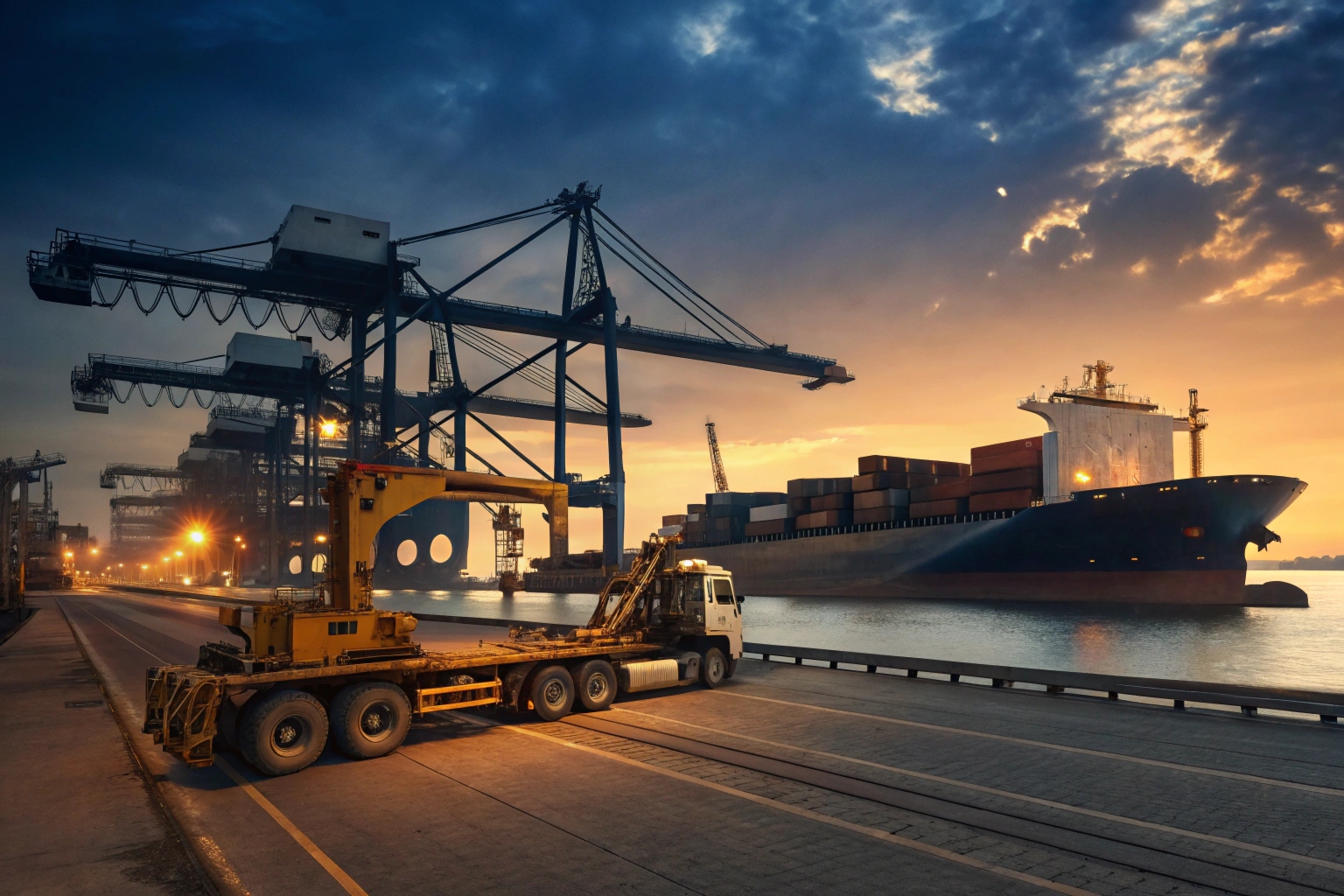
The industry standard dictates that the supplier pays for all freight costs related to confirmed manufacturing defects, including return shipping and sending replacements. However, if the return is due to a customer ordering error, the customer is responsible for all shipping charges plus a restocking fee.
The "Root Cause" Principle
In B2B manufacturing, "fairness" is determined by physics and paperwork, not feelings. The question of "who pays" always comes down to the root cause of the return. I have seen many distributors get bullied into paying for freight when they shouldn’t. You need to stand firm on this policy.
When I negotiate with my partners, I explain that freight responsibility is binary. It is either my fault, or it is your fault. There is rarely a middle ground. This clarity helps us avoid arguments later.
Scenario A: Manufacturing Defects (My Responsibility)
If a sprocket cracks because my heat treatment process 4 was off, or if a roller leaks because a seal was installed backward, that is 100% my responsibility. As a manufacturer, I must stand behind my quality.
In this case, I cover:
- Return Freight: The cost to bring the bad part back to China (if I need to see it).
- Replacement Freight: The cost to send a new part to your warehouse.
- Incidental Costs: Import duties 5 and customs fees for the replacement.
Crucial Note: I usually ask the customer to prepay the return shipping. I reimburse them only after my engineers have inspected the part and confirmed the defect. This protects me from customers who claim a part is "defective" just because they ordered the wrong size.
Scenario B: Customer Errors (Your Responsibility)
This is common. A customer orders a track group for a PC200-7 but they actually have a PC200-8. The bolt holes don’t line up. They want to return it.
In this scenario, I cannot subsidize the mistake. The margins in this industry are too tight.
If the return is due to an ordering error, the customer must pay:
- Outbound Freight: The original cost of shipping the item.
- Return Freight: The cost to ship it back to me.
- Restocking Fee: Usually 15% to 20% of the item’s value.
Why the restocking fee 6? Because when that part comes back, I have to pay my staff to unload it, inspect it for rust, re-paint it if necessary, and put it back in inventory. That labor costs money.
Freight Responsibility Matrix
To make this crystal clear for your sales team, I have created this reference table.
| Cause of Return | Return Shipping Cost | Replacement Shipping Cost | Restocking Fee |
|---|---|---|---|
| Factory Defect (Material failure) | Supplier Pays | Supplier Pays | 0% |
| Wrong Part Ordered (Customer error) | Customer Pays | Customer Pays | 15% – 20% |
| Carrier Damage (Bent/Lost in transit) | Insurance (Carrier) | Insurance (Carrier) | 0% |
| Inventory Adjustment (Overstock return) | Customer Pays | N/A | 25% |
This table removes the ambiguity. When a customer calls to complain, you simply look at the table and tell them the policy.
Can I receive credit notes for returned items?
Waiting for international bank transfers is slow and expensive. Do you hate seeing your cash flow tied up in administrative limbo for weeks?
Yes, issuing credit notes is the most efficient method for handling returns in long-term B2B partnerships. Instead of refunding cash, the value is credited to your account and deducted from your next purchase order, which saves on bank fees and keeps capital moving fluidly.

The Efficiency of the Credit System
In the world of international trade, cash refunds are a headache. If I need to send $2,000 back to you in the US, I have to go to my bank in Fujian, fill out foreign exchange forms, and pay a SWIFT fee 7. You also pay a fee to receive it. We both lose money, and it takes 5 to 10 days.
A credit note bypasses the banking system entirely. It is essentially an internal currency between our two companies. It acknowledges that I owe you money, but instead of sending cash, I give you a discount on your next container.
Building Long-Term Trust
Using credit notes implies a commitment to the future. It signals that we are not just doing a one-time deal; we are partners. When I issue a credit note to David, my client in the US, I am effectively investing in his next order.
For a distributor like you, this is excellent for cash flow. You don’t have to wait for a wire transfer to hit your account. You just deduct the amount from your next invoice. It simplifies your accounting and reduces the paperwork for your finance team.
The Anatomy of a Valid Credit Note
A credit note must be a formal document. It cannot just be an email saying, "I’ll owe you one." To be valid for accounting and tax purposes, it needs specific details.
- Reference to Original Invoice: It must link back to the invoice where the defective part was sold. This creates a clear audit trail 8.
- Currency Consistency: If you bought the parts in USD, the credit note must be in USD. This protects you from currency exchange fluctuations.
- Expiration Date: I typically make credit notes valid for 12 months. This encourages you to place regular orders to use up your balance.
Comparison: Credit Note vs. Cash Refund
I want you to see why I push for this method. It is not just about keeping your money; it is about efficiency.
| Feature | Credit Note | Cash Refund (Wire Transfer) |
|---|---|---|
| Processing Speed | Instant (Once approved) | 5 – 10 Business Days |
| Transaction Fees | $0 | $30 – $50 per transaction |
| Paperwork Load | Low (Internal entry) | High (Bank forms, tax declarations) |
| Relationship Impact | Encourages repeat business | Signals end of transaction |
For ongoing partners who buy containers every month, the credit note is the superior tool. It keeps the gears of commerce grinding without friction.
How do we handle rework vs replacement decisions?
Scrapping a giant steel part feels wasteful and wrong. Do you want to avoid the massive cost of shipping a heavy replacement when a simple fix might work?
We prioritize local rework over full replacement whenever the cost of repair is lower than the cost of shipping a new unit. If a part can be fixed locally, such as replacing a seal or a bolt, the supplier reimburses the labor costs; full replacement is reserved for unfixable structural failures.
The Logistics of Heavy Metal
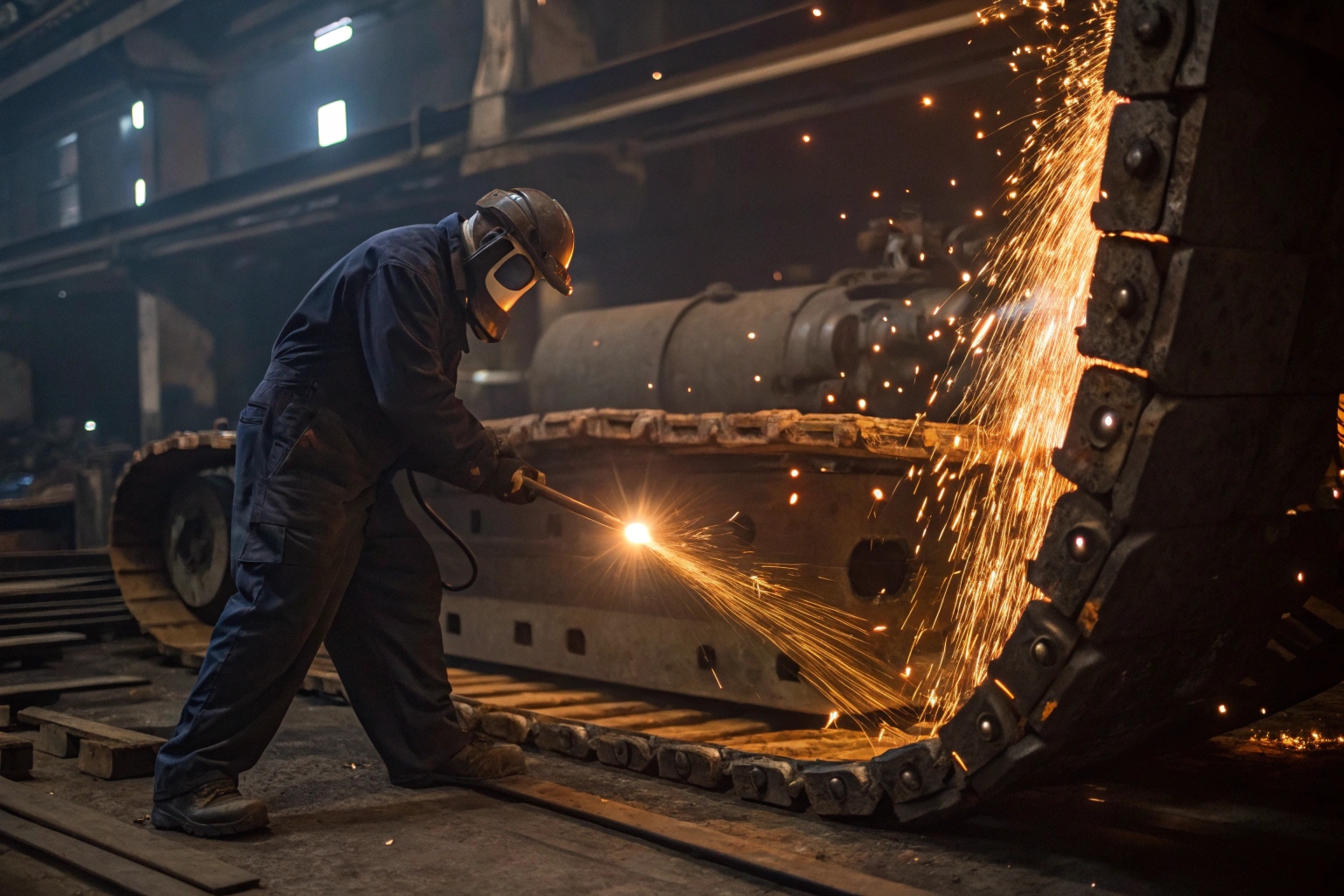
We have to be realistic about what we are selling. An excavator idler is not an iPhone. It weighs hundreds of kilograms. Shipping a replacement idler from China to the US by air freight 9 can cost three times the value of the part itself. That is economic suicide.
Therefore, we must adopt a "Repair First" mindset. My engineers are trained to look for solutions that do not involve shipping. We calculate the Total Landed Cost 10 of the solution. If sending a mechanic to your yard to change a seal costs $200, and shipping a new roller costs $500, we choose the mechanic.
Protocol for Local Rework
This requires trust and good communication. Since I cannot see the part in person, I have to trust your judgment.
Here is how we handle it:
- Diagnosis: You send a video of the problem.
- Proposal: You get a quote from a local repair shop (or your own internal cost).
- Approval: I review the quote. If it is reasonable, I authorize the work.
- Reimbursement: You send me the invoice for the repair, and I issue a credit note for that amount.
This is faster for everyone. Your customer gets their machine back to work in 24 hours, rather than waiting weeks for a sea shipment.
The "Proof of Destruction" Policy
Sometimes, a part is truly dead. It has a crack in the casting or a major deformation. It cannot be fixed. In this case, we do not want it back. Shipping scrap metal is a waste of fuel.
However, I cannot just send a free replacement without proof. I need to know that the defective part has been taken out of circulation. We use a "Proof of Destruction" policy.
- The Action: I ask you to destroy the part. This might mean cutting the track link with a torch or smashing the roller housing.
- The Evidence: You send me a video or photo of the destroyed part.
- The Result: Once I see the destruction, I release the new replacement part immediately.
Remote Diagnostics
Technology has made this much easier. I often jump on WhatsApp video calls with my clients’ mechanics. Even with the language barrier, we can look at the part together. My engineer can point to a specific valve and say, "Tighten this."
This remote support solves about 30% of "defect" claims without spending a penny. It turns out the part wasn’t broken; it was just installed incorrectly. This collaborative approach saves us both money and builds a deeper technical bond between our teams.
Conclusion
Managing returns is not the glamorous part of our business, but it is the foundation of trust. By strictly following an RMA process, understanding who pays for freight based on facts, using credit notes for speed, and being smart about local repairs, we turn a potential conflict into a routine task. These policies protect your margins and show your customers that you are a professional organization.
Footnotes
1. Market statistics and growth trends for the global heavy machinery sector. ↩︎
2. Definition and operational mechanics of batch production systems. ↩︎
3. Best practices for packing heavy items for safe shipment. ↩︎
4. Explanation of heat treatment processes used to strengthen metals. ↩︎
5. Official guide to US import duties and customs regulations. ↩︎
6. Understanding how restocking fees work in inventory management. ↩︎
7. Details on SWIFT network fees for international bank transfers. ↩︎
8. Importance of audit trails for accounting and financial compliance. ↩︎
9. Overview of air freight costs and logistics pricing factors. ↩︎
10. Definition of landed cost including shipping and customs fees. ↩︎