
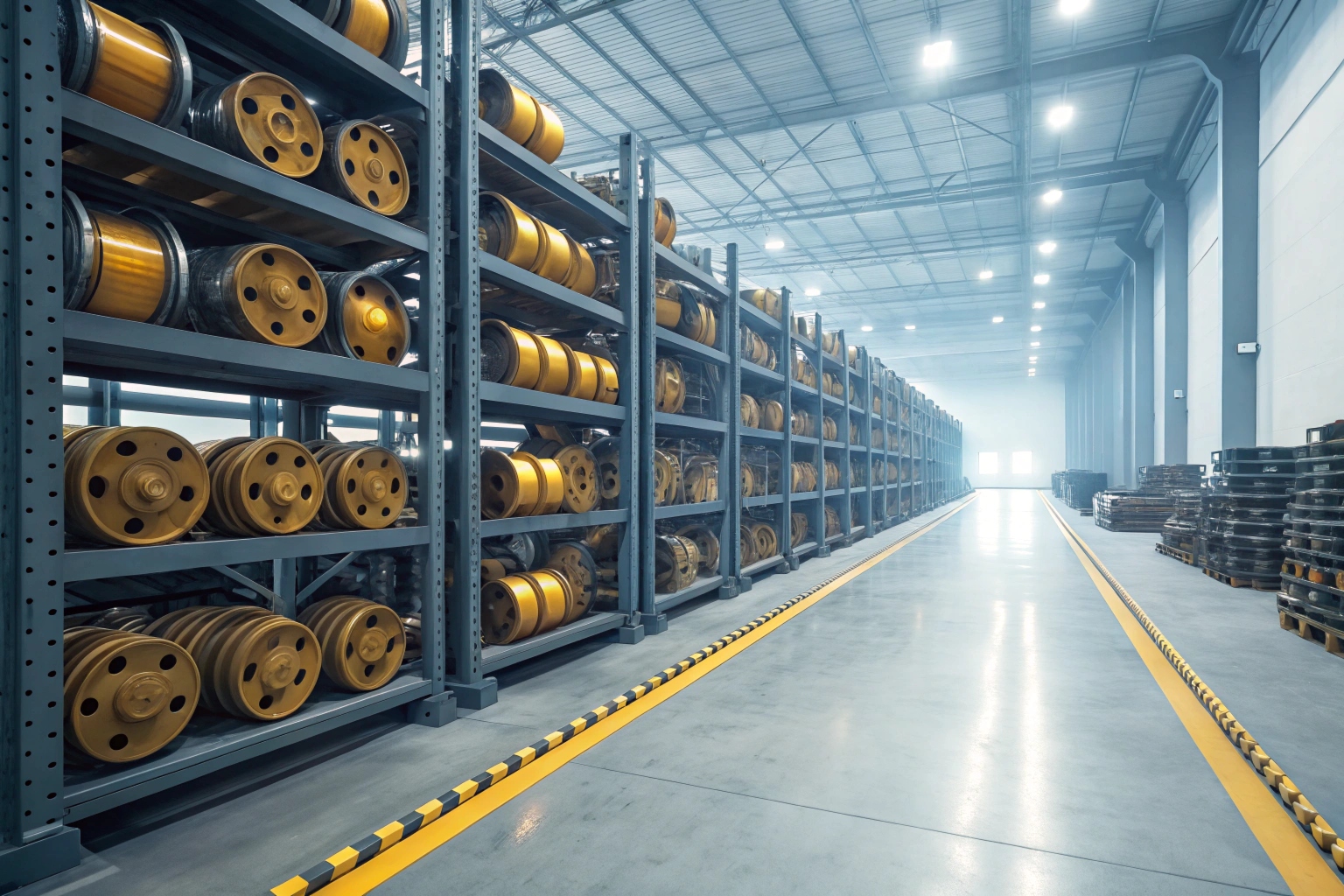
I know the sinking feeling when a customer needs a track chain today, but your shelf is empty. You check your system, and the next shipment from China is still 30 days away.
To set safety stock, calculate the gap between your maximum daily sales and average sales, multiplied by your longest lead time. You should also add a 20% buffer for high-wear items like track shoes. This strategy protects you from shipping delays and sudden demand spikes.
You cannot afford to guess with heavy equipment parts. If you run out of bolts, it is just annoying. But if you run out of rollers or idlers, your customer loses thousands of dollars a day. In this article, I will share the strategies I use with my partners to keep their inventory healthy.
What demand forecasting model fits my business?
Many purchasing managers look at last year’s sales and just add 10%. I think this is a mistake because it ignores the reality of the construction season and recent market shifts.
The best forecasting model for undercarriage parts is the Weighted Moving Average. This method gives more importance to your most recent 3 months of sales data while still looking at the full year. It helps you catch trends early, like a sudden increase in demand before summer.

When we talk about forecasting for heavy machinery parts, we have to be honest about how this business works. Selling track chains is not like selling groceries. The demand is "lumpy." You might sell zero idlers for three weeks. Then, a large construction firm comes in and buys your entire stock for a fleet overhaul. If you use a simple average, your numbers will look flat. You will not be ready for that big order.
In my factory in Fujian, we see this pattern clearly. We have customers who order steady amounts of bolts, but their orders for track groups go up and down. To handle this, I recommend you look at the Weighted Moving Average 1.
Here is why this works better for you. Standard averages treat sales from January the same as sales from June. But for construction, June is much more important. By giving more "weight" to the last three months, your forecast reacts faster to what is happening right now.
However, math is not everything. You must combine this with Qualitative Forecasting 2. This means talking to your biggest customers. Ask them about their upcoming projects. If you know they just won a bid for a massive road project, you know their track wear will double. No spreadsheet can tell you that. You have to pick up the phone.
I also suggest looking at the Seasonality Index 3. In the US, construction slows down in winter for many northern states. Your stock levels in November should look very different from your stock levels in March. I help my clients plan their containers so they land exactly before the spring rush.
Comparison of Forecasting Methods
| Forecasting Method | Best Used For | Pros | Cons |
|---|---|---|---|
| Simple Moving Average | Stable items like bolts & nuts. | Easy to calculate. Smooths out noise. | Reacts too slowly to changes. |
| Weighted Moving Average | Seasonal items like Track Chains. | Responds to recent trends. | Requires choosing right "weights." |
| Exponential Smoothing | Mature products with history. | Good for trends without seasons. | Complex formula. Misses spikes. |
How do supplier MOQs impact my stock levels?
You might want to order just 50 track rollers to keep your inventory lean. But then I tell you my factory needs a minimum order of 200. This conflict is a constant battle.
Supplier MOQs (Minimum Order Quantities) force you to hold more stock than your basic forecast requires. To manage this, you must balance the holding cost of extra stock against the lower unit price from bulk orders. You can also mix different parts in one container to meet volume requirements.
Let’s dive deeper into why MOQs exist and how you can work around them. As a manufacturer, I do not set MOQs just to be difficult. It is about physics and cost. When we heat-treat track links or cast drive sprockets, we have to run our furnaces at a certain capacity. Turning on a massive furnace for a small batch burns too much energy. It makes the per-unit cost skyrocket.
So, when you see an MOQ of 100 pieces, understand that is the break-even point 4 for the factory to give you a good price. If you strictly order only what you need for this month, say 20 pieces, I might have to charge you 30% more.
The problem for you is that meeting the MOQ means you might sit on that stock for four months. That ties up your cash and takes up space in your warehouse. Track groups are big and heavy; they eat up floor space fast.
Here is the strategy I use with smart buyers like David. We stop looking at MOQs for single part numbers. Instead, we look at "Production Batching" or Container Utilization 5.
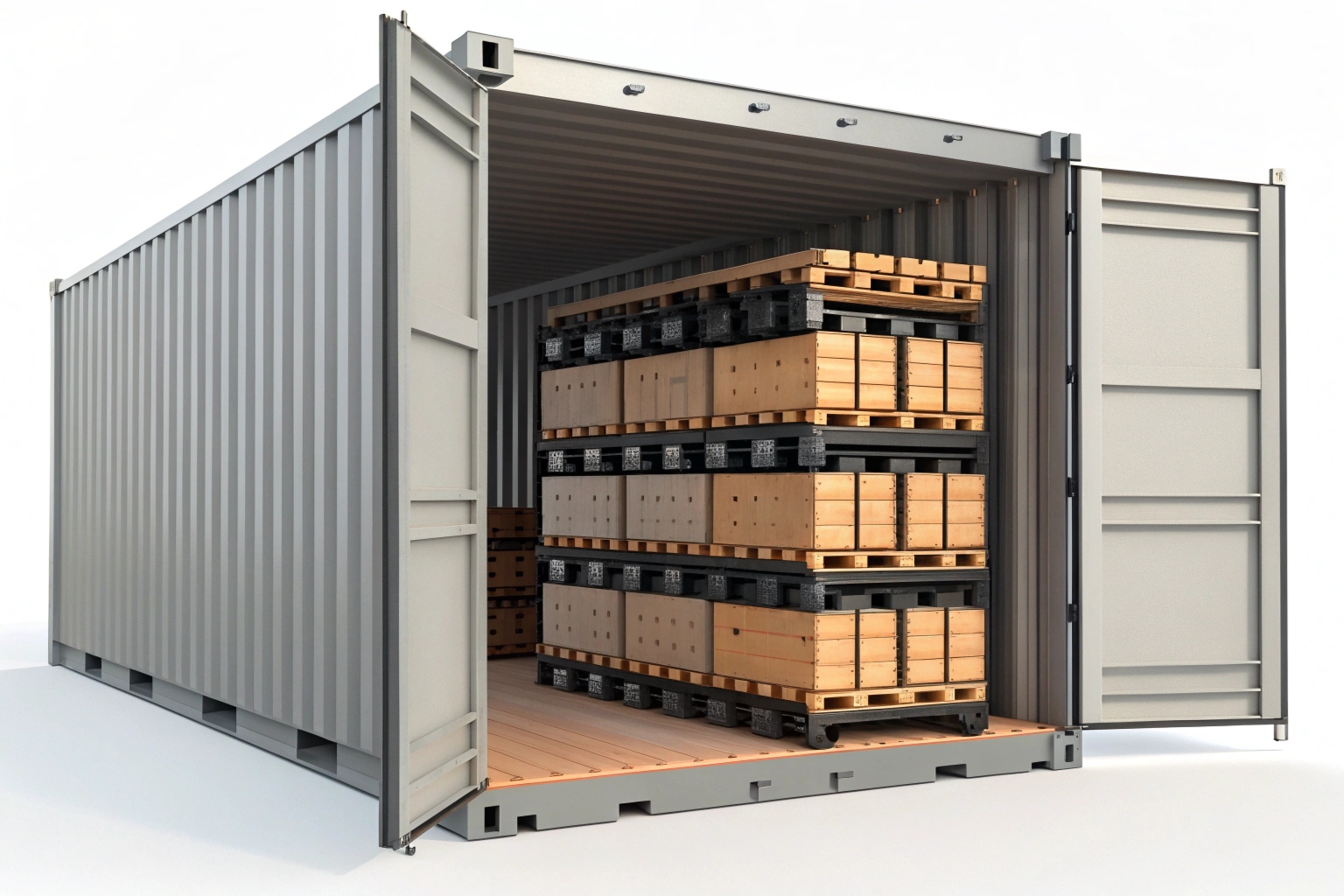
If you need 50 rollers but the MOQ is 200, ask me if we can combine that order with other items that use the same production line. Maybe we can mix top rollers and bottom rollers. Or, we focus on filling a 20ft container. If you fill the container, I am often willing to lower the MOQ on individual items because my logistics cost goes down.
Another tactic is "Blanket Orders." You commit to buying 1000 pieces over a year. I produce them all at once to get my efficiency. But I keep them in my warehouse and ship them to you in batches of 250 every quarter. You get the bulk price, but you do not drown in inventory.
MOQ vs. Cost Trade-offs
| Factor | Low MOQ / High Frequency | High MOQ / Low Frequency |
|---|---|---|
| Unit Price | Higher (Factory loses efficiency). | Lowest (Economies of scale). |
| Shipping Cost | High (LCL shipments are expensive). | Low (FCL shipments are cheap). |
| Inventory Risk | Low (You stay lean). | High (Risk of obsolescence). |
Can I run VMI with my factory for key parts?
Vendor Managed Inventory 6 (VMI) sounds like a dream. You want the factory to watch your stock levels and ship parts automatically. It can work, but only if we have total trust.
Yes, you can run VMI with your factory, but it requires you to share real-time sales data. It works best for steady, high-volume parts like standard pitch track chains. This strategy shifts planning responsibility to the manufacturer, reducing your workload and preventing stockouts.

VMI is a powerful tool, but it is not a magic switch you can just flip. In a traditional model, you send me a Purchase Order (PO), and I make the parts. If you forget to order, you run out. In VMI, I look at your inventory levels and I decide when to ship new parts to you.
For this to work in the undercarriage industry, we need three things.
First, Transparency. You have to open your books to me. I need to see exactly how many sprockets you sold last week and how many are sitting on your shelf. Many buyers are scared to show this data because they think the supplier will use it to raise prices. But with a partner like Dingtai, this data helps us plan our raw material purchases 7. If I know what you need two months in advance, I can buy steel when the price is low. Then I pass that savings to you.
Second, Standardization. VMI is terrible for custom, one-off parts. Do not use it for special modify buckets or rare excavator models. Use VMI for your "bread and butter" items—the parts that fit the most common CAT or Komatsu machines. These parts have predictable sales curves.
Third, The Agreement. We need to agree on who pays for what. In some VMI deals, the stock sits in your warehouse, but you do not pay for it until you sell it, known as Consignment 8. In others, you pay when it ships, but I guarantee I will always have stock ready for you.
For my US clients, we often do a "Hybrid VMI." You give me a forecast for the next 6 months. I agree to keep 2 months of that stock finished and sitting in my factory in Fujian. It is ready to ship instantly. This cuts your lead time from 45 days (production) to 7 days (packing and booking vessel). You do not pay until I ship, but I have the security of your commitment.
Requirements for Successful VMI
| Requirement | Why it Matters |
|---|---|
| Data Sharing | Supplier needs to see your stock levels weekly to plan production. |
| Product Selection | Only choose high-volume, standard parts (A-Items). |
| Trust Level | High trust is needed. You share sales data; I guarantee stock. |
Should I use multi-location warehousing?
Shipping a track chain from California to New York is expensive and slow. You might be thinking about opening a second warehouse or using a third-party logistics provider 9.
You should use multi-location warehousing if your customers are spread across a wide area and shipping costs are high. By placing fast-moving stock in regional hubs, you cut delivery time to 1-2 days. However, this increases your total inventory investment because you need safety stock in two places.
Let’s look at the math of logistics. Undercarriage parts are dense. A single track assembly can weigh over a ton. If you import everything into a single warehouse in Los Angeles, but your customer is in Florida, the inland freight cost might be higher than the profit margin on the part. Plus, the customer has to wait 5-7 days for a truck. In our business, if a machine is down, 5 days is unacceptable.
Multi-location warehousing solves the speed and freight cost problem. But it creates a new problem: Inventory Fragmentation.
Imagine you have 10 units of a specific idler. If you have one warehouse, all 10 are there. Any customer can buy them. If you have two warehouses, you put 5 in the West and 5 in the East. Now, if a West Coast customer needs 8 units, you are "out of stock" in the West. You technically own 10 units, but you cannot sell them easily. You have to ship from the East, which defeats the purpose.
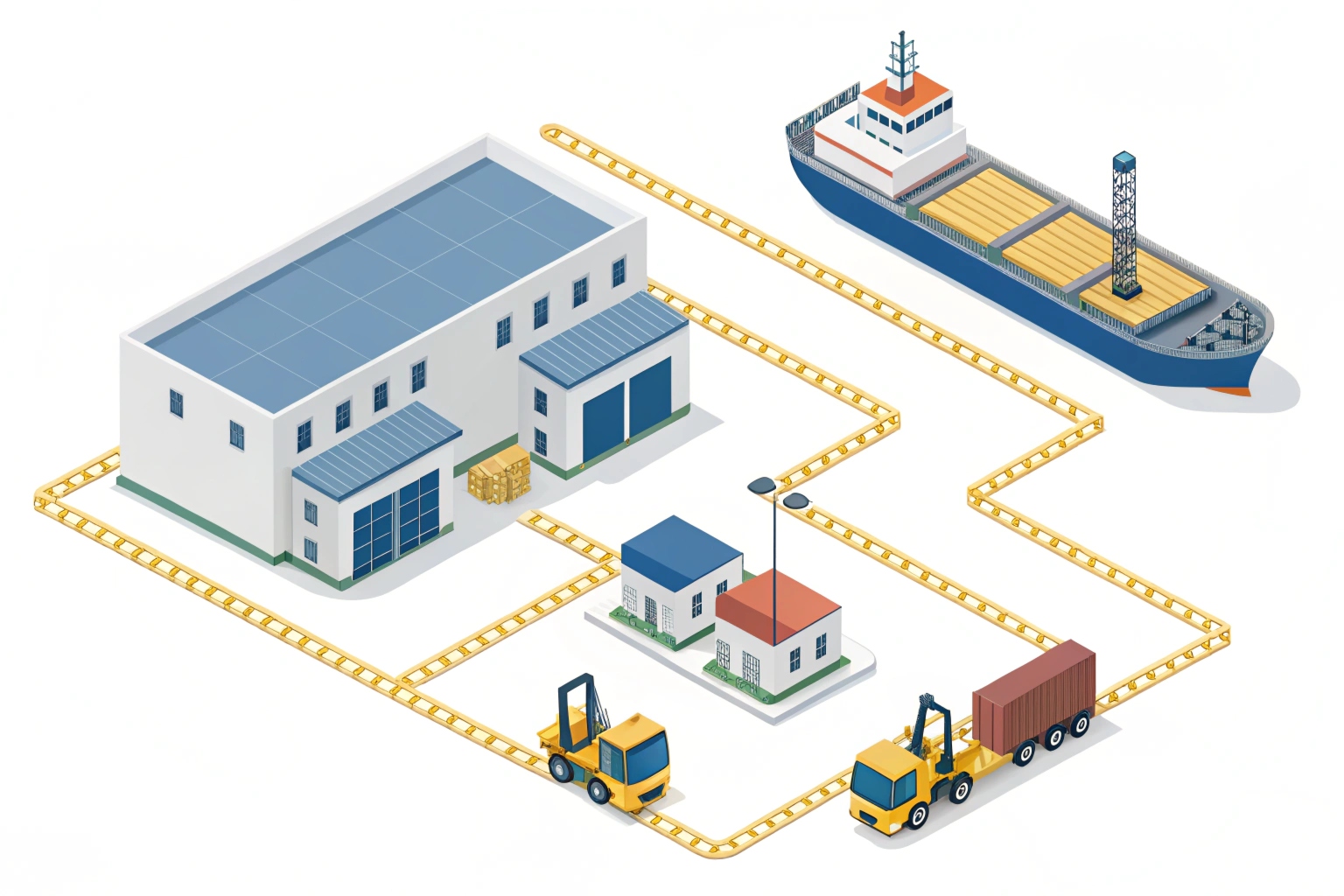
This is why I recommend a Hub and Spoke model 10 for undercarriage parts.
Keep your slow-moving, expensive, or very heavy items in one central "Hub" (usually near a major port). These are items people are willing to wait a few days for.
Then, use smaller regional warehouses ("Spokes") for the high-turnover "emergency" items. Things like bolts, nuts, bucket teeth, and common rollers. These are the things customers need today.
You can also use 3PL providers for the spokes. You do not need to rent a building and hire staff in Texas. You just pay a logistics company to store 20 pallets of your fastest-selling teeth there. This approach balances the cost of holding inventory with the need for speed.
Conclusion
Setting safety stock is a balance between risk and cash. Use the weighted average formula to plan. Respect supplier MOQs by optimizing containers. Consider VMI for stable items. Finally, split your inventory wisely to keep customers happy and costs low.
Footnotes
1. Statistical method for smoothing data to identify trends. ↩︎
2. Using expert judgment to predict demand changes. ↩︎
3. Adjusting forecasts based on recurring seasonal patterns. ↩︎
4. The sales volume needed to cover production costs. ↩︎
5. Maximizing cargo space to reduce shipping costs per unit. ↩︎
6. Supply chain strategy where suppliers manage buyer inventory. ↩︎
7. Sourcing essential materials for manufacturing processes. ↩︎
8. Arrangement where goods are paid for only after sale. ↩︎
9. Outsourced logistics services for storage and transportation. ↩︎
10. Efficient distribution strategy centralizing freight logistics. ↩︎