
I know how frustrating it is to get a quote that looks cheap but ends up expensive. You see a low unit price, but then the invoices pile up. I want to help you stop the financial bleeding.
A complete supplier quote consists of three main parts: the EXW price (factory cost), inland freight (trucking to the port), and port charges (local export fees). Understanding these layers prevents hidden costs from eating your profit margins.
In this article, I will break down every line item on that invoice. I want to show you exactly where your money goes before the parts even leave China.
How do I compare EXW vs FOB offers fairly?
I see many buyers get confused when they see two different prices for the same roller. You might think one supplier is cheating you, but they are just using different shipping terms.
To compare fairly, you must add the trucking and port fees to the EXW price to match the FOB price. EXW is just the bare metal sitting on my factory floor, while FOB includes getting it onto the ship.

When you look at a quote from a manufacturer like me, the biggest number is usually the EXW (Ex Works 1) price. This is the foundation. It includes the raw steel, the forging process, the heat treatment 2, and our labor. However, if you stop there, you are missing a big piece of the puzzle.
You cannot compare a supplier offering an EXW price directly with a supplier offering an FOB (Free on Board 3) price. It is like comparing a car without wheels to a car ready to drive. To make them equal, you have to do some math.
The Real Cost of "Factory Gate" Pricing
When I give you an EXW quote, I am telling you the price of the goods sitting in my warehouse in Fujian. You are responsible for everything that happens after I pack the box. This gives you control, but it also gives you work. You have to arrange the truck. You have to pay the driver.
If you choose FOB, I handle the local logistics. I hire the truck, and I pay the port fees. Of course, I add these costs to your unit price.
Here is a simple way to look at the math for a typical container of track chains:
| Cost Component | EXW Offer (Supplier A) | FOB Offer (Supplier B) | Notes |
|---|---|---|---|
| Unit Price Total | $40,000 | $41,200 | Supplier A looks cheaper at first glance. |
| Inland Freight | +$300 (You pay) | Included | Trucking from factory to port. |
| Port Charges | +$400 (You pay) | Included | THC, Docs, Customs fees. |
| Export License | +$100 (You pay) | Included | Some small shops charge this extra. |
| True Total | $40,800 | $41,200 | Now you can see the real difference is only $400. |
Why Distance Matters
Inland freight is not a fixed number. It depends heavily on where the factory is located. My factory is in Fujian. If we ship from the Xiamen port, the distance is short, and the cost is low.
However, if you buy from a supplier deep inland and they ship from a faraway port, that trucking fee can double or triple. If you accept an EXW price from a factory 800 miles from the port, you might get a nasty surprise when the trucking bill arrives.
Always ask your supplier: "Which port do you use?" Then, check the distance. If you control the shipping (EXW), you need to know if you are paying for a 50-mile trip or a 500-mile trip. This small detail can change your landed cost significantly.
Can I get a cost breakdown for tooling and QA?
You need to know if you are paying for high-quality molds or cheap ones. Sometimes, a supplier hides the cost of tooling in the unit price, and sometimes they charge it upfront.
A transparent quote should separate tooling costs from the part price so you know what you own. You should also see specific lines for Quality Assurance tasks, like material reports or third-party inspections, to ensure accountability.
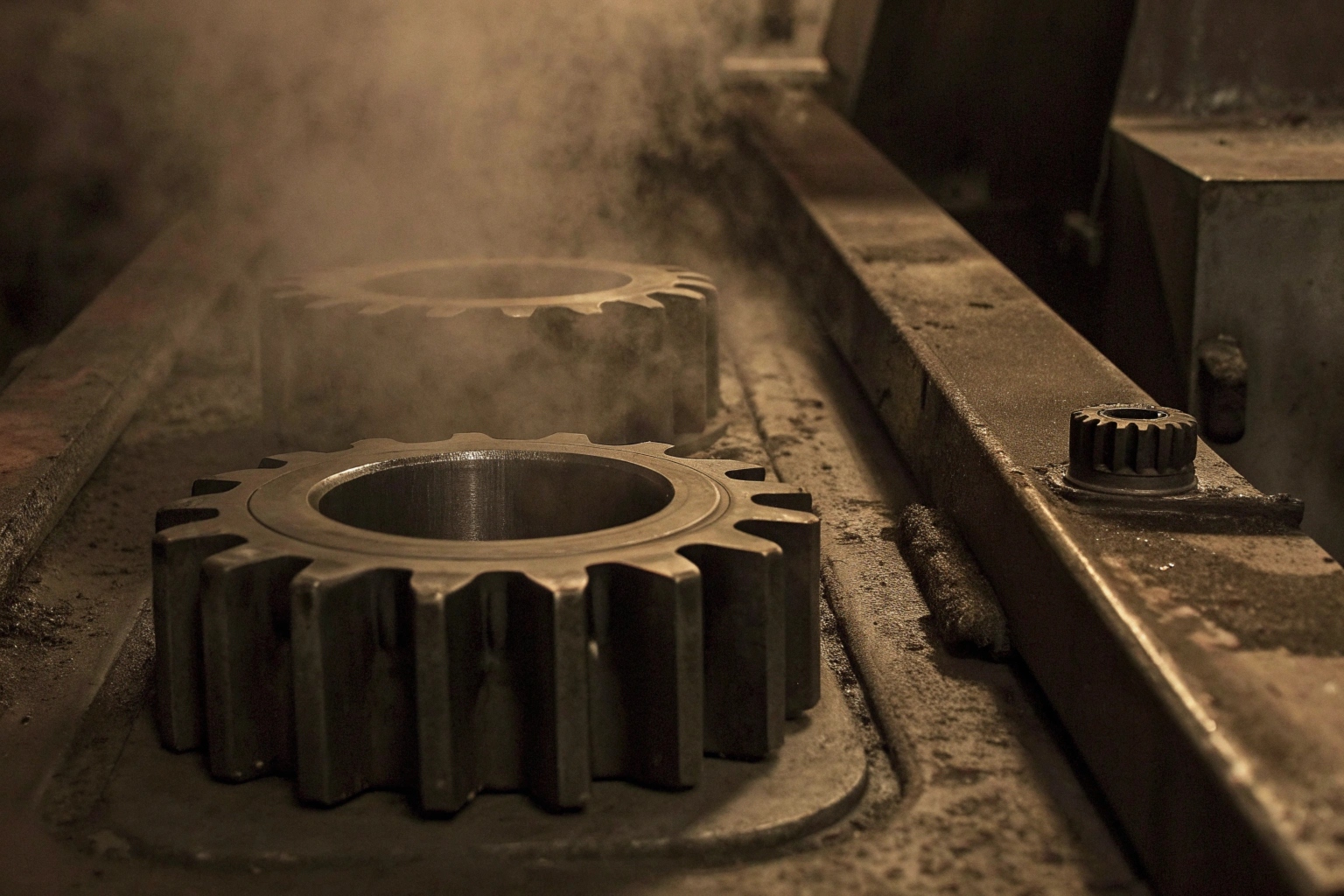
In the undercarriage business, tooling is everything. When we make a track link or a sprocket, we use heavy steel dies to forge the shape. These dies cost money.
The Two Ways to Pay for Tooling
Suppliers usually charge for tooling costs 4 in two ways. You need to identify which method your quote uses.
- Amortized Cost: The supplier adds a few dollars to every single part you buy. If you buy 1,000 rollers, you pay a little bit of the mold cost each time. This makes the unit price look higher, but you don’t have a big bill upfront.
- Upfront Fee: You pay a lump sum for the mold (e.g., $2,000) at the start. Then, your unit price is lower because you have already paid for the equipment.
I often advise long-term partners to pay upfront if they can. Why? Because once you pay for the mold, you usually "own" the capacity. Also, over five years, amortized costs often end up being more expensive than the one-time fee.
Quality Assurance is Not Free
Quality control 5 costs money. If a quote is suspiciously low, the supplier might be skipping the testing phase. In my quotes, I prefer to be open about what we do.
You should ask if these items are included or extra:
- Material Composition Reports: Do you get a sheet showing the chemical mix of the steel?
- Heat Treatment Graphs: Can they prove the hardness depth of the roller?
- Dimensional Checks: Do they measure every critical point before packing?
If you require a third-party inspection, like SGS or Intertek, that is almost always an extra cost. A good supplier will coordinate it, but you will pay the bill.
Hidden Risks of "Free" Tooling
Be careful if a supplier says tooling is "free" for a custom part. Nothing is truly free. They might be using an old, worn-out mold from another customer.
Worn molds create parts with poor tolerances. A sprocket made from a bad mold might not fit the track chain perfectly. This causes premature wear. You save money on the quote, but you lose money on warranty claims when the product fails in the field. Always ask about the condition of the tooling.
Local charges in China can be a "black box" for buyers. You might think you have paid for everything, and then a new invoice appears for things like "document fees" or "seals."
Common hidden fees include Terminal Handling Charges (THC), documentation fees, and fumigation costs for wooden pallets. You must clarify who pays these "local charges" before you sign the contract to avoid surprise bills.

When we move a container into the port, the port authority charges us fees. These are called "Local Charges." In an FOB price, I pay them. In an EXW price, you pay them. But even in FOB, some suppliers try to pass extra small fees to you.
The Breakdown of Port Fees
Let’s look at what typically happens at the port of loading (e.g., Xiamen or Shanghai). These are not shipping costs; they are handling costs.
| Fee Name | What it covers | Who typically pays (FOB)? |
|---|---|---|
| THC (Terminal Handling) | Moving the container from the truck to the ship stack. | Supplier |
| DOC (Documentation) | Processing the Bill of Lading 6 and export paperwork. | Supplier |
| Seal Fee | The physical security seal on the container door. | Supplier |
| EIR (Equipment Interchange) | Handling the empty container release. | Supplier |
| Customs Clearance | The fee paid to the broker to clear export customs. | Supplier |
If your supplier asks you to pay for "Customs Entry" on an FOB term, they are double-dipping. Stand your ground.
The Fumigation Trap
This is a big one for undercarriage parts. Our parts are heavy—steel track groups, idlers, rollers. We cannot ship them in cardboard boxes. We use strong wooden pallets or crates.
Most countries, including the USA, require wood packaging to be treated for pests. This is the ISPM 15 standard 7. We have to fumigate the wood and stamp it.
This process costs money (usually around $100-$200 per shipment). Some cheap quotes exclude this fee. If your goods arrive in the US without the stamp, Customs will turn the whole container away. You will pay thousands in fines and return shipping. Always confirm: "Does your quote include ISPM 15 fumigation and stamping?"
Export License Fees
This is something specific to China. Large factories like Dingtai have our own export license 8. We can export directly.
However, many small workshops do not have a license. They have to pay a trading company or an agent to "buy" the export documents. They might charge you an "Agency Fee" or "Export Handling Fee" of 1% to 3% of the cargo value.
If you see this fee, it tells you two things:
- You are paying extra for paperwork.
- You might be dealing with a very small supplier who cannot legally export on their own. This is a risk factor for stability.
Do exchange rates affect my final landed cost?
You pay in US Dollars, but my costs are in Chinese Yuan (RMB). When the currency market 9 moves, the price of your parts moves with it.
Exchange rate fluctuations directly impact the validity period of your quote and the final price you pay. Suppliers typically valid quotes for only 10 to 15 days to protect themselves from currency and steel market volatility.

Business is global, but costs are local. I pay my workers in RMB. I pay my electricity bill in RMB. But I sell to you in USD.
The Currency Risk
Imagine I quote you $100 for a track roller. Today, $1 USD equals 7.2 RMB. So, I get 720 RMB. I calculate my profit based on that 720 RMB.
Two weeks later, the dollar drops. Now $1 USD equals 6.8 RMB. If I still sell to you at $100, I only get 680 RMB. I just lost 40 RMB of my margin. If my margin was slim to begin with, I might be losing money on the deal.
This is why you see "Quote Validity: 10 Days" on my proforma invoice 10. I am not trying to rush you. I am trying to ensure I don’t lose money if the currency shifts.
Steel: The Other Volatile Variable
Undercarriage parts are 95% steel. We are not selling software; we are selling heavy metal. The price of raw steel changes every week.
If the global price of scrap steel or iron ore goes up, my cost goes up immediately.
- When steel is stable: I can give you a quote valid for 30 days.
- When steel is volatile: I might only be able to hold the price for 7 days.
If you sit on a quote for a month and then decide to order, don’t be surprised if I have to adjust the price. It is not greed; it is the market.
How to Protect Yourself
If you are a regular buyer, we can talk about "locking" prices.
- Deposits: If you pay a deposit (usually 30%), you lock in the price. Even if steel goes up next week, I have already bought the material for your order with your deposit.
- RMB Pricing: Some savvy buyers who have offices in China pay in RMB. This shifts the currency risk to you, but it often gets you a lower base price because the supplier doesn’t have to add a "risk buffer."
Understanding that the price is alive, not static, helps us work better together. If you like the price, act on it. If you wait, the market might move against us both.
Conclusion
Understanding your quote protects your profit. Look closely at the EXW versus FOB terms, ask about tooling ownership, check for hidden port fees, and respect the validity period of the price.
Footnotes
1. Definition of Ex Works (EXW) Incoterm responsibilities. ↩︎
2. How heat treatment improves metal durability. ↩︎
3. Definition of Free on Board (FOB) shipping terms. ↩︎
4. Guide to estimating manufacturing tooling expenses. ↩︎
5. The importance of maintaining product standards. ↩︎
6. Legal document detailing shipment type and destination. ↩︎
7. International regulations for treating wood packaging materials. ↩︎
8. Government regulations for shipping goods internationally. ↩︎
9. How global currency exchanges influence trade costs. ↩︎
10. Preliminary bill of sale outlining terms and prices. ↩︎